
Topic · Kitchen Equipment Basics
Water Ovens and Circulators
Water ovens and immersion circulators are both used for a cooking technique called sous vide. The sous vide method is done by placing food in a sealed container, usually a vacuum-sealed plastic bag, into a heated water bath at a precise temperature. This simmers the food at a steady temperature, which results in evenly-cooked food at the desired doneness.
Sous vide technology cooks foods in their own juices without losing any flavor, moisture, or volume, giving you results that cannot be replicated by any other cooking technique. It is great for eggs at any level of doneness, perfectly-cooked vegetables, and meat, thawing frozen food quickly, poaching fruit, and pasteurizing egg yolks, among other uses.
The most important thing to make sure of when choosing a water oven or circulator is that it holds a constant temperature while cooking, or the whole point of the sous vide technique is lost. However, most water ovens and circulators do this well. Other considerations include how much space you have in your kitchen and your budget.
Let’s take a closer look at water ovens and circulators.
Water Ovens
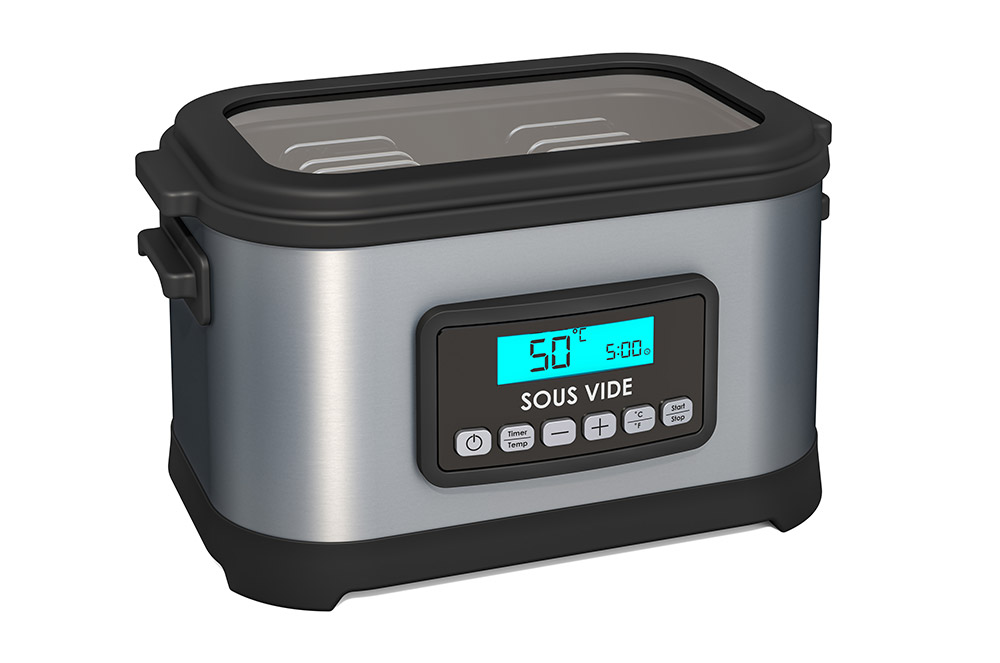
A water oven is a self-contained countertop unit with a computer-controlled temperature sensor and an insulated cavity for cooking. Water ovens generally use convection to keep the temperature steady and even, with complex circuitry and heating elements to precisely control convection currents within the oven.
Since the water doesn’t circulate within them, water ovens are more prone to hot or cool spots than circulators. However, they are still considered to be accurate and effective sous vide cookers.
Water ovens take up more space in a kitchen and are also generally more expensive than circulators. Their maintenance, however, is easier since they are essentially a big tub. It’s important to wipe it out regularly and not to let water sit in the water oven since that leads to bacteria growth.
Circulators
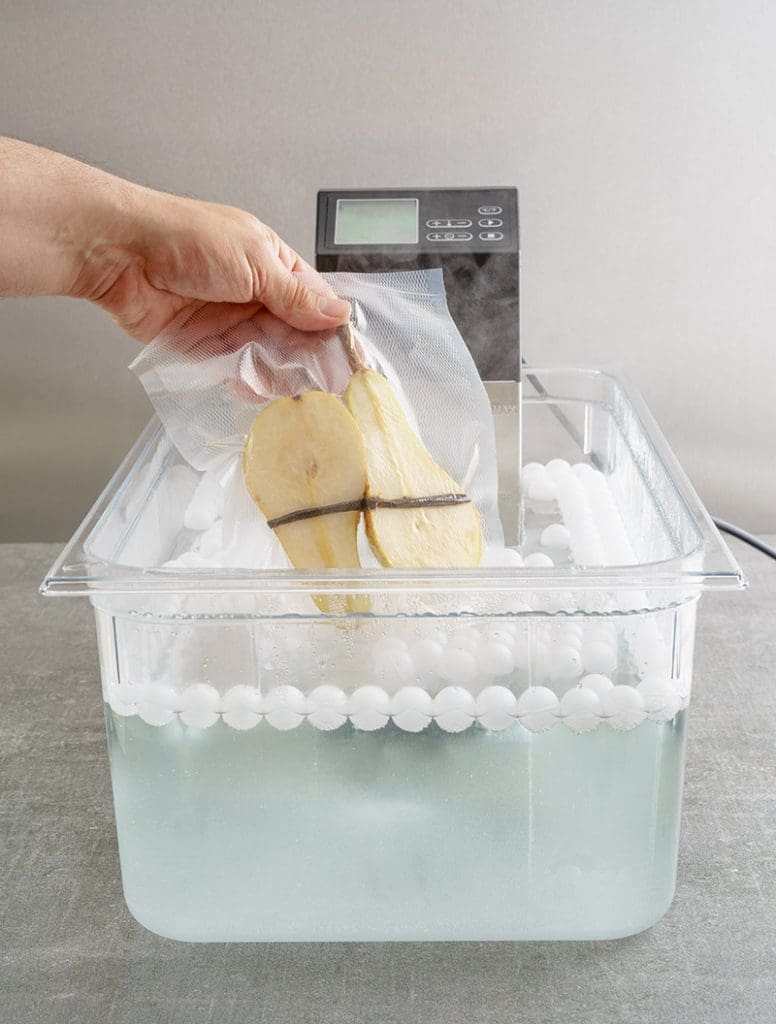
A circulator, also called an immersion circulator, is a pump that can be attached to almost any cooking vessel. Like a water oven, it uses a computer-controlled temperature sensor to make sure that the water is always at a constant temperature while cooking. Circulators heat the water in the container and circulate it to ensure an even temperature and avoid any hot or cool spots.
Circulators can attach to the vessel with a clamp, clip, or magnet depending on the type of vessel that you will be using. A clamp is the most versatile, since it can fit over the lips of a wide variety of containers. Magnetic circulators are designed to attach to the bottom of the container but usually come with a clamp or clip as well for non-magnetic vessels.
A major advantage of circulators, as opposed to water ovens, is that they are very small and compact. They won’t take up any counter space in your kitchen and can be stored out of sight when not in use. They also tend to be cheaper than water ovens.