
Topic · Kitchen Equipment Basics
Slicing Knives
Slicing knives (aka carving knives) are meant for making clean slices with a single stroke. They are long and thin, usually between 8 to 12 inches (20 to 30 cm) in length. There are different shapes and edges to choose from based on intended usage, with the generic slicing knife, or Sujihiki for Japanese chefs, being the most utilitarian.
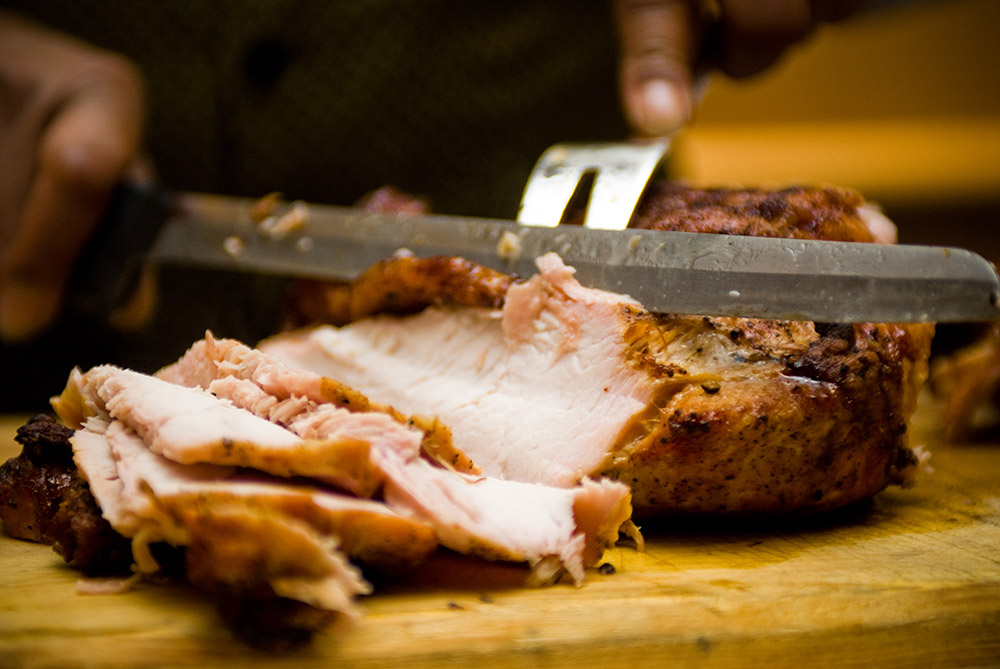
A meat fork goes along with the carving knife to anchor the meat while you slice. Its other uses include lifting meat while cooking and swirling pasta while plating in restaurants.
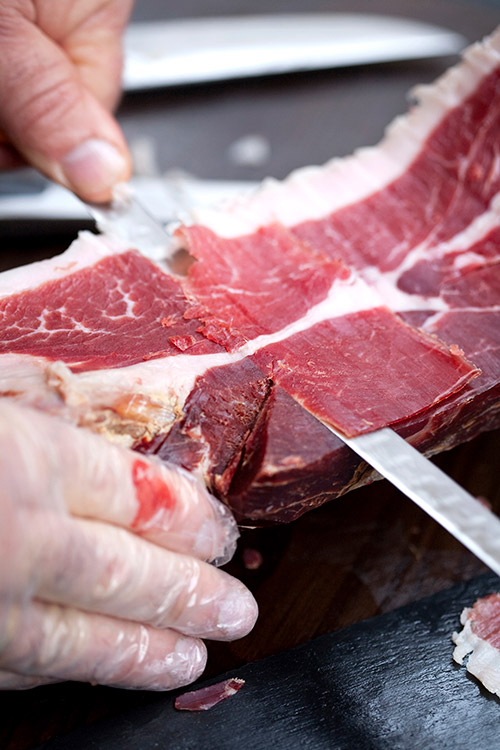
Roast beef carvers (aka hollow-edge slicers) are large, hollow-edged slicers with rounded tips that are commonly used to slice large rounds of beef at buffet carving stations. The rounded tip came about as a safety precaution since these knives are so often used in buffets.
The salmon slicer or ham slicer, depending on where you’re from, is the thinnest, most flexible slicing knife. It’s used for slicing smoked salmon and prosciutto very thinly.
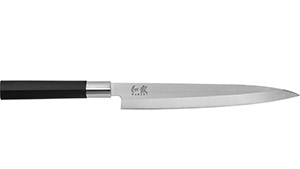
Meaning “willow blade” in Japanese, the Yanagiba has a single-beveled blade that is used for slicing sashimi. Considered to be the most essential knife for a sushi chef, these are usually 10 to 12 inches (25 to 30 cm) long, though they can be much longer.
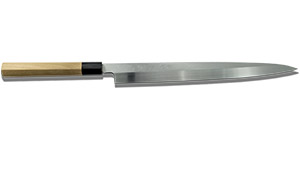
There are many specialized variations on the Yanagiba. The thinner Fugubiki knife is for making slices of fugu (blowfish) thin enough to be able to see the plate’s pattern through, the square-tipped Takobiki is for octopus, and the regionally-used Sakimaru Takobiki’s tip is angled forward.
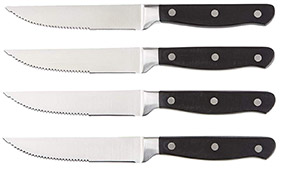
Steak knives are used while dining to cut meat and other foods that require an edge sharper than a butter knife. They are small enough to blend in with the other flatware and can have a serrated edge or a fine edge, the latter of which is more easily sharpened and makes cleaner cuts.
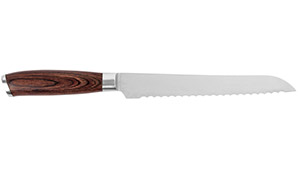
Bread knives are great for slicing anything with a hard exterior and a soft interior, like bread. They are typically 8 to 10 inches (20 to 30 cm) long with a serrated blade, though longer knives can be used in commercial settings. You may see them with an L-shaped (offset) blade to protect the chef’s knuckles.
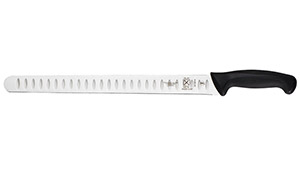
The scalloped edge knife of scalloped slicers is excellent for slicing as it provides a more edge surface than a fine-edged knife of the same length would. Since they don’t have pointed teeth like serrated knives, scalloped slicers fall between bread knives and slicing knives.
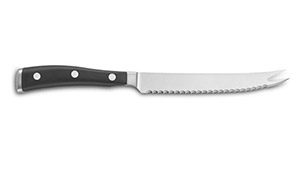
Tomato knives are small, about 5 inches (13 cm) long, serrated, and great for slicing tomatoes.
Because tomatoes have a tough skin yet are soft on the inside, many people like to use a serrated blade to cut them. However, a sharp fine-edged blade will leave you with neater slices.