Topic · Kitchen Equipment Basics
Specialty Knives
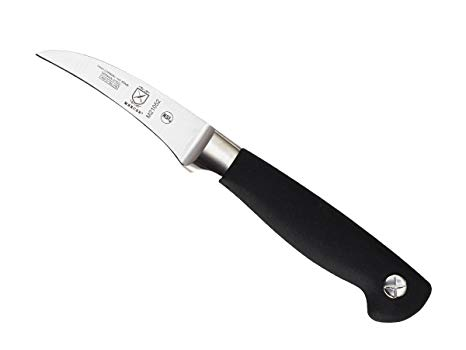
Tourné Knife
Tourné Knife, Peeling Knife, or Bird’s Beak Knife … Considered a type of utility knife that is used for many of the same tasks as the traditional paring knife. The bird’s beak knife, which is also known as a “Tourné” knife, has a shorter two to the three-inch blade than a paring knife and is designed to curve upward on both the cutting edge and the top edge. It is a knife that is commonly used to make a type of cut referred to as the Tournée cut in vegetables such as carrots, potatoes or squash that is accomplished for purposes of food presentation. This cut is also known as tourné cutting or tournée cut. Bird’s beak knives may also be used to slice soft fruits such as nectarines, plums, or peaches and for peeling skins or blemishes from a variety of fruits and vegetables. It is a knife that is also used for cutting decorative garnishes such as rosettes in radishes or fluted mushrooms.
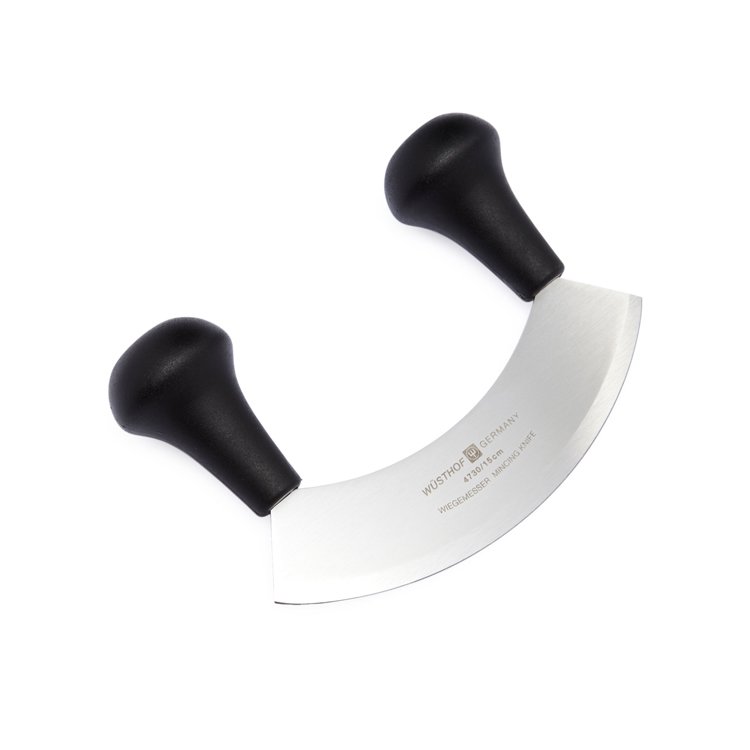
Mincing Knife
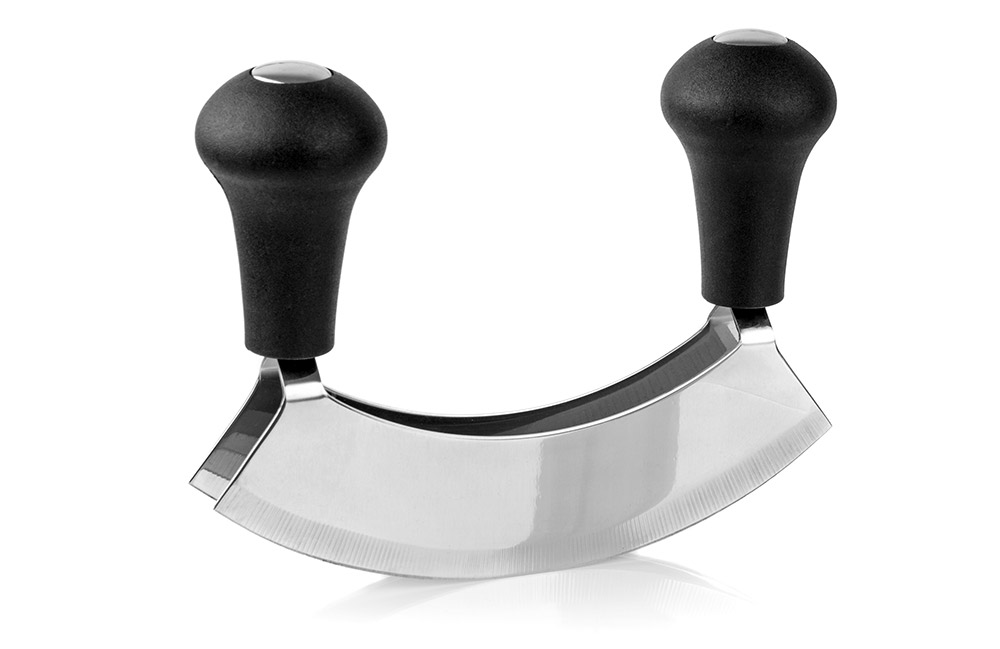
A knife that can be used to mince or cut foods into smaller bits for seasoning sauces, soups, salads, and other dishes. Mincing knives can be either single or double-bladed to cut a variety of foods into very small pieces. A mincing knife is also referred to as a Mezzaluna, Mezzaluna chopper, or Mezzaluna knife.
Double-Bladed Mincing Knife
Another version of a mincing tool is the rolling mincer or rotary mincer. This utensil consists of numerous circular blades close together mounted on a handle, enabling the user to roll the tool back and forth over the herb as the blades do the mincing.
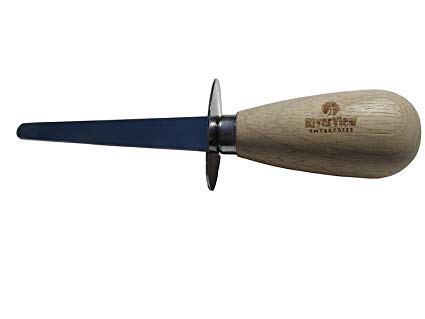
Oyster Knife
A kitchen utensil that is used to pry open the hard shell of an oyster or clam in order to remove the meat. Typically, the knife will have a sharp, beveled blade that can be inserted into the tightly closed shell to pry the shell apart. The blade is then used to cut through the muscle and oyster membrane. A round shield is built into the handle in order to keep the knife and hand from going into or through the sharp-edged shell.
Devein Knife
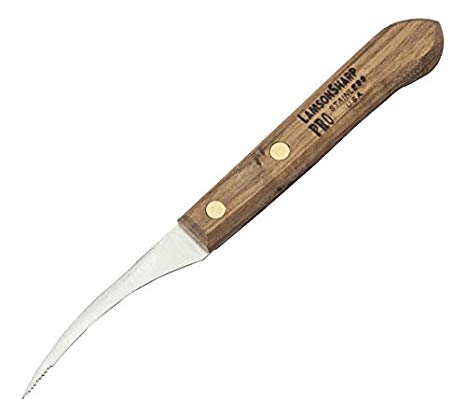
A kitchen utensil that is used to remove the large vein that runs down the length of a shrimp. A fork can be inserted in the back of the shrimp to pull out the vein or a deveining knife can be used to cut a slit down the length of the shrimp. This tool is inserted at one end of the shrimp and then pushed up through the entire body to remove the vein and the shell at the same time.
Clam Knife
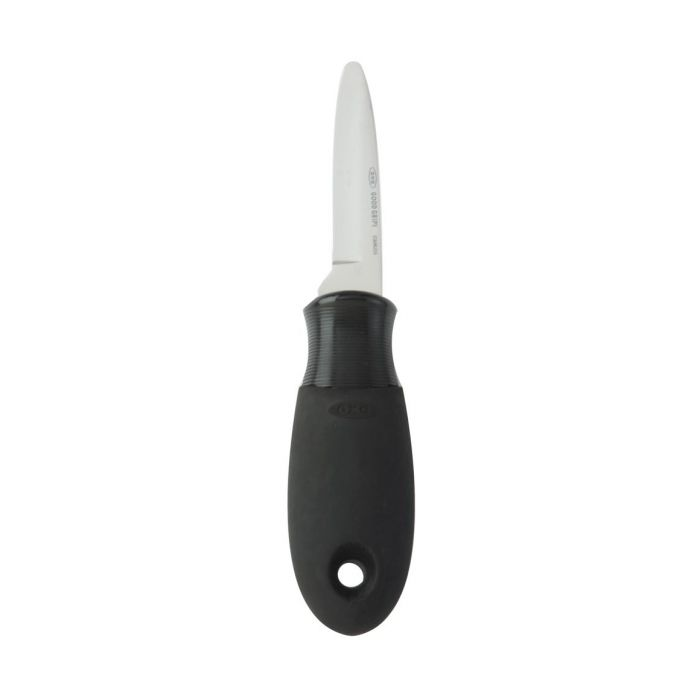
A kitchen utensil that is used to pry open the hard shell of a clam or an oyster in order to remove the meat. Typically, the knife will have a beveled edged blade that can be inserted into the tightly closed shell, twisting the blade to pry the shell apart. A round shield is built into the handle in order to keep the knife and hand from going into or through the sharp-edged shell.
Grapefruit Knife
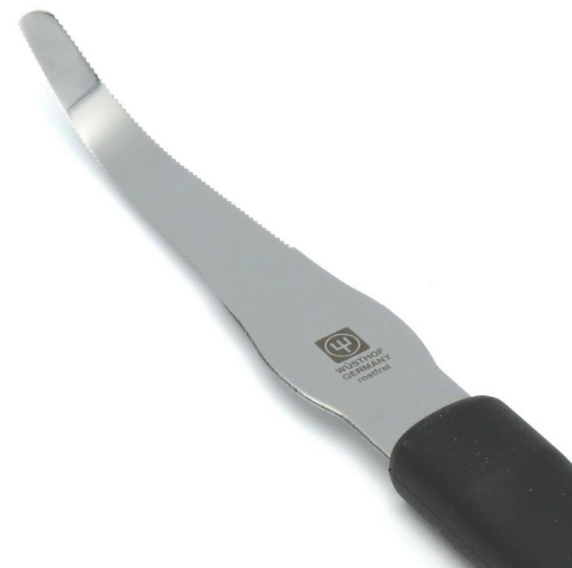
A kitchen utensil that is made for ease of cutting the meat of the fruit away from the grapefruit skin when preparing a half grapefruit for serving. There are several varieties of this tool available, either single or double-bladed, each containing at least one serrated blade. The dual-bladed knives have serrated blades on each end of a handle placed in the center. The curved blade on one end is used for cutting the meat away from the outer skin. The second blade may consist of two closely aligned parallel blades or one blade with a slit in the center, each used to cut between the linings that separate the inner meat into sections. The grapefruit knife effectively serves a good purpose of separating the meat sections of grapefruits better than the average kitchen knife.
Cheese Knife
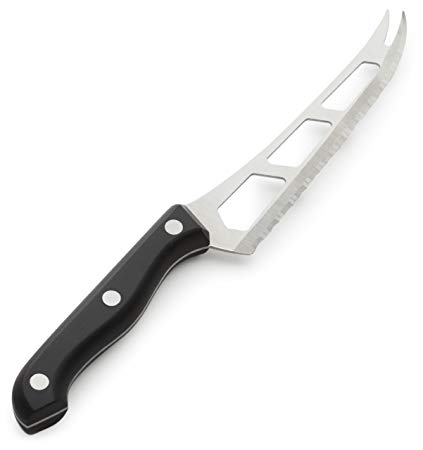
A kitchen utensil that is thinly shaped to cut easily through soft or hard-textured cheese. This knife may have a forked tip that is used as a lifter for pieces of cheese as they are cut. This knife may also be referred to as a forked-tip utility knife, which is used as a bar knife for cutting through citrus fruits or spearing garnishes for drinks as may be required for pickles, onions or maraschino cherries.
Chestnut Knife
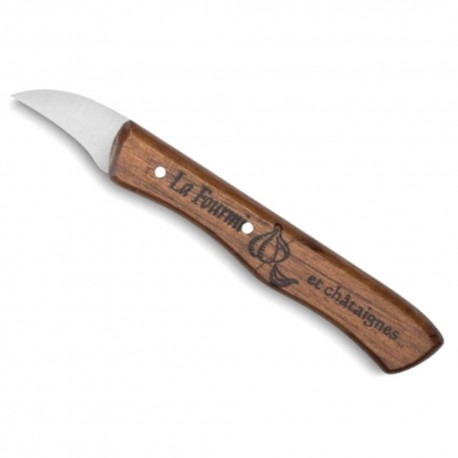
A kitchen utensil that is used to score the chestnut prior to roasting. By carving a line, across or an X into the shell of the unroasted nut, it allows it to breathe during roasting and to resist exploding as the steam builds up. The chestnut knife is shortly shafted in order to keep the cut confined to the shell without going too deeply to pierce the inner skin. When preparing, place the nuts in a shallow pan and roast at 425 degrees for 30 minutes or slightly less. Following roasting, the knife can then be used to open the shell to remove the meat. To remove the nut, make a single score cut fully around the middle of the shell. The nut may stick to the skin but should be adequately separated to remove the nut easily.
Ceramic Knife
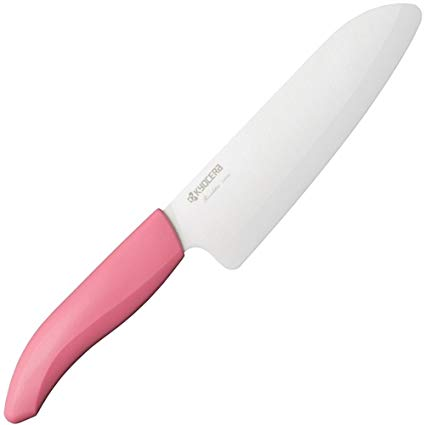
A knife with a blade made from zirconium oxide also referred to as ceramic zirconia, a very durable and hard substance that is only slightly softer than the hardness of diamonds. With a blade harder than steel, knives made from industrial ceramic do not easily dull and will maintain an exceptionally sharp edge before being required to be sharpened. Industrial ceramic, which is made by heating the base materials to exceptionally high temperatures, results in a substance that has a high degree of purity removing most of the impurities that make ceramic materials brittle.
Ceramic knives are excellent for slicing through a variety of foods, making thin slices an easy task. However, use on harder materials, such as bones and hard textured foods may result in chipped or broken blades, due to the hard and rigid blade materials that are not as flexible as more common metals. Also, if the blade hits or is dropped accidentally on a hard tile floor, part of the blade may chip, but it will not shatter. Factory repair of the blade is an option if the blade becomes damaged. Ceramic knives will not need sharpening as often as other metal knives but will require that the person doing the sharpening be qualified to sharpen ceramic materials.
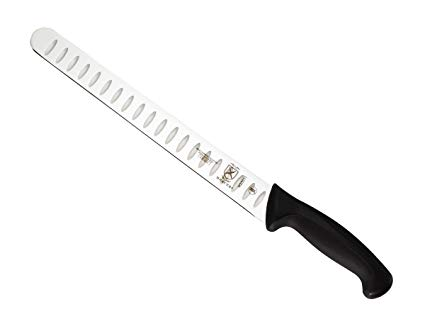
Slicer Knife
A knife used to slice cooked meat. The blade is long, typically eight to 12 inches, with a round or pointed tip. Depending on the manufacturer, the blade may be flexible or rigid. Some manufacturers refer to slicers fewer than nine inches as carvers.