
Topic · Kitchen Equipment Basics
Washing and Storing Knives
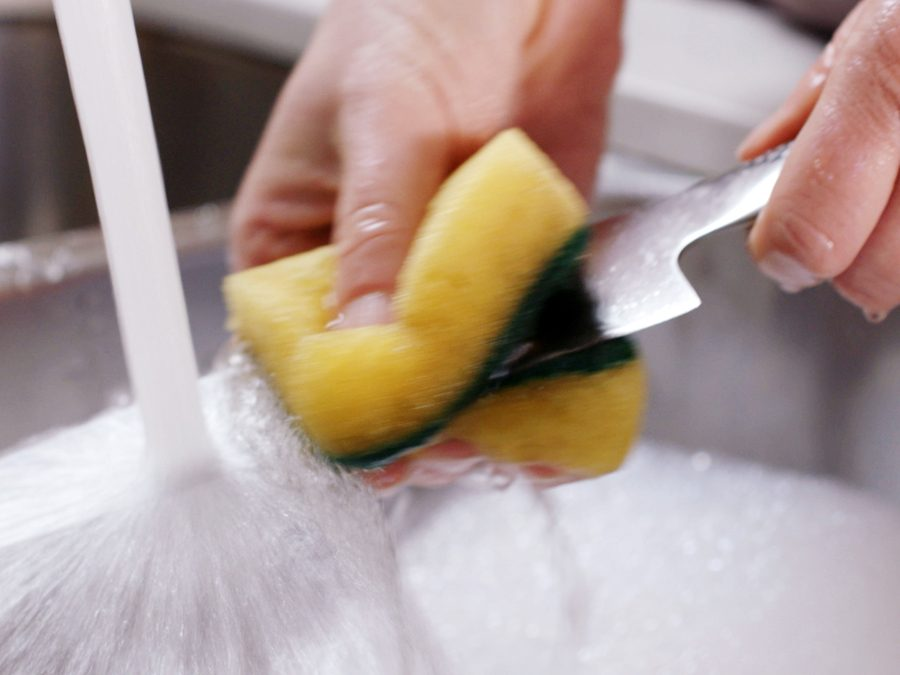
To extend the lifetime of your knives, wash them by hand. Knives that are washed in the dishwasher are exposed to harsh detergents and scalding temperatures. Damage is likely to occur to the sharp edge of a knife if allowed to be thrashed around in a dishwasher.
Wipe knives clean immediately after use to prevent the discoloration of the blade. This practice will also help to prevent foods from hardening onto the blade, allowing for ease of cleaning.
Tip: Safely clean knives by laying the blade on a flat surface. Wipe one side with a wet cloth, turn and wipe the other side. Always use hot, soapy water to clean a knife that has been used to cut poultry, meat, and/or fish. If available, store knives in a wooden or polyethylene knife block. If one is not available, store knives in a sheath or at a minimum, keep them away from other utensils to prevent damage to the sharp edges.
Use a wood or polyethylene cutting board. Wood and polyethylene cutting boards create less resistance to the knife-edge than ceramic, metal or plastic cutting boards.
Tip: To prevent contamination, wash cutting boards with hot, soapy water immediately after use. Cutting boards should be sanitized by spraying the surface with a solution of bleach and water, letting it stand for a short time, then wiping it with a clean cloth.