
Topic · Kitchen Equipment Basics
Measuring Equipment
Measurements are determined in many different ways in a professional kitchen. It’s imperative to have the right equipment to measure liquid and dry volume for both U.S. and metric systems, as well as a variety of scales for adequate measurement by weight.
From school cafeterias to fine dining restaurants, maintaining consistent food portions is extremely important. Recipes relied on exact measurements, especially pastry and bread, for example. Food cost depends on portion controls that require the right measuring tools and portion control tools.
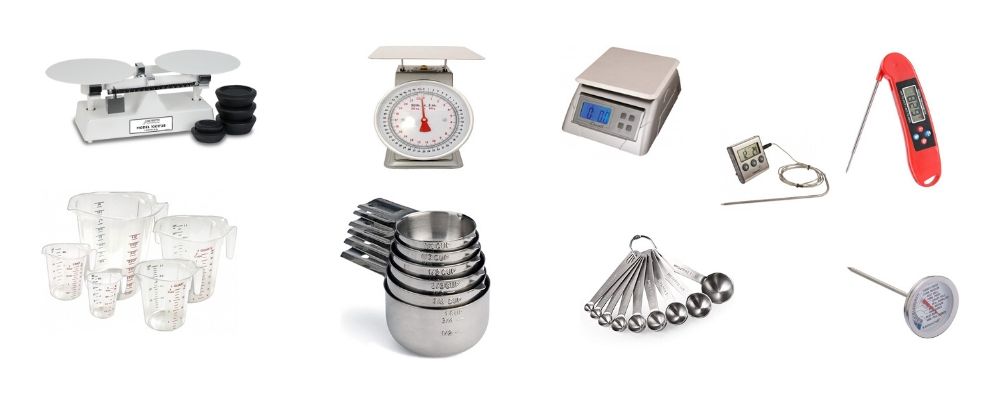
The most common and useful measuring equipment are as follows:
- Measuring pitchers to measure liquids
- Spring, balance beam or electronic scales to weigh ingredients for preparation and portion control
- Food thermometers use to measure the internal temperature
- Measuring spoons to measure an amount of an ingredient, either liquid or dry, when cooking
- Measuring cups to bring speed and precision to measuring ingredients for baking and cooking
The most common and useful portion control tools are as follows:
- Various size ladles for portioning and serving liquid foods
- Portion control plain and slotted spoons for portioning and serving solid foods
- Various size spoodles which combine the functionality of a scoop, a spoon, and a ladle.
- Food dishers include big or small scoop to serve ice cream, portion cookie dough, or mashed potatoes. Dishers are commonly categorized by their size, which is based on the approximate amount of servings it takes per quart or the number of ounces it holds.
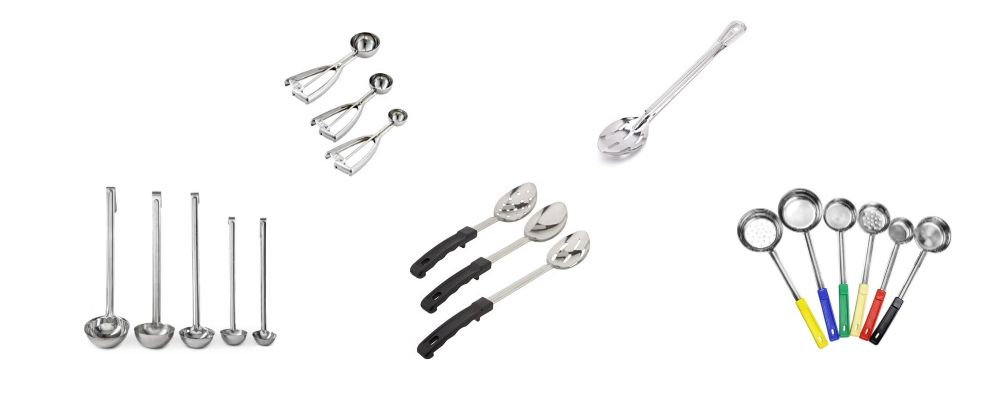
All those portion control tools are essential kitchen tools to help with portion control to reduce food waste while also providing an easy way to serve food without sacrificing presentation.