
Topic · Kitchen Equipment Basics
Cookware Material
Cookware is made from many different materials. Understanding the differences will assist you in making the best choice for your needs. Some of the most common cookware materials are shown below with a description and pan care instructions for each.
Aluminum
Inside Coated with Stainless Steel Aluminum cookware is fairly inexpensive in comparison to cookware made from other materials. Aluminum is lightweight but fairly strong. It is a good conductor of heat and does not easily distort when exposed to high temperatures.
Aluminum works well for sautéing and frying foods because of its heat responsiveness. The drawback of aluminum is that it reacts to acidic and alkaline foods, causing it to corrode and affect the taste of the food being cooked. Aluminum is generally used as a core heat conductor, or coated with stainless steel or an anodized coating to protect the food.
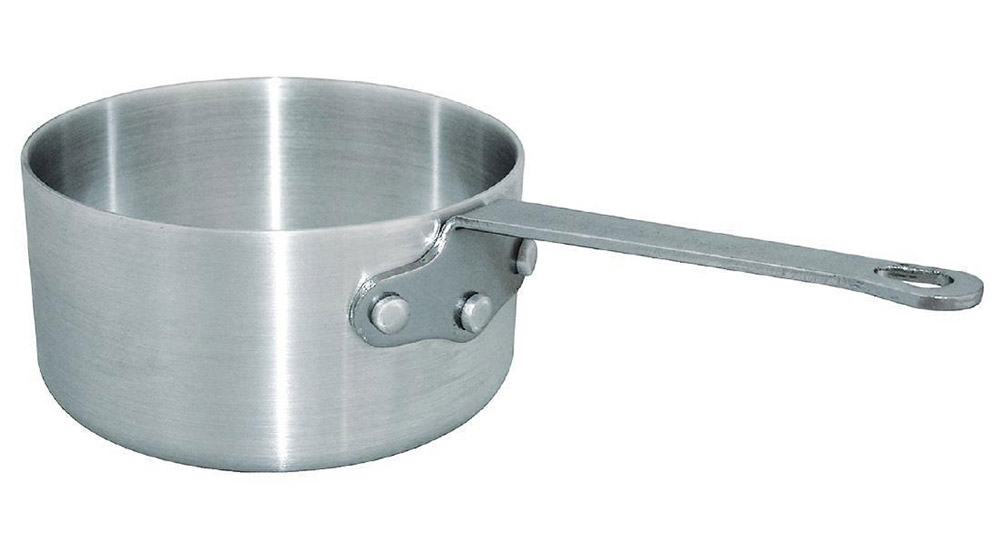
Pan Care: To care for aluminum cookware, wash the pans with hot soapy water. Avoid washing the cookware in hard water because it tends to darken the aluminum. To remove stains, use a paste made of cream of tartar and water.
Anodized Aluminum
This is aluminum that has been given a special finish to protect it from corrosion. It is a good conductor of heat and the special finish makes it stick-resistant. It is a good choice of material to look for in pots and pans for most any type of cooking. Pots and pans made from anodized aluminum are not dishwasher safe and can be dark in color, making it hard to see slight color changes in the food being cooked.
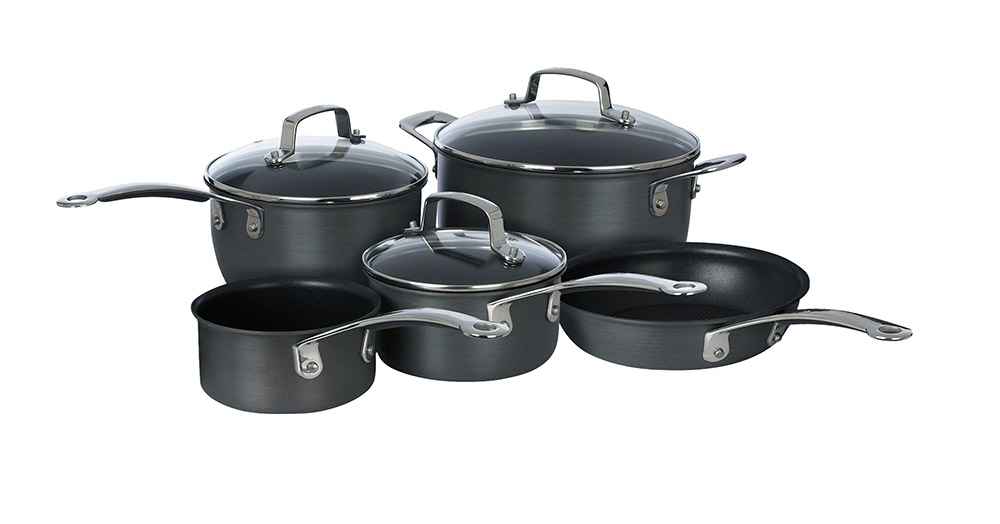
Pan Care: To care for anodized aluminum pans, do not cook foods that are highly acidic or alkaline in them because they have a tendency to cause pitting in the coating. They should be washed by hand in hot soapy water rather than in a dishwasher where the strong detergent would damage the surface of the cookware. To avoid scratching the finish, do not use abrasive materials on the surface of anodized aluminum cookware.
Cast Iron
Cast iron cookware is inexpensive to moderately priced products. It is fairly heavy and conducts heat evenly. It heats slowly but once it is hot, it holds the heat well. This makes it good for deep frying and slow cooking. It can be used on top of the stove and in the oven. Drawbacks to cast iron are that it rusts, stains and becomes pitted when exposed to air, moisture and certain foods.
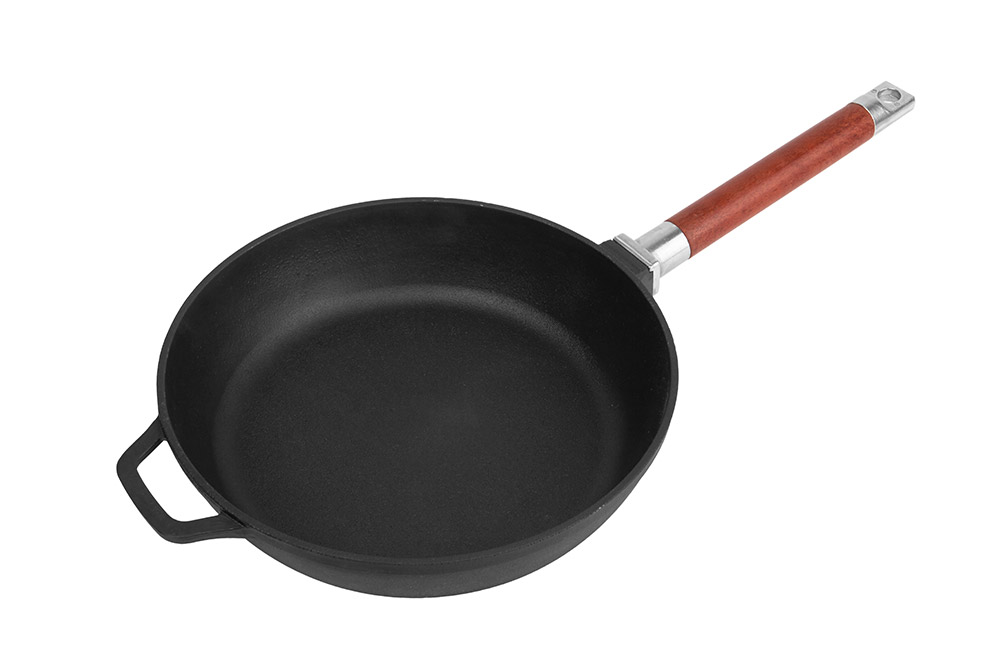
Pan Care: To care for cast iron cookware, do not wash in soapy water but try wiping clean with a paper towel. Run hot water over food that is stuck to help loosen and remove it. After your cast iron pot has been washed, it should be dried thoroughly. To prevent the pan from rusting, rid it of any excess moisture by setting it on the stove over high heat until all moisture has evaporated and coat with oil before storing.
Lined Copper
Copper is one of the more expensive materials used to make pots and pans. It conducts heat evenly and is very responsive to heat. It heats up quickly and will also cool down quickly when removed from the heat, preventing sautés and delicate foods from burning and becoming overdone. Because copper distributes heat so evenly and efficiently, it is the best choice for frying and sautéing, but it is also a good choice for many other cooking methods. One problem with copper is that it interacts with everything it comes in contact with. Moisture in the air causes it to form a film on it that is poisonous and salty food causes a chemical reaction that can make food acquire a metallic taste. To make the copper pots and pans safe to use, they are lined with tin, silver or stainless steel to protect any surface that would come in contact with any food. Because copper reacts to everything it touches, it needs to be polished regularly to keep its bright copper shine.
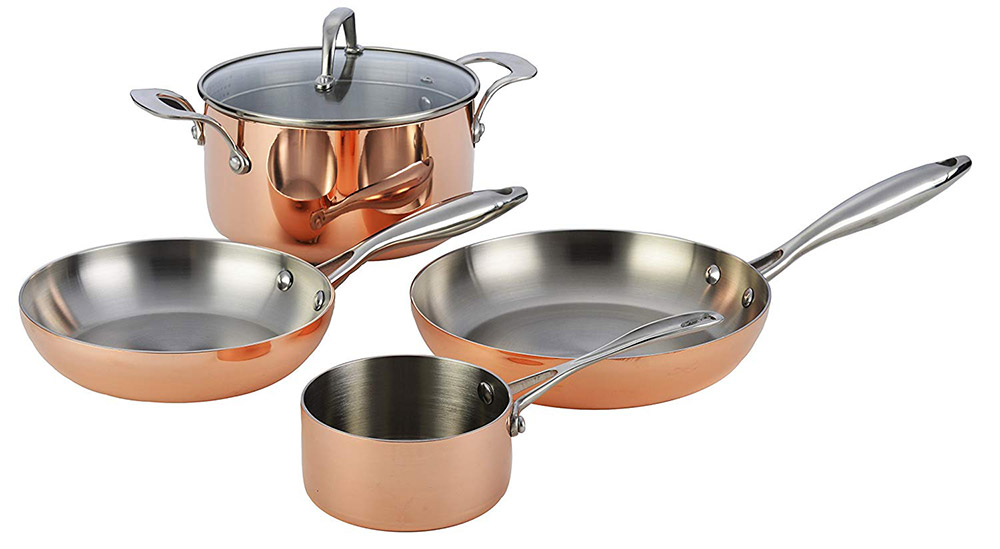
Pan Care: To care for copper cookware, hand wash with hot soapy water and avoid using abrasive materials to clean. Use copper polish to keep copper from tarnishing and free from white spots. The interior should be re-tinned every couple of years, depending on usage.
Non-Stick
These pots and pans have had a coating applied to them that prevents food from sticking and makes cleaning up easier. The non-stick surface is really an advantage when cooking some foods, such as omelets, and when reheating sticky foods such as rice. It also reduces the amount of fat that is normally required when cooking. The non-stick surface is less efficient when using certain cooking methods, such as sautéing, because the coating interferes with the transfer of heat from the underlying pan.
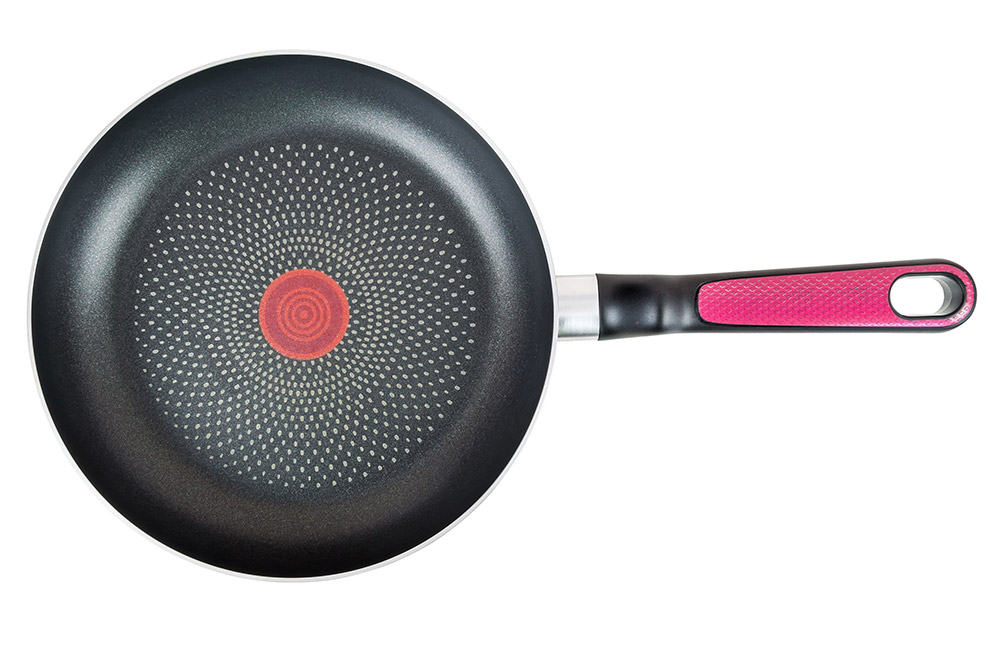
Pan Care: To care for non-stick cookware, use hot soapy water and avoid using abrasive pads or powders. If food does stick to the pan, soak in hot water to loosen food that is stuck. A nylon scouring pad, nylon scraper, or nonabrasive cleaner can also be used to help remove food that is stuck. Do not wash in a dishwasher. Also protect the non-stick surface by only using wooden, plastic, or coated or wooden spoons, spatulas, and ladles when cooking.
Porcelain Enamel
Porcelain enamel is applied as a coating only on pots and pans made of other materials, such as cast iron or aluminum. It prevents them from corroding or reacting with the food being cooked. A pan coated with porcelain on the inside cannot be used for sautéing or frying but will work as a saucepan and can be used in the oven.
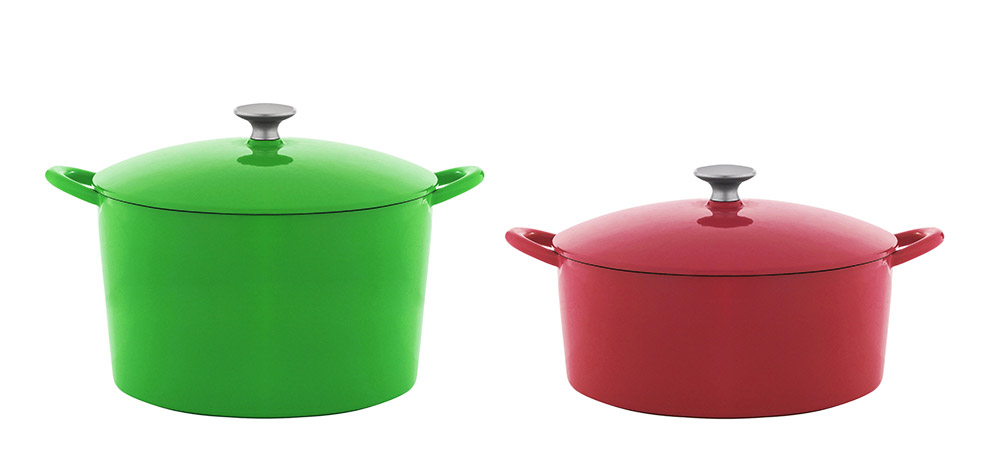
Pan Care: To care for porcelain enamel cookware, wash with hot soapy water. For food that is stuck, soak in hot water to loosen. A nylon scouring pad, nylon scraper, or nonabrasive cleaner can also be used to help remove food that is stuck. Porcelain enamel can be cleaned occasionally in the dishwasher unless it has a non-stick interior surface. Limit the use of a dishwasher to avoid the strong detergent dulling the enamel surface.
Stainless Steel
Stainless steel cookware is moderately priced. It is the most versatile material to use because it keeps its bright shine and has good tensile strength, preventing it from denting easily. Stainless steel is a good material for any type of pan because it does not corrode and does not react with alkaline or acidic materials. The one problem with stainless steel is that it does not conduct heat well. To combat this problem, pots and pans made from stainless steel should have a thick aluminum or copper core in the bottom of the pan to help conduct heat more evenly and make the pan more responsive to heat. In the better quality pans, the aluminum or copper core also runs up the sides. You may find a stainless steel pan with an aluminum or copper plate on the bottom but if the plate is not thick enough, it will not do an efficient job of conducting heat evenly.
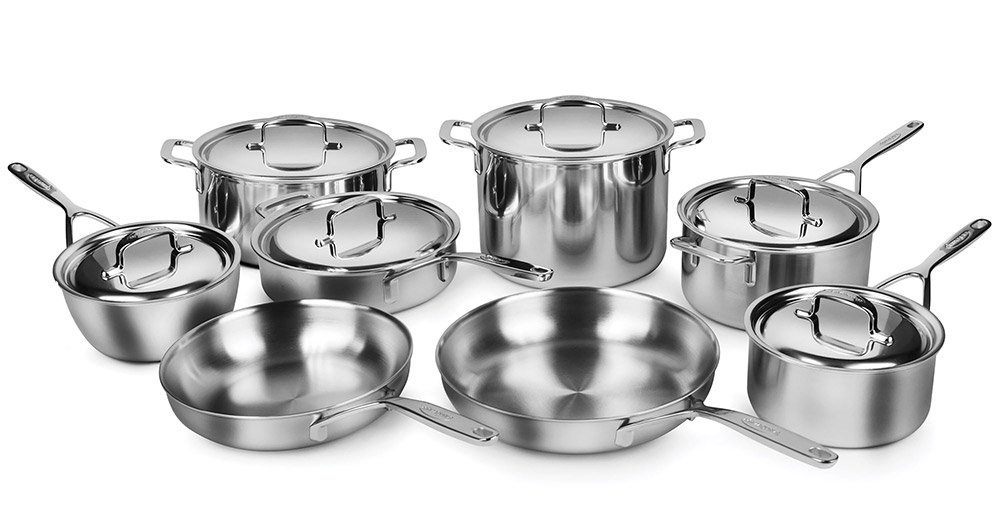
Pan Care: To care for stainless steel cookware, wash with hot soapy water. A nylon scouring pad or nylon scraper can be used to remove food that is stuck. There are stainless steel cleaners that can also be used to remove stains and bring a shine back to the cookware. Stainless steel cookware can be washed in the dishwasher but the high temperatures in the drying process can cause water spots. To avoid water spots, remove the pan from the dishwasher before it is dry and wipe with a soft cloth.
Tempered Glass
Available as flameproof and ovenproof glassware. Both types of glassware hold heat well but are not heat-responsive. The flameproof glassware, which is fairly expensive, can be used in the microwave, on the stovetop, and in the oven. It heats unevenly, resulting in hot spots that cause food to stick. Ovenproof glassware can be used in the microwave and in the oven, but if used on the stovetop, it must be used with a diffuser.
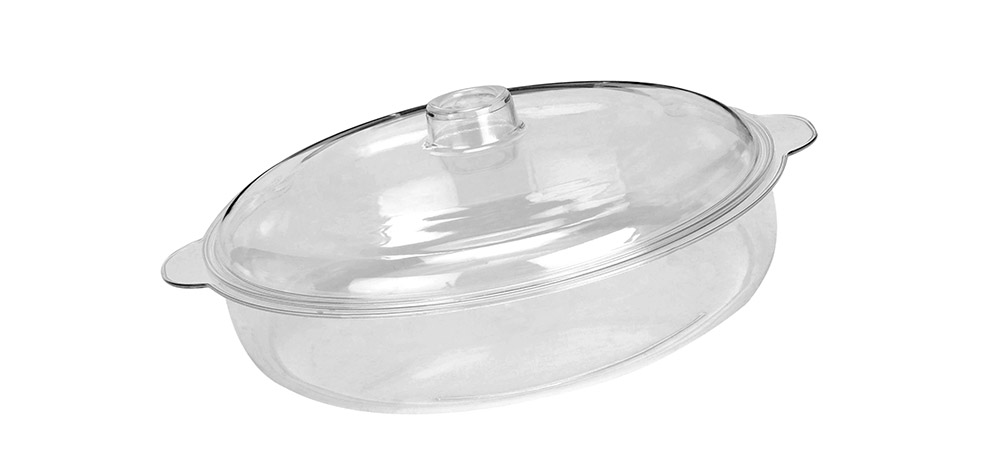
Pan Care: To care for tempered glass, wash in hot soapy water and soak to loosen food that is stuck. Do not use metal scrapers or abrasive powders to remove food that is stuck. Tempered glass cookware is dishwasher safe.