
Topic · Kitchen Equipment Basics
Griddle and Grills
Part of the traditional foodservice set up, griddles and grills are a mainstay of the commercial kitchen.
Griddles
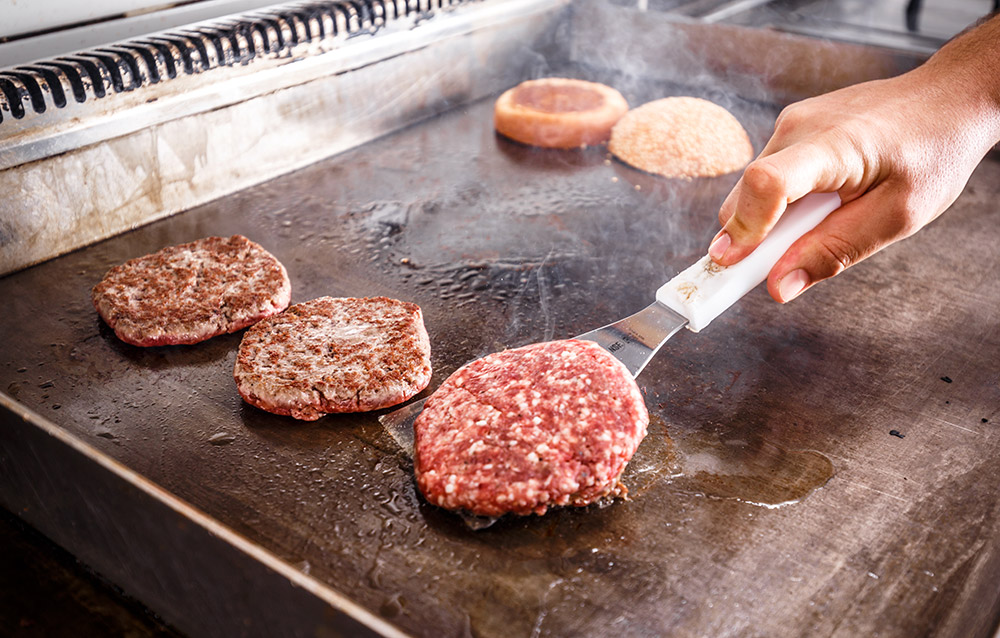
Like a flattop range, a griddle is a broad, thick plate of metal with a heat source located underneath. Food is cooked directly on the surface of the griddle.
There are a few common types of griddles in a commercial setup. Countertop griddles are free-standing equipment that rests on a stand or base and can be moved around or carried offsite for events.
A drop-in griddle is built into the kitchen seamlessly, usually as part of a larger piece of equipment like a range.
A third kind of griddle called a Teppanyaki griddle is often found in Japanese kitchens, but is useful for many types of commercial kitchens. In this griddle, the heat source is in the center, so food items can be cooked in the middle of the griddle and warmed on the edges.
The performance of a griddle, including its consistency/evenness, depends on its material, heat source, and temperature control. The vast majority of griddles are made from cast iron or steel, though there are composite plates available that improve the distribution of heat.
For commercial settings, gas is preferred over electricity because of its faster heating time and because it is more responsive to temperature adjustments.
You will also need to choose between manual or thermostatic temperature controls. Manual controls usually only have the options of low, medium, and high, while thermostatic controls allow you to set the heat the desired specific temperature.
Grills
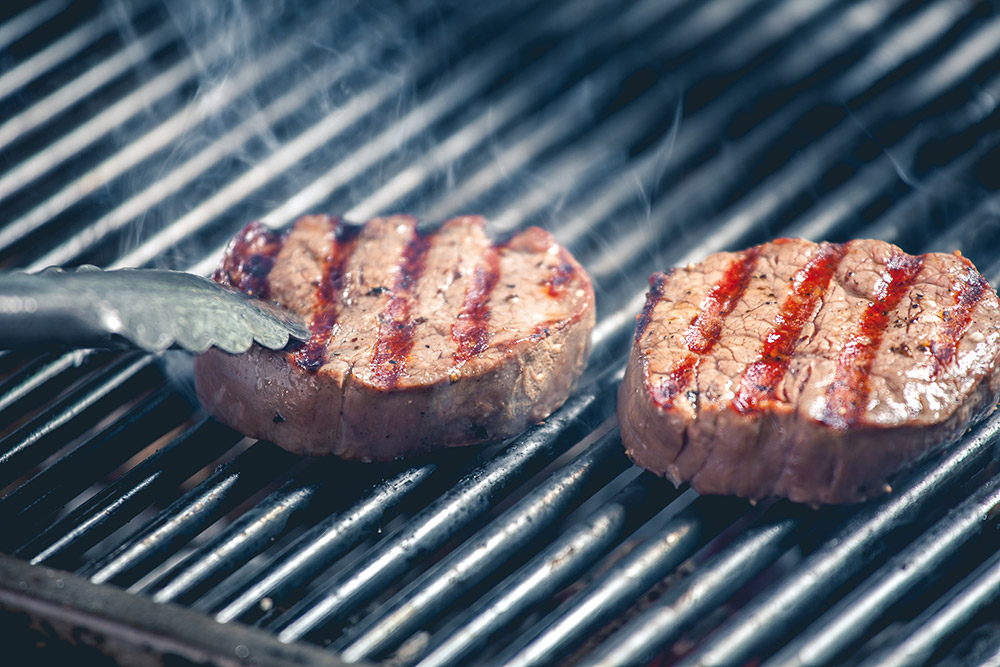
Grills cook by the application of intense dry heat and are often used for cooking meat or vegetables quickly. They consist of a rack above a heat source, with the food placed on the rack.
Grills traditionally burn wood or charcoal as a heat source, which gives food a unique, smoky, grilled flavor. However, restaurants usually use either gas or electricity instead, producing the charcoal grill effect with a bed of coals made from ceramic rocks.
A broiler is similar to a grill, however, the heat source is located above the rack rather than below. A salamander is a small broiler that is usually used to finish or glaze foods.
While the direction the heat comes from is the main difference between broiling and grilling, there are also differences in taste and cooking time that will affect which method is chosen for a particular dish. While grilling gives foods a smoky flavor, broiling caramelizes any sugar in the food, giving it a different, but also delicious taste. Grills also tend to take less time to cook than broilers.