
Topic · Kitchen Equipment Basics
Kettles and Steamers
Commercial Restaurant Kettles
High-volume kitchens can definitely benefit from having a commercial kettle. If your kitchen makes a “soup of the day,” you probably don’t need one. However, large production kitchens should have a commercial kettle to quickly cook soups, stocks, stews, broths, sauces, pastas, and more.
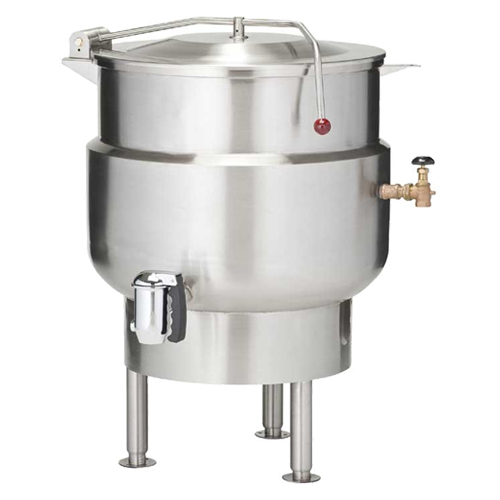
When looking for a kettle, you need to consider the needs of your kitchen. Since they come in various volumes and sizes, including floor and countertop models, the size that you choose will depend on how much food you need to cook and how often you will be using it.
When looking for a kettle, you need to consider the needs of your kitchen. Since they come in various volumes and sizes, including floor and countertop models, the size that you choose will depend on how much food you need to cook and how often you will be using it.
You will also need to choose between a gas kettle or an electric kettle. Gas steam kettles tend to be larger and higher volume, but they aren’t very mobile. Also, it would help if you considered how your choice would affect the energy costs in your kitchen.
When picking out your kettle, you must know what controls you want. Most kettles come with a timer, thermostat, safety valve, and pressure limit switch. Some manufacturers are coming out with electronic controls, which let you program options for cooking, chilling, and pressure and temperature limits. Some kettles also have extra water connections, so cold water can chill the food as soon as it’s done.
Another crucial thing to know is what kind of steam kettle is right for your kitchen. The different types are:
Direct Steam Kettles
With direct steam kettles, steam enters the jacket and condenses on the inside walls of the kettle. This transfers heat throughout the kettle before condensing back into the water.
An outside boiler is the source of steam for this kind of kettle, and it requires regular maintenance. Also, the condensation needs to be blown out a couple of times per day to prevent buildup on the main steam supply line.
Self-Contained Kettles
Self-contained kettles have a closed steam system. The source of steam is an electric or gas boiler that sits on the kettle’s stand, and the jacket is filled up with water.
Since this model is more complicated than direct steam kettles, they tend to be more expensive. However, they are more versatile because they can work with both electrical and gas plumbing, and maintenance is easier as well. They just need to be vented and refilled.
Tilting Steam Kettles
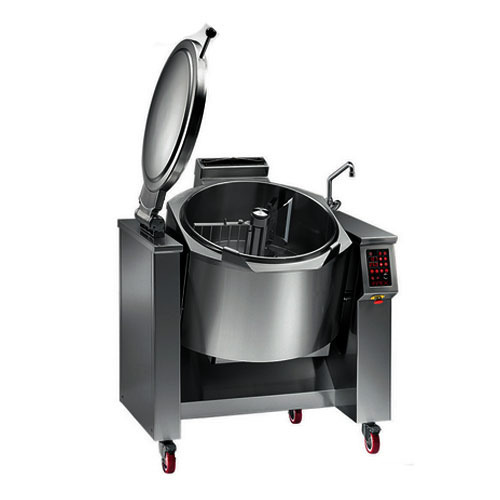
Tilting steam kettles are easier to pour from, since they are designed to tilt easily and safely, usually with a wheel. They come in various shapes, sizes, and mounting styles, though all have a lip for mess-free pouring. Some models even tilt using an electric motor; it makes it easier for you to pour food out of them.
Stationary Steam Kettles
Stationary steam kettles don’t tilt and use a tangent valve located at the bottom of the kettle instead.
These are generally larger than tilting steam kettles, which make them a good option for kitchens that cook more than 750 L / 200 gallons of food at once.
Commercial Restaurant Steamers
As with kettles, you should choose the model and size of your commercial steamer based on how much food you will use it for cooking at once. Additionally, you’ll need to take into consideration the amount of space you have allotted for your steamer since both floor and countertop models are available.
Here are some of the steamer models to consider:
“The Mini” Combi Steamer
Technically a countertop model, these small steamers can hold three 12″ x 20″ x 2 1/2″ full-size steam table pans or six 12″ x 18″ half size baking sheet pans. Best used for small volume outputs (like side dishes), reconstituting foods, and sandwiches.
Countertop Steamer
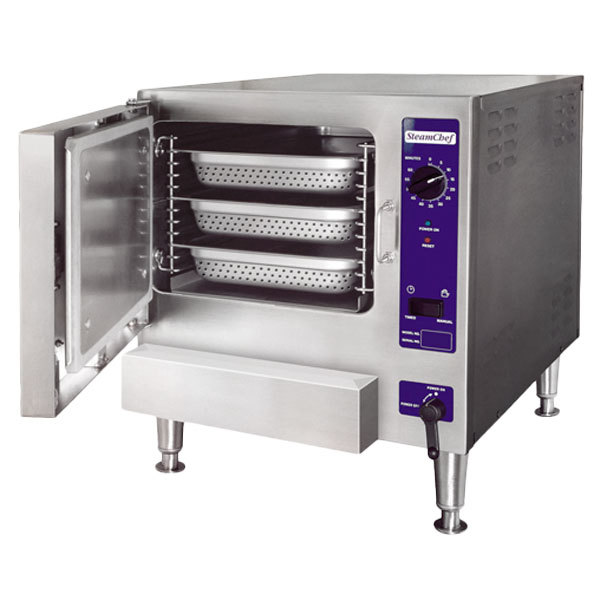
Countertop steamer models don’t take up valuable floor space and generally hold 3-6 pans. They can also be stacked if your kitchen uses more than one. Best for small kitchens, small volume outputs, and front of the house.
Floor Model Steamer
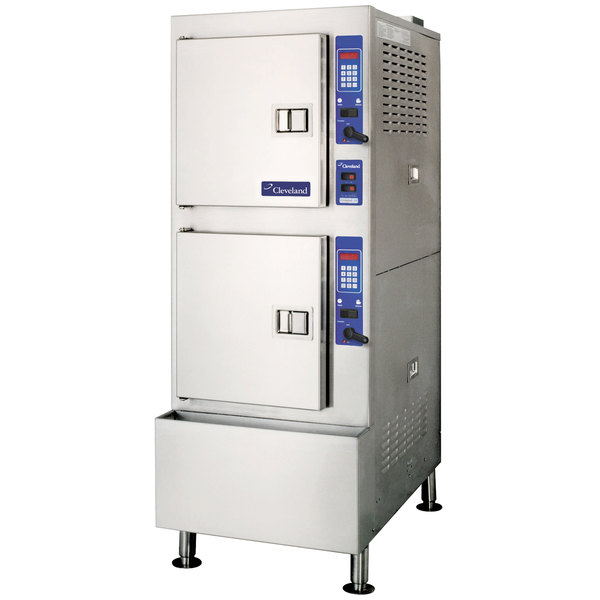
Floor models can hold 6-16 full-size pans, but they do consume floor space in your kitchen.
Some floor steamer models come with over-powered boilers that can be used to power other kitchen equipment, like a kettle.
Best for large kitchens, large volume outputs, and larger food items.
Gas vs. Electric Power Source
It’s important to know whether a gas or electric steamer will work best in your kitchen. Gas steamers heat items faster, but they require room for the LP tanks and a natural gas hookup.
Electric steamers can be installed anywhere with an electricity and water hookup, and depending on local laws may not require a hood vent. However, they are not as fast as gas steamers.
Steam Generation
All steamers cook food using steam, but the source of steam can vary. Here are the most common types of steam generation.
Steam Generator
These are purchased separately from your steamer, and create steam that is sent into the steamer.
Best for restaurants without a boiler or potable water, and large kitchens with more than one steamer.
Boilerless Steamer
These steamers generate their own steam, so you don’t need to purchase an additional steam generator. Boilerless steamers use an open water reservoir at the bottom of the unit or a spritzer that splashes cold water inside, making steam.
This model produces wetter steam that cooks food more slowly and makes it less crispy. However, maintenance and cleanup are easier.
Best for kitchens without an external steam generator.
Boiler-Based Pressure Steamer
These units have an inside boiler that creates steam and funnels it into the cavity. It’s important to use pure water to avoid limescale buildup. Boiler-based pressure steamers typically cook faster than equivalent convection steamers.
Best for large volume outputs, starchy, or tough foods (like potatoes and meat).
Convection vs. Pressure
The two types of steamer cooking methods are convection and pressure.
Convection Steamer
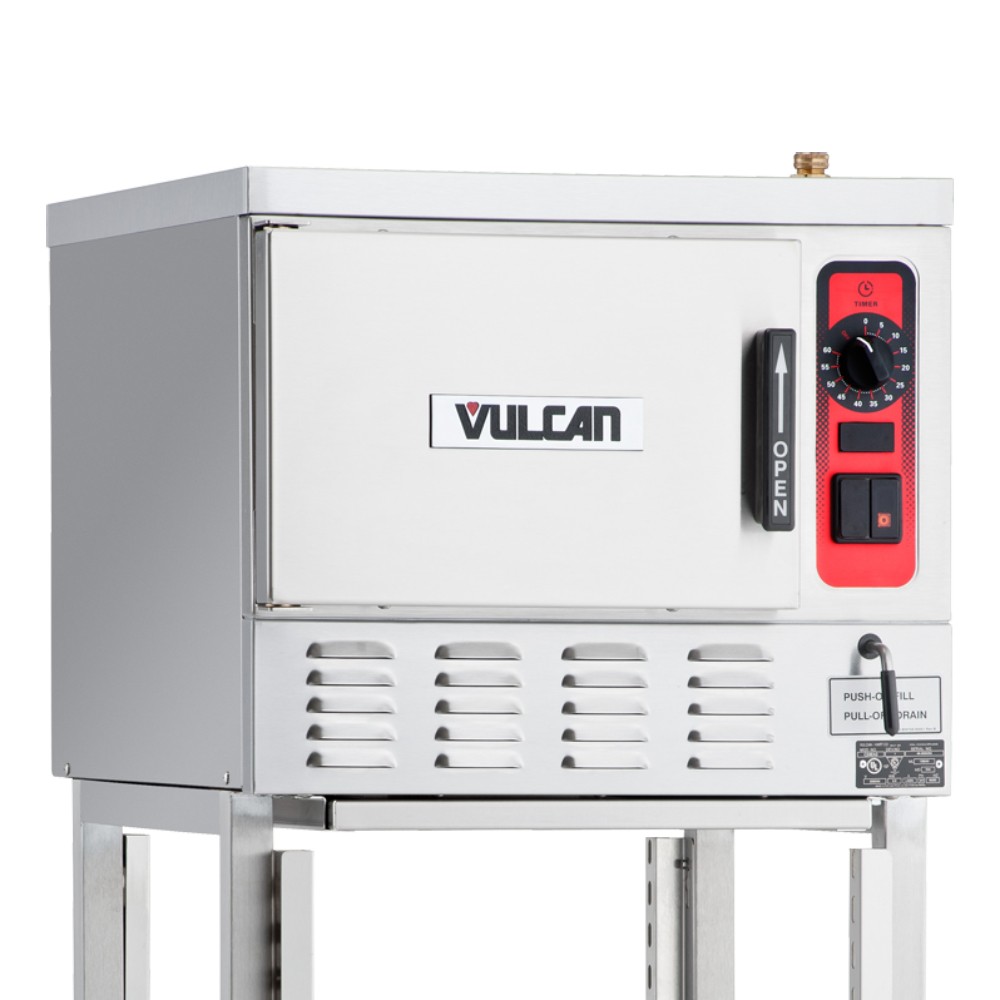
Convection steamers use a fan to circulate heat throughout the cavity. Since there is no extra pressure creating heat, cooking temperatures tend to be lower.
Pros:
- Does delicate foods well
- You can open them to check on food during the cooking process
- Don’t have to worry about taste-transfer issues
- Great for steaming, poaching, thawing, stewing, reheating, and par-cooking
Cons:
- Cooking times are longer than with pressure steamers (but still shorter than with convection ovens)
Pressure Steamer
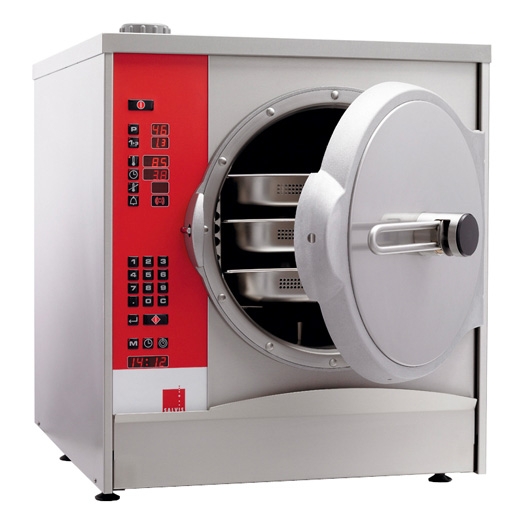
Pressure steamers cook using a combination of high heat and steam. Their tight seal raises the temperature in the cavity to between 230 and 240 degrees Fahrenheit (110 to 116 Celcius).
Pros:
- Takes less time to cook
- Works well for large batches of food
- Great for dense food items
Cons:
- Must stay closed during the steaming process
- May have taste-transfer issues
- Not ideal for delicate items
More Steamer Information
Steamers aren’t just for vegetables—they are great for seafood and tougher food items as well. They cook quickly and preserve nutrients and moisture, making it a valuable piece of equipment for many commercial kitchens.
One thing that must be paid attention to is the water quality of the incoming steam, as the water affects the flavor of the food. This, as well as wanting to avoid costly maintenance caused by limescale buildup, means that investing in a decent water filter is essential.