
Topic · Kitchen Equipment Basics
Hand Tools
Hand Tools include several small tools other than knives that can make a world of difference in any kitchen and are essential in daily tasks. They include:
Straight or swivel-bladed peeler
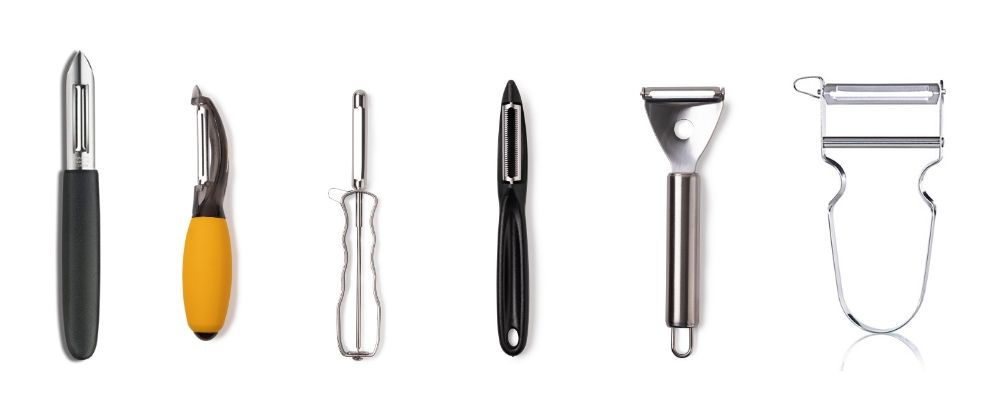
Straight peeler has the blade parallel to the handle, resembling a knife. The blade may be fixed or pivoting. For a fixed blade peeler, you have to adjust the angle of the blade that touches the skin. Swivel-bladed peeler is used to peel the skin from various vegetables and fruits. The swivel action accommodates the contour of multiple products. Because the blade is sharpened on both sides, it will peel upward and downward motion.
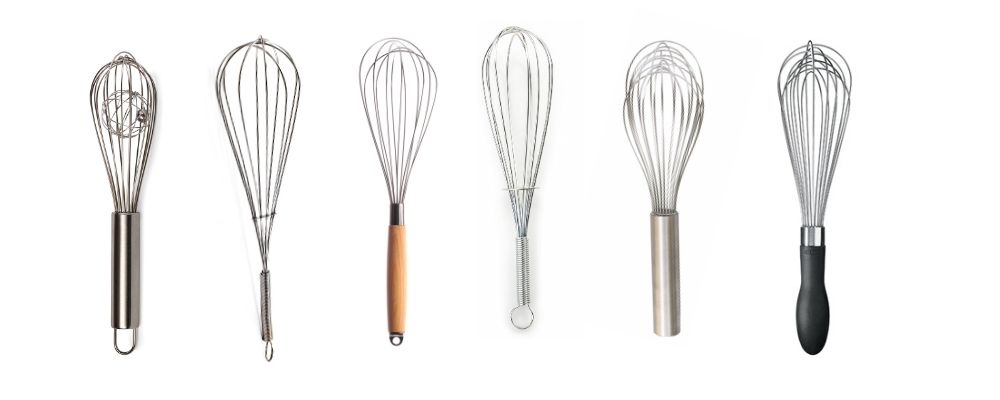
Whisks
Whisks are used to beat, blend, or whip foods. Balloon whips are sphere-shaped and have thin wires to incorporate air for making foams. Sauce whips are narrower and frequently have thicker wires. Great for whisking in bowls or sauciers; keeping custards in motion; combining dry ingredients; smoothing batters. French whisks are longer and thinner. They are suitable for making a bechamel sauce, aerating eggs or cream, reaching into tight corners, working in small pots, and emulsifying sauces.
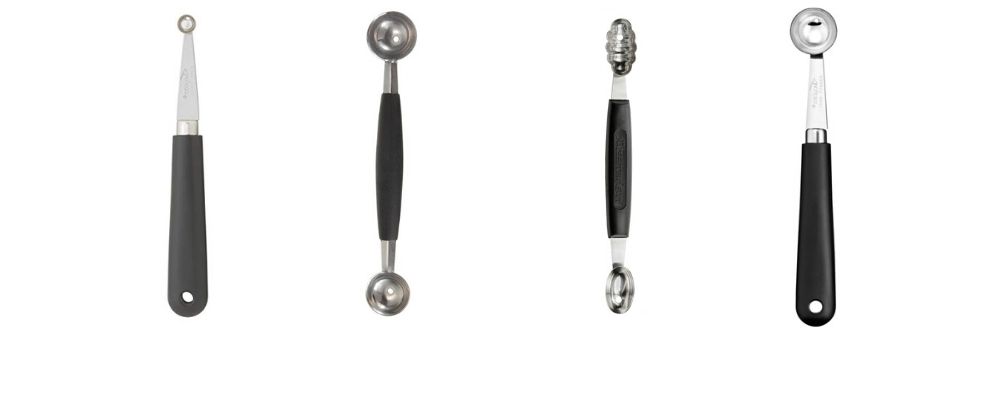
Parisienne scoop and melon baller:
Parisienne scoop and melon baller are specifically designed for scooping out balls or ovals from vegetables and fruits. Noisette, Parisienne scoop, and melon baller are the same tools but different sizes.
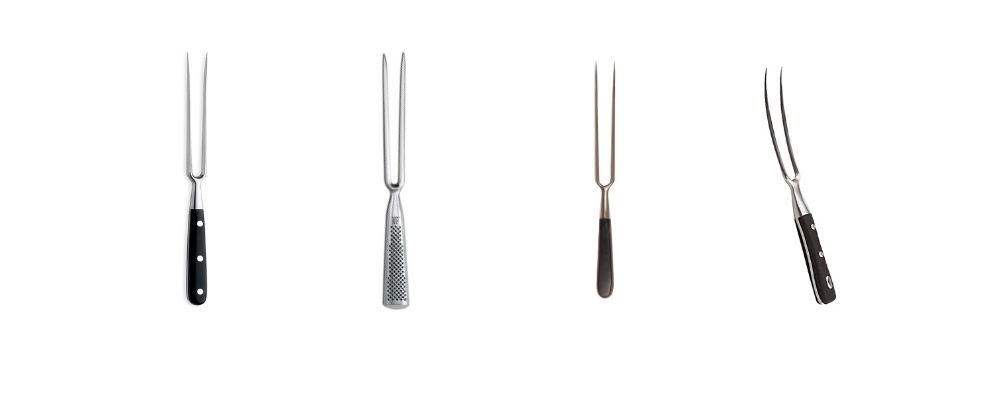
Kitchen fork:
Kitchen fork has two long stiff tines are used to test the doneness of braised meats and vegetables. It should be strong enough to lift and carry finished roast from the roasting pan to the carving board or plate, and to hold the item being carved in place.
Palette knife (metal spatula)
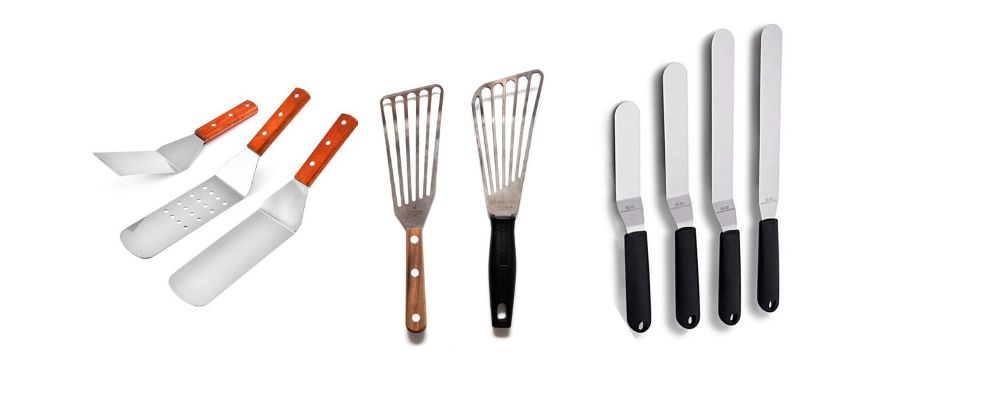
Palette knife has a flexible round-tipped tool used in the kitchen and bakeshop for turning pancakes, flipping fish in the pan or while grilling food, spreading fillings and glazes and a variety of other functions.
Offset spatula:
An offset spatula is used to turn or lift on grills, broilers, and griddles. It has a wide chisel-edged blade set in a short handle.
Long, narrow tools that have a thin, flat metal blade or paddle at one end. The edge is blunt, not sharp, and is used for spreading frosting onto a cake or pushing batter into an even layer in a cake pan.
Rolling pins
Rolling pins are made from hard, tight-grained woods, which prevent fats and flavoring used in rolled dough from penetrating the pin. The two basic types of rolling pins are French-style and the rod-and-bearing pin.
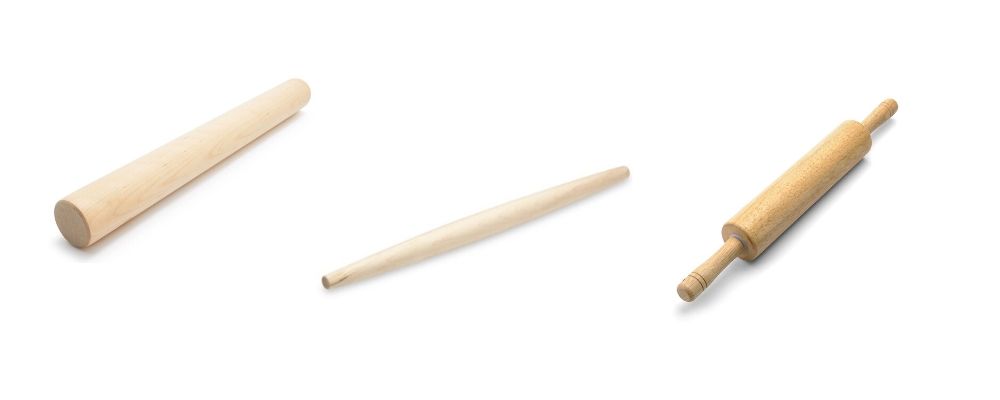
Rolling pins should never be washed with water. Doing this could ruin the integrity of the pin by warping or distorting the grain of the wood. Always use a dry cloth to wipe clean the pin right after use. Damage to the surface of the pin will relay or “print” imperfection to the dough been rolled. The French pin is a long cylinder of wood used to roll over the dough with the palm of the hands. The second type is heavier and wider. It has a lengthwise shaft at the center of the wooden cylinder through which runs a metal rod with two wooden handles at either end.
