Topic · Kitchen Equipment Basics
Multi-Purpose Knives
The following descriptions and images of different varieties of knives are general examples only. Although the basics of each knife style are the same, manufacturers have many variations of how each type of knife should look and which are suited for each purpose.
Chef Knife
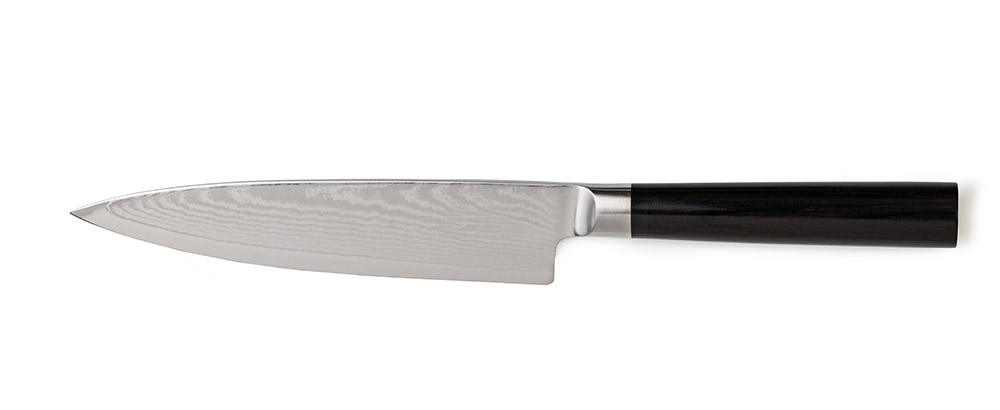
Also called a cook’s knife, this all-purpose kitchen knife is used for most types of chopping, dicing, mincing and slicing.
Chef’s knives come in various lengths of 6, 8, 10 and 12-inches. The length of the knife you purchase is significant. The longer the knife, the heavier and more difficult it will be to handle. Small-handed cooks should choose a shorter blade while large-handed cooks will prefer longer blades.
Carving Knife
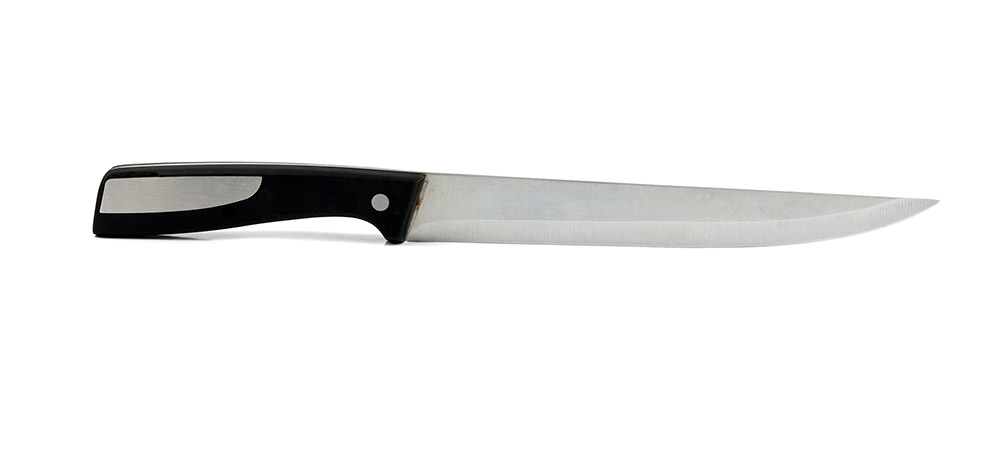
A knife with an eight to 15-inch inch blade is used for carving large roasts poultry and filleting large fish. The blade edge of a carving knife is either smooth or beveled. The blade should be large enough to carve across the cut of meat, poultry or fish in one sweep. The blades vary in flexibility. A carving knife with a rigid blade is used for slicing roasted meats, more flexible blades are for poultry, and the most flexible blades are for slicing smoked pork and fish. Carving knives are often sold in sets with a carving fork. A carving fork is designed to hold the meat steady while slicing and keep the hand safe while cutting. These forks typically have two long, curved prongs. Some manufacturers refer to carving knives over nine inches as slicers.
Paring Knife

This type is a small knife with a sharp blade that is generally three to four inches long. It is easy to handle and works well for peeling and coring foods. The blade is typically thin and narrow and tapers to a point at the tip.
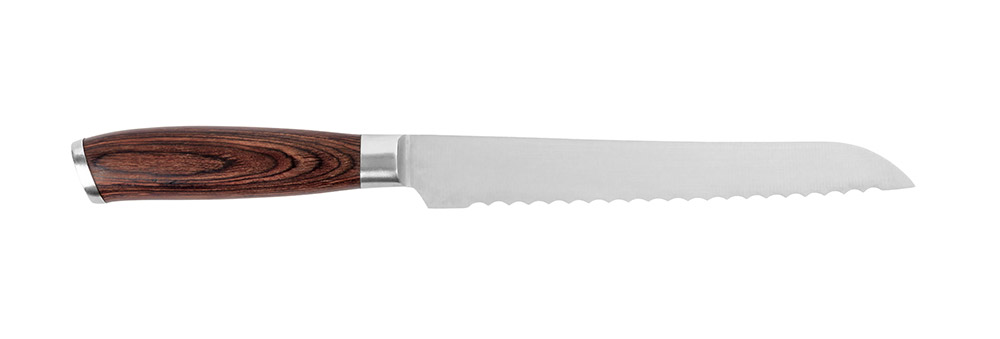
Serrated Knife
A serrated knife has a sharp edge and saw-like notches or teeth. The blade of a serrated knife is 5 to 10 inches long. Serrated knives are difficult to sharpen; therefore, many chefs spend less on serrated knives and buy new ones more often.
A serrated knife with a long blade is used to slice through food that is hard on the outside and soft on the inside, such as slicing through the hard crusts of bread. A serrated knife with a short thin blade is intended for slicing fruits and vegetables.
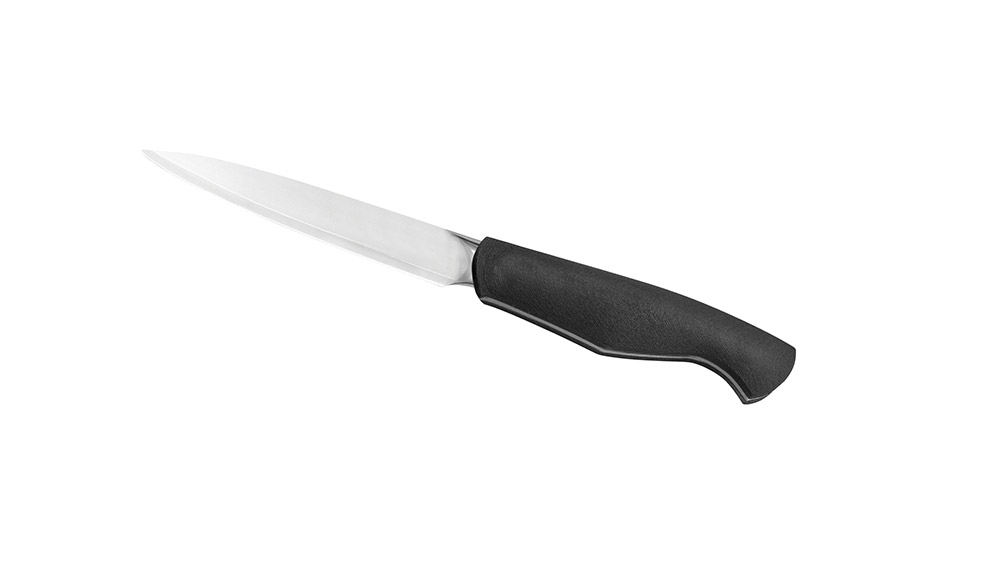
Utility Knife
A small lightweight knife, which has a blade that is generally four to seven inches long, is used for miscellaneous light cutting such as fruits and vegetables.
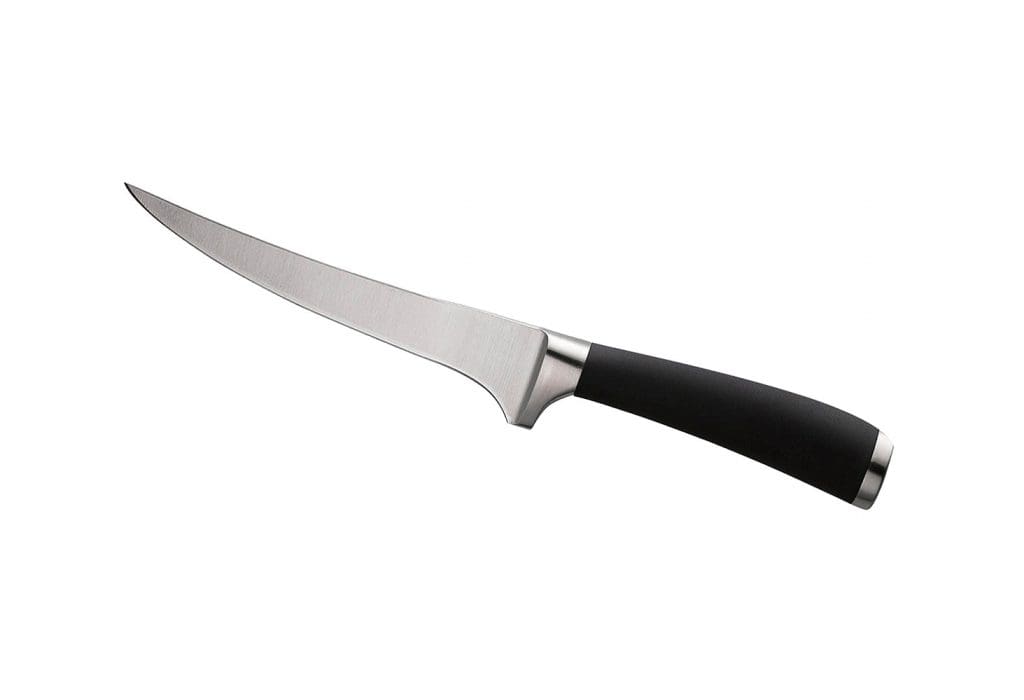
Boning Knife
A knife with a thin short blade, typically five or six inches long, is used to remove the main bone within a cut of meat, such as a ham or a beef roast. A boning knife will typically have a long narrow blade for ease of manipulation around the bones. The blade is rigid and proportioned to the size of the bones being removed. Bigger cuts of meat require a larger, more rigid blade that will not be too flexible and cause injury if it bends too easily, while smaller meat cuts can be trimmed and boned using a smaller, less rigid blade.
Fillet Knife
A knife consisting of a thin flexible blade, typically six to eleven inches long is used for filleting fish. The narrow blade enables the knife to cleanly move along the backbones of the fish, in and around areas adjacent to bones and to evenly slice along the skin, removing it easily from the flesh.

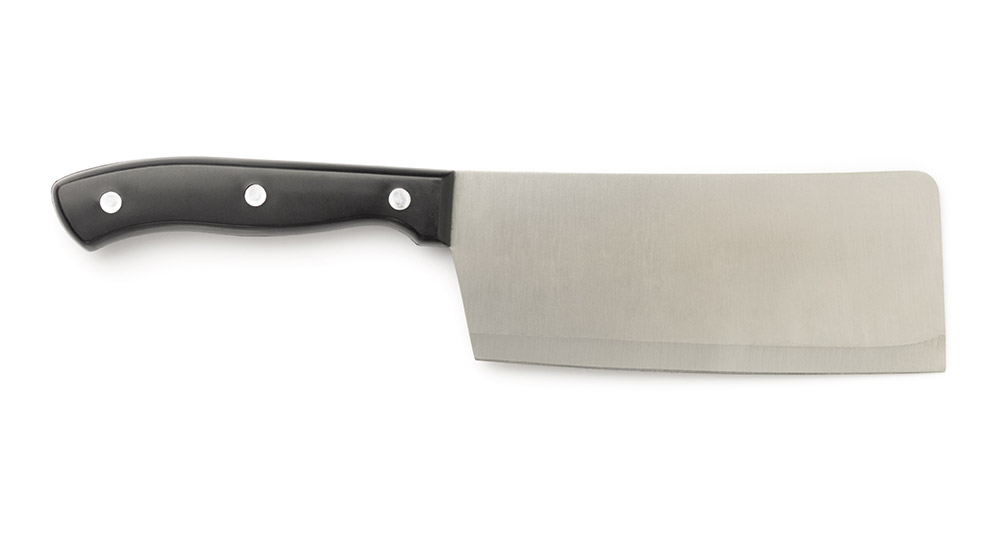
Cleaver Knife
A cleaver is a knife with a wide rigid blade approximately six inches in length, which tapers to a sharp cutting edge. This tool is used to chop, shred, pound, or crush food ingredients and materials. The blade of the cleaver is thick, somewhat heavy and well-balanced with a beveled cutting edge which allows for ease of chopping through vegetables or materials as hard as bones. The flat blunt side of the blade can be used to pulverize meat. If the handle is flat on the end, it may be used to crush seeds, garlic, or other similar ingredients. A hole is typically provided on the top end of the blade to allow for ease of hanging this tool.
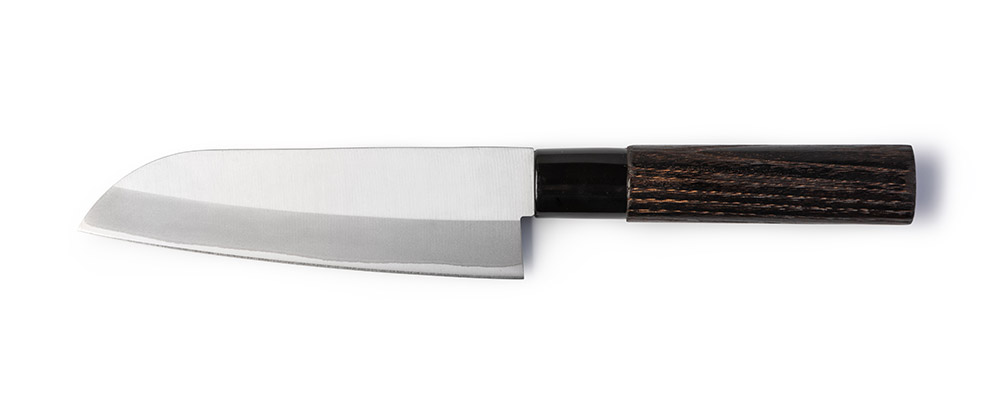
Santoku Knife
A type of knife commonly used to prepare ingredients for Asian food dishes, a Santoku knife is very similar to a chef’s knife. The main difference is that the Santoku knife has a wider blade that is thinner in thickness, shorter in length and curves up very gradually at the end providing a straighter cutting edge.
Constructed of stainless steel, this knife will typically be expensive to purchase, since it is precision made to be well-balanced and well-formed for ease of handling and greater control. With a thinner blade than a chef’s knife, the Santoku can cut smoothly and more precisely through dense vegetables, which may have a tendency to provide more resistance when using thicker width blades. Versions of this knife are manufactured with either a standard-edged blade or a hollow, ground edge, also known as a Granton edge. The purpose of the Granton-style blade is to assist with keeping particles from sticking to the knife-edge as it chops small bits of food and is a friction reducer to provide less drag when chopping, which enables easier and faster motion. Santoku knives are used for chopping, dicing and slicing foods into narrow or fine pieces.
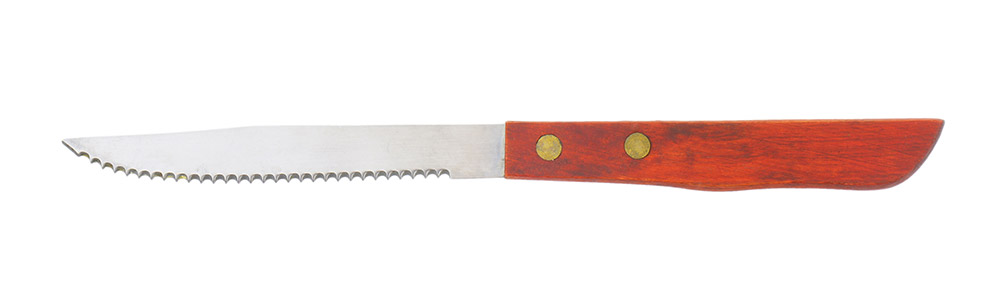
Steak Knife
A knife used for cutting main courses such as steak and chicken. The knife usually has a blade that is four to six inches long and varies in thickness. Depending on the manufacturer, the blade may or may not be serrated.