
Lesson · Food Handler Certificate
Workplace Sanitation & Facility Care
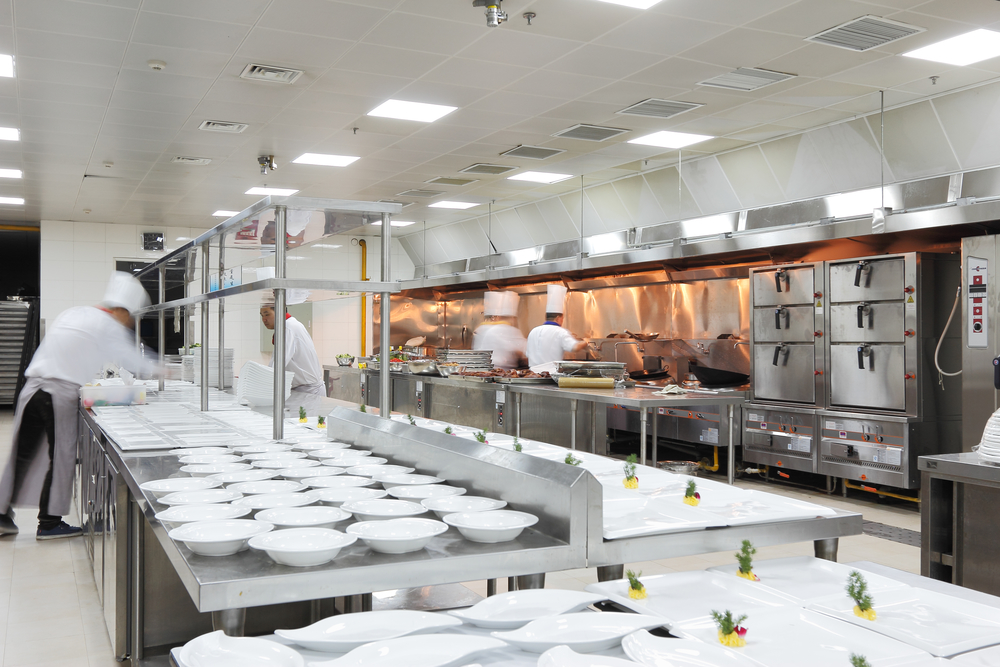
Foodservice employees, kitchen managers, and food business owners rarely have the luxury of designing an establishment from the ground up.
However, having a strong knowledge of food premises requirements and facility care standards is essential to maintaining safe and compliant operations.
A well-designed and well-maintained kitchen allows food to move safely from delivery to service — preventing cross-contamination, pest entry, and operational hazards.
1. The Concept of Food Flow — “La Marche en Avant”
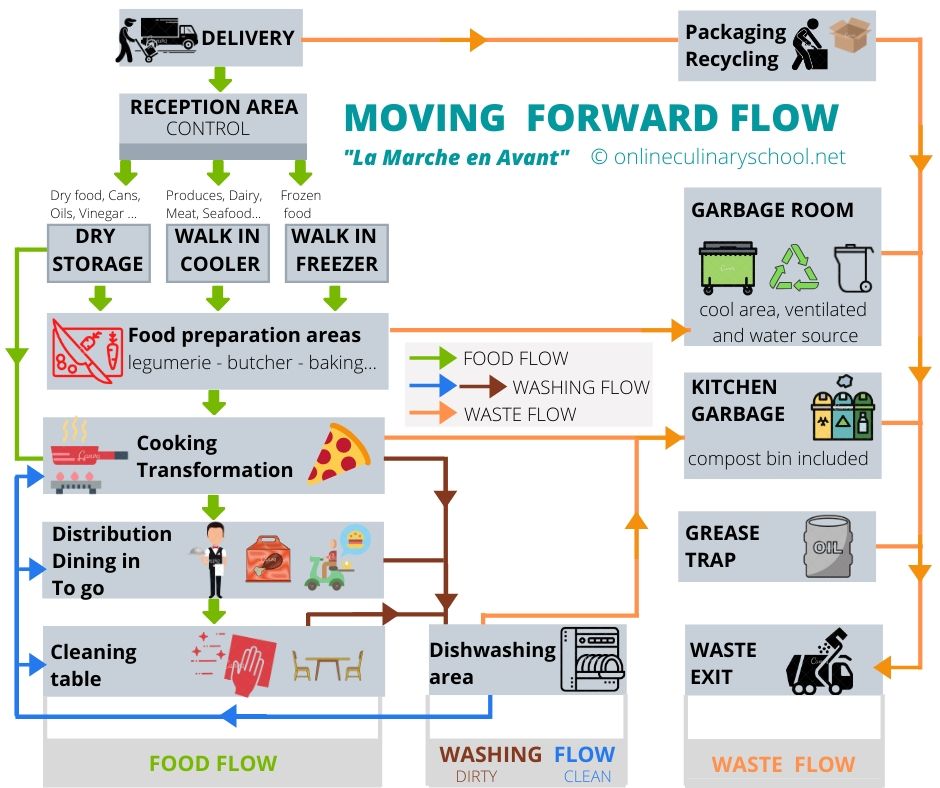
In food safety, the flow of food through the kitchen is known in French as “la marche en avant”, or moving forward.
The idea is simple but crucial: food should always move forward in a clean, logical direction — from receiving → storage → preparation → cooking → service → cleaning — without ever going backward into less hygienic areas.
For example:
- Cooked food should never pass back into raw preparation zones.
- Dirty dishes should never cross paths with clean ones.
- Waste and deliveries should have separate routes whenever possible.
This concept helps build a culture of food safety, ensuring that your workspace layout supports safe practices every day.
2. Nine Essential Premises Requirements
To meet food safety regulations and ensure efficient daily operations, every food establishment must meet nine core facility standards:
| # | Requirement | Description / Standards |
|---|---|---|
| 1. Potable Water Supply | The water supply must be potable and safe for human consumption — used for drinking, cooking, cleaning, and ice production. | |
| 2. Adequate Hot Water Supply | Hot water must be available in sufficient quantity for dishwashing, handwashing, and cleaning — even at peak hours. | |
| 3. Cold Storage Capacity | Coolers and freezers must maintain safe temperatures: • Coolers: ≤ 4 °C / 40 °F • Freezers: ≤ –18 °C / 0 °F Shelving must be 15 cm / 6 inches off the floor with space for air circulation. | |
| 4. Adequate Lighting | Work areas should be bright enough to detect dirt, spills, and pests. All lights in food prep zones must have shatterproof covers. | |
| 5. Grease Traps | Fat, oil, and grease must be collected and disposed of properly. Blocked traps can cause sewage backup, flooding, and contamination. | |
| 6. Proper Ventilation | Ventilation systems remove heat, smoke, grease, and steam, maintaining air quality and reducing condensation. Hood filters should be cleaned weekly. | |
| 7. Waste Disposal | Garbage and recycling must be removed frequently, stored in covered containers, and kept separate from food prep areas. Exterior bins must be pest-proof. | |
| 8. Handwashing Sinks | Handwashing stations must be conveniently located, equipped with hot water, liquid soap, and paper towels. These sinks are for hands only. | |
| 9. Dishwashing Facilities | The dishwashing setup must handle the busiest period of service. Ensure separation between dirty and clean areas, and verify sanitizer concentration regularly. |
💡 Tip: Many of these requirements are verified during routine health inspections. Keeping your facility inspection-ready at all times prevents costly citations and shutdowns.
3. Facility Design & Maintenance Standards
Once the physical layout is in place, ongoing maintenance and cleanliness are vital:
- Surfaces (floors, walls, ceilings) must be smooth, durable, and easy to clean.
- Seal edges and corners to prevent pest harborage.
- Ensure adequate drainage in dishwashing and food prep areas.
- Replace damaged tiles, worn paint, or cracked caulking promptly.
- Ventilation hoods and filters must be inspected and cleaned regularly.
- Maintain calibration logs for all temperature and pressure equipment.
A well-kept facility supports all your Food Safety Plan (HACCP) and Sanitation Plan (PRP) programs.
4. Facility Inspection & Preventive Maintenance
Regular self-inspections help detect problems early before they become serious risks.
| Area | Inspect For | Frequency |
|---|---|---|
| Floors & Drains | Clean, dry, non-slip, no pooling water | Daily |
| Walls & Ceilings | No mold, flaking paint, or condensation | Weekly |
| Ventilation & Lighting | Clean filters, protected bulbs | Weekly |
| Refrigeration Units | Seals intact, temp ≤ 4 °C / 40 °F | Daily |
| Freezers | Frost-free, temp ≤ –18 °C / 0 °F | Daily |
| Handwashing Stations | Soap, towels, hot water available | Daily |
| Dishwashing Areas | Sanitizer concentration verified | Each shift |
| Waste Disposal Area | Pest-free, bins covered | Daily |
5. Activity – Facility Walkthrough
Perform a short Facility Walkthrough of your workplace or a sample layout.
Instructions:
- Download the Facility Maintenance Checklist from the Materials tab.
- Inspect your kitchen, storage, and dishwashing zones.
- Record any issues — leaks, damage, poor lighting, clutter, or unsafe storage.
- Assign responsibility for each correction (e.g., manager, maintenance, cleaner).
- Submit your findings to your supervisor or upload your completed form.
If you’re working independently, choose a sample food operation (café, childcare kitchen, or catering facility) to simulate the inspection process.
6. Verification & Documentation
Keep the following documents organized in your Premises & Maintenance section of the Food Safety Binder:
- Facility Maintenance Checklist
- Preventive Maintenance Log
- Thermometer & Equipment Calibration Log
- Corrective Action Reports
- Pest Control Records
Review these records monthly or after each inspection.
Materials Tab Text
Facility Maintenance & Inspection Tools
Download and use these forms to inspect, verify, and maintain your facility:
- Facility Maintenance Checklist – Verify cleanliness and upkeep of all areas.
- Preventive Maintenance Log – Record regular inspections, repairs, and calibrations.
Keep both in your Premises & Maintenance section of your Food Safety Binder. Review monthly or after inspections.
Lesson Summary
You’ve learned how to:
- Understand how food should flow safely through your kitchen (“la marche en avant”).
- Identify nine essential requirements for a compliant food facility.
- Conduct inspections and maintenance to keep your premises clean and efficient.
- Record and verify all activities to stay inspection-ready.
Maintaining your physical environment ensures that your Food Safety Plan and Sanitation Plan can function properly — every day, in every shift.