
Topic · Food Handler Certificate
Fresh Meats, Poultry, and Seafood
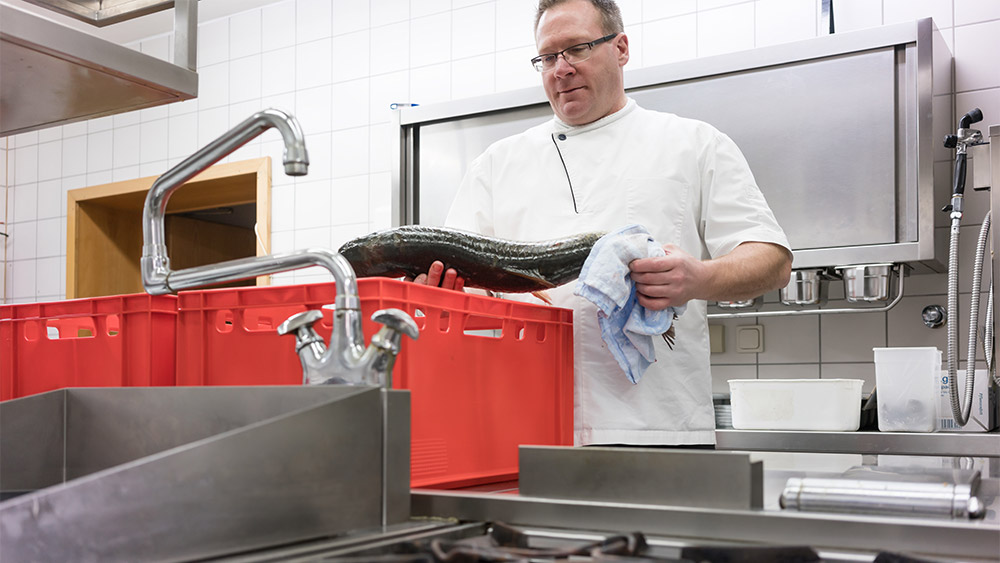
Fresh meat is shipped in pieces and by weight. Count and weigh the new items. Check for leaking vacuum-packed (Cryovac) packages, and check the grade of the meat against the grade on the invoice. Also, if specifications were given on the order form, confirm the cuts of meat do meet those specifications.
Fresh poultry and seafood should also be counted, weighed, and checked for quality. These items are the most difficult to store and the most expensive food items sold by the restaurant. When storing meats, poultry, and seafood items, remember the critical control point.
Keep these factors in mind when storing fresh meats, poultry, and produce:
- All carcass meats should be unwrapped and hung so that air can circulate around them. They should be stored at 1°C to 3°C (34°C to 37°F) in a walk-in refrigerator. Place the absorbent paper under the meats for quick cleanup of any unwanted drips.
- Fresh meat must not be kept too long. Boned meat should be kept no longer than three days. Individual cuts should be use within two days, preferably on the day they are cut.
- Individual meat cuts such as steaks, chops, stewing meat, and ground meat should be kept covered on plastic or stainless steel trays at 2°C to 4°C (36°F to 39°F).
- Fresh poultry should be packed in ice and stored in the refrigerator.
- Fresh seafood should be packed in ice, stored at −1°C to 2°C (30°C to 34°F) and used as soon as possible.
- Store raw products on the lower shelves of the refrigerator, below cooked or ready to eat food.
Do not overstock to avoid spoilage, as it could affect your food cost and bottom line negatively.