
Topic · Food Handler Certificate
Dry Foods
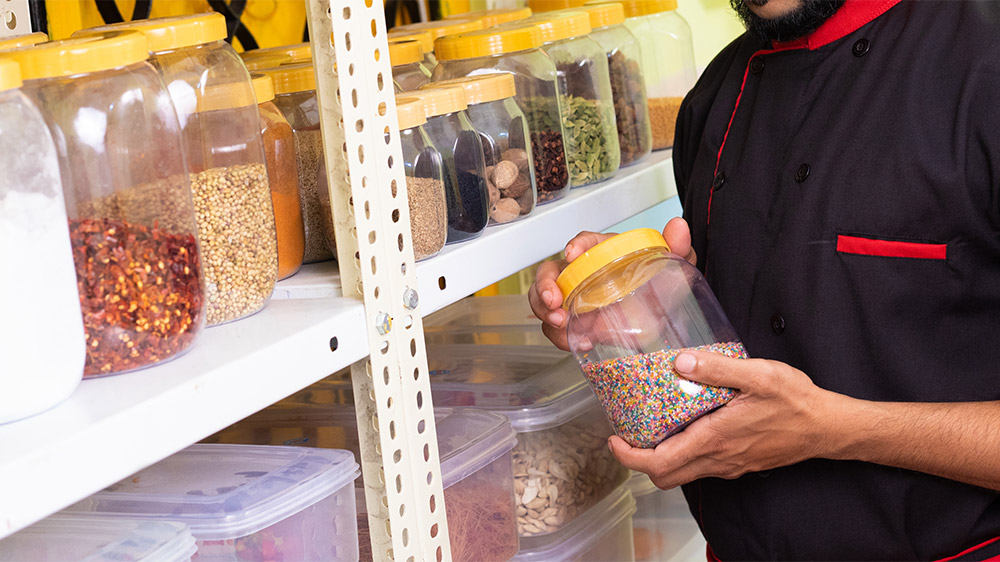
The storeroom for dry foods should be located near the receiving area and close to the main kitchen. Unfortunately, the storeroom for dry foods is often an afterthought in foodservice facility designs, and the area designated for storage is sometimes in an inconvenient location.
No matter where the location, there are several essential points to be observed in the care and control of the dry storeroom.
- The area should be dry and cool to prevent spoilage and the swelling of canned goods. The ideal temperature range is 10°C to 15°C (50°F to 59°F).
- The storeroom should be easy to keep clean and free from rodents and vermin. This means all wall, ceiling, and floor openings should be sealed and protected to prevent access.
- It should be designed so it is easy to arrange and rearrange supplies to facilitate stock rotation. The best arrangement is to have shelves situated in the middle of the room so they can be stocked from both sides. This allows you to rotate stock by simply pushing out old stock by sliding new stock in from the other side of the shelf. This guarantees (FIFO) concept in stock rotation.
- The area should be well lit.
- Shelving must be at least 15 cm (6 in.) above the floor. Do not store items right on the floor.
- Aisles should be wide enough to allow room for carts or dollies, which should be used to prevent possible injuries from lifting.
- Food and supply storage areas should be kept under lock and key to prevent pilferage.
- Food storage control is an essential step in the overall supervision of food costs. All storerooms should be considered to be like bank safes where the assets of the operation are being stored. This may mean that more valuable commodities such as liquor and wine should be stored and locked inside a larger storage area, such as the dry food storage area.