
Topic · Food Handler Certificate
Frozen Foods
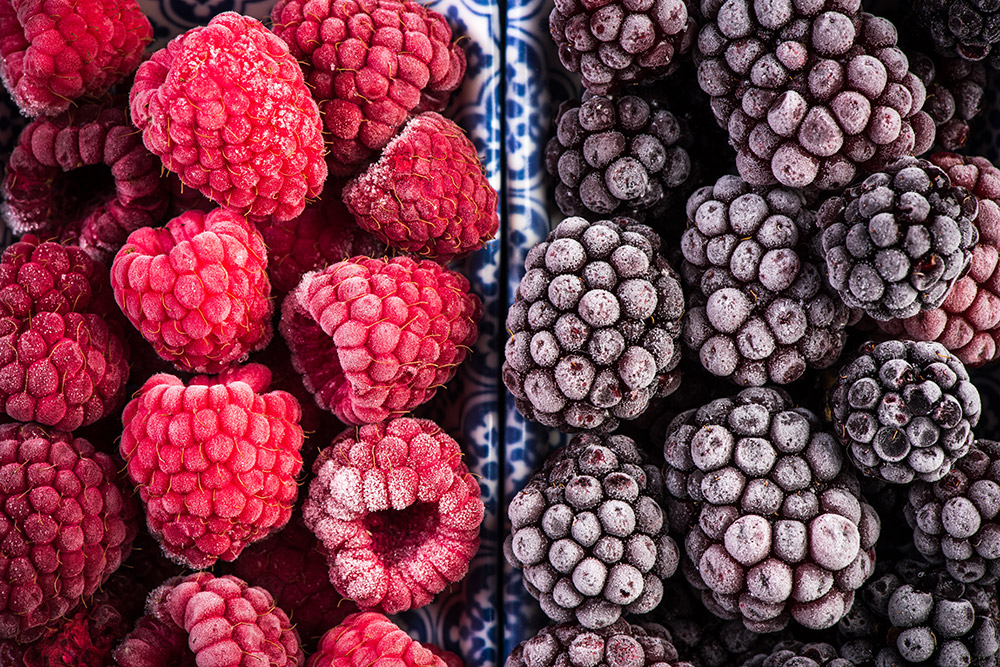
Frozen products are often delivered in cases and cartons. Open the cases to count the items and to check for signs of freezer burn, torn wrappings, partial thawing, or other problems. Frozen foods should be stored at –18°C (0°F) or lower. If the temperature rises above –18°C, food can become discolored and lose vitamin content. Lowering the temperature after it has raised does not correct the damage.
Keep these factors in mind when storing frozen foods:
- Fruit and vegetables that are received frozen will keep for months if they are properly wrapped. Fish and meat properly wrapped also have a relatively long freezer shelf life.
- Freezing fresh fruits and vegetables on the premises is time-consuming and may be too expensive to consider. Fresh fruit must be adequately prepared for freezing, or it will not store well.
- All freezer products not properly wrapped will develop freezer burn, which is a loss of moisture that affects both the texture and the flavor of the food. A common sign of freezer burn is a white or grey dry spot developing on the surface of the frozen product. Meat is particularly susceptible to freezer burn.
- Rotating stock is extremely important with frozen foods. Such rotation is difficult in standard chest freezers as it often means that old stock must be removed before new inventory is added. The temptation with frozen foods is to develop the unacceptable habit of using the last item bought first, instead of FIFO (first in, first out).
Do not overstock your freezer to avoid freezer burns that will alter your products. Maintain up to a week of food supply, and rotate (FIFO). This will shorten time spend on inventory and benefit your cash flow.