Topic · Cook-Along: Salads & Side Dishes
Salad Dressings: Vinaigrettes, Creamy and Mayonnaise-Based
A dressing is the sauce of the salad. Nearly every dressing belongs to one of four families. Once you know them, you can create your own.
1. Vinaigrettes
Oil and an acid (vinegar or citrus juice), seasoned and usually emulsified with a little mustard. The classic ratio is 3 parts oil to 1 part acid; use a little less oil with a sweet, soft balsamic, and a little more with a sharp vinegar. A vinaigrette is a temporary emulsion: it separates on standing, so whisk or shake it again before serving.
The basic vinaigrette
This is the foundation of French salad dressings. For about 4 servings of green salad:
- 1 tablespoon red wine vinegar
- ⅛ teaspoon fine sea salt
- A pinch of freshly ground pepper
- ½ teaspoon Dijon mustard (optional, helps the emulsion)
- 3 tablespoons oil (olive, neutral, or a mix)
- In a bowl, whisk the vinegar and salt until the salt dissolves. Salt does not dissolve in oil, so always add it to the vinegar first.
- Whisk in the pepper and mustard.
- Add the oil in a thin stream, whisking, until the dressing thickens slightly.
- Taste it on a leaf, not from the spoon, and adjust the salt, acid or oil.
Once you know the base, vary it: change the vinegar (sherry, cider, balsamic, lemon juice), the oil (walnut, hazelnut), add a minced shallot, garlic, fresh herbs, honey or a spoonful of cream. In France, many families make a jar once a week and keep it in the fridge; shake it before each use. Learn more about the ingredients in Vinegar, Oils and Olive Oil.
2. Mayonnaise-based dressings
Mayonnaise is a stable emulsion of egg yolk and oil. Thinned and flavoured, it becomes the base of many creamy dressings and binds salads such as potato, egg or chicken salad.
- Caesar Dressing
- Thousand Island Dressing
- Rémoulade, as in Celery Rémoulade
3. Dairy-based dressings
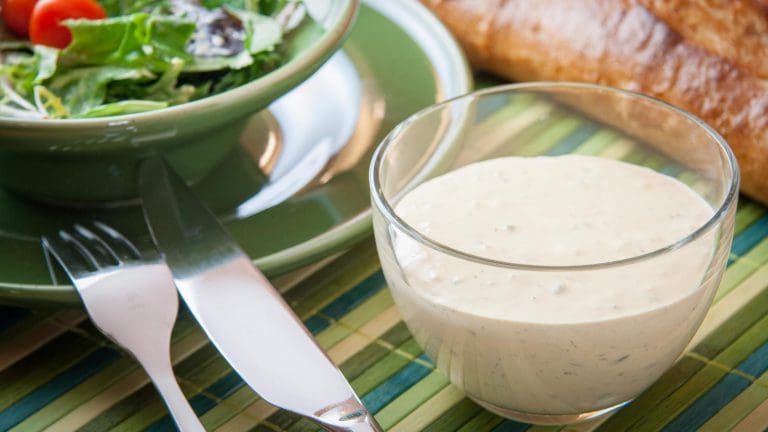
Buttermilk, sour cream, yogurt or crème fraîche, often combined with a little mayonnaise, herbs and cheese. They cling well to sturdy leaves such as romaine and iceberg.
- Ranch Dressing
- Blue Cheese Dressing
- Yogurt and herbs, as in Cucumber Yogurt Salad
4. Purées and nut-based dressings
Puréed herbs, roasted peppers, tahini, nut butters or miso, loosened with citrus, vinegar or oil. They bring body without eggs or dairy, which makes them useful for vegan guests.
Matching dressing to salad
- Tender leaves (mâche, butter lettuce, mesclun): a light vinaigrette, added at the last moment.
- Sturdy leaves (romaine, iceberg, kale, cabbage): creamy dressings or stronger vinaigrettes.
- Bitter leaves (endive, radicchio, escarole): a touch of sweetness or a rich element such as blue cheese, walnuts or a warm bacon vinaigrette.
- Grains, potatoes and legumes: vinaigrette added while still warm.
Storage and safety
- Plain vinaigrettes keep for about a week in the fridge. Once you add fresh garlic, shallot or herbs, use them within 3 to 4 days.
- Mayonnaise and dairy dressings must stay refrigerated. Made with commercial mayonnaise, they keep for several days; made with homemade (raw egg) mayonnaise, use them the same day.
- Olive oil firms up in the fridge. Let the dressing stand for 10 minutes at room temperature, then shake.
Key terms in the glossary: Vinaigrette, Mayonnaise, Emulsion, Rémoulade, Salad Dressing.
Chef Eric’s tip: taste a dressing on a leaf of the salad you’re making, never straight from the spoon. A dressing that tastes too strong on its own is often just right on the greens.