
Topic · Cook-Along: Salads & Side Dishes
Crudités: Cuts, Blanching and Serving
Crudités is French for “raw things”. The word comes from the Latin crudus, raw, the same root as the English “crude”. In France, crudités means two things: a starter plate of small raw vegetable salads, and the colourful platter of cut vegetables served with dips at a party or buffet. Both are simple, healthy, inexpensive and beautiful when done with care.
The French crudités plate
In homes, school canteens and bistros all over France, a meal often starts with an assiette de crudités: three to five small mounds of different raw vegetable salads, each with its own dressing, served with bread. The classics are:
- Carottes râpées: finely grated carrots with lemon juice or vinaigrette and parsley; see Grated Carrot Salad.
- Céleri rémoulade: fine julienne of celery root in a mustard mayonnaise; see Celery Rémoulade.
- Tomates en salade: sliced tomatoes, vinaigrette, shallots and herbs; see French Tomato Salad.
- Concombre à la crème: thin cucumber slices in cream or yogurt with dill or chives; see Cucumber Yogurt Salad.
- Betteraves: diced cooked beets in vinaigrette; see How to Cook Beets.
- Chou rouge: finely shredded red cabbage with a cider vinaigrette; see Cabbage Salad Duo.
- Radis au beurre: radishes with butter and salt (below).
Each salad is dressed separately so the colours stay bright. Most of them can be prepared a few hours ahead, which makes them perfect for entertaining.
The crudités platter
For a party or buffet, crudités are vegetables cut into bite-size pieces, arranged by colour on a platter and served with one or two dips. They are an appetizer or a light snack, not a meal: they should whet the appetite, not fill guests up before dinner. Allow about 100 g (3 to 4 oz) of vegetables per person.
Choose a colourful variety: carrots, celery, cucumber, bell peppers of several colours, radishes, cherry tomatoes, cauliflower, broccoli, asparagus, snap peas, green beans, fennel and endive leaves. Add cheese, crackers, olives, cubed bread or fruit if you like. Keep the pieces small so they can be eaten in one or two bites, and make sure each piece is sturdy enough to scoop a dip.
Typical cuts for crudités
- Carrots: peel, trim both ends, cut into 7.5 cm (3 in) lengths, then into sticks about 1 cm (½ in) wide.
- Celery: trim and remove tough strings with a peeler, then cut like carrots.
- Bell peppers: halve lengthwise, pull out the stem and seeds, trim the white ribs, cut off the curved top and bottom to make a flat rectangle, then cut into 1 cm (½ in) strips.
- Cucumbers: peel in stripes with a vegetable peeler for a decorative look, then cut into sticks or slice on the diagonal 6 mm (¼ in) thick.
- Broccoli and cauliflower: cut the head into florets about 4–5 cm (1¾ in) long; peel tough stems with a paring knife. Keep the broccoli stalk for soup.
- Asparagus: snap off the woody end of one spear where it breaks naturally, then line up the others and trim them all to the same length, about 12 cm (5 in).
- Green or yellow beans: snap off the stem end and pull away any string; leave the pointed tail.
- Fennel: trim, halve, remove the core and cut into thin wedges.
- Radishes: leave whole with a little green, halve, or cut into quarters.
- Endive: separate the leaves; they make natural scoops for dips.
Blanching vegetables for crudités
Some vegetables taste better and look brighter when briefly cooked: asparagus, broccoli, cauliflower, green and yellow beans and snap peas.
- Bring a large pot of water to a rolling boil and salt it generously, about 2 tablespoons of coarse salt per 4 litres (1 gallon).
- Prepare a large bowl of iced water.
- Cook one type of vegetable at a time, just until crisp-tender: 1 to 2 minutes for beans, peas and asparagus, 2 to 3 minutes for broccoli and cauliflower.
- Lift the vegetables out with a skimmer or slotted spoon and plunge them immediately into the iced water. This is called shocking or refreshing: it stops the cooking and sets the bright green colour.
- As soon as they are cold, drain and pat them dry. Refrigerate until serving.
Dips for crudités
Serve one creamy dip and one lighter or more original one: Ranch Dressing, Blue Cheese Dressing, Roasted Red Pepper Dip, a garlicky aïoli, tapenade, hummus or a herby yogurt dip. Put the dip in a bowl in the centre of the platter, or serve small pitchers of dressing beside it.
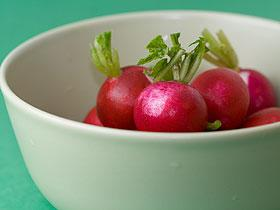
Radishes with butter and salt
The radish is the root of a plant of the mustard family, which explains its peppery bite. In France, fresh radishes are a favourite bar snack and hors d’œuvre, served with good bread, sweet butter and coarse sea salt. Dip the tip of the radish in butter or salt, eat it, then take a bite of buttered bread. Simple, but divine.
- Choose firm, bright radishes with fresh green leaves.
- Scrub them well, trim the root end and leave a little of the green tops as a handle.
- Keep them in iced water until serving so they stay crisp.
See the recipe Fresh Radishes with Butter and Salt and the lesson Fresh Radishes with Butter and Salt. Don’t throw the tops away: try Radish Top Pesto.
Other ways with raw radishes
- Slice them thinly and toss with greens for a peppery crunch.
- Grate them with carrot and scallion, and dress with sesame or olive oil, for a quick slaw.
- Mince them finely into a vinaigrette.
- Halve them for a crudités platter: the red and white look beautiful.
Key terms in the glossary: Crudités, Blanch, Blanch and Shock, Rémoulade.
Chef Eric’s tip: arrange crudités by colour, in bands or groups, never mixed at random. Keep the cut vegetables covered with a damp towel in the fridge until the last moment so they stay crisp and shiny.