
Topic · Sauce Making Fundamentals
Understanding Sauce Terms
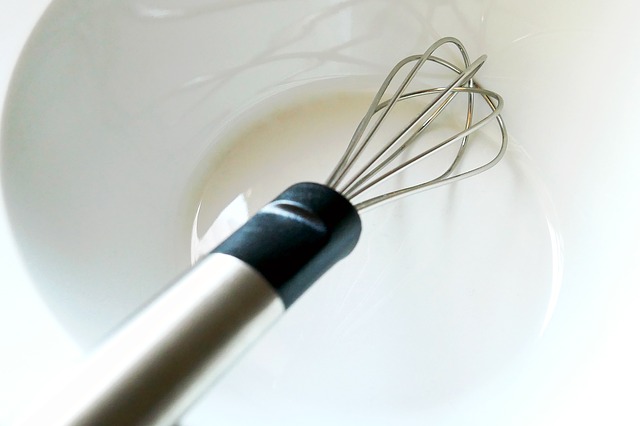
By whisking a sauce rapidly will not only give a smooth consistency, but it will also allow the sauce to be cooked on high heat, so that it is less likely to form lumps. Also, rapid whisking will prevent the sauce getting sticky and burned at the bottom of the saucepan.
When whisking a sauce, try to whisk in a figure eight motion, working around the sides of the pan and going across the middle. From time to time, pass the whisk in a circle around the base of the pan to make sure that no area has been missed.
It is important to mention that hot and cold emulsified sauces do not need to be reduced. Some need a deduction that is cooked separately and added later, like Béarnaise sauce. For butter sauce, the wine, stock or cooking juices that form the base are reduced to a glaze at the beginning of the sauce, before the butter emulsion.
Typical sauces that can be reduced are Béchamel, Velouté and brown sauces. The key when making a non-emulsified sauce is the reduction. When reducing a sauce, it should not be rushed, or the sauce might be cloudy. You may bring the sauce to a rolling boil on medium-high heat, to cross the danger zone rapidly (temperature range where bacteria multiply rapidly) but as soon as the sauce boils, you must turn the heat down to simmer the sauce. While the sauce simmers, it will reduce and concentrate the flavor. From time to time, you must skim off impurities or fat that might appear and float on the top. Leaving the pan without a lid will speed up the reduction process. Depending on the sauce and the amount of liquid, the reduction time could take from three minutes to more than an hour.
|
Types of sauces: |
Average cooking time: |
|
Béchamel sauce |
1 to 3 minutes |
|
Velouté sauces |
15 to 30 minutes |
|
Brown sauces |
Up to 1 hour or more |
A sauce is strained through a conical or round mesh sieve to remove any solid ingredient. Straining could also help to emulsify liquid ingredients. By contrast, when a sauce is puréed, it is usually not strained and the pureed ingredients thicken the sauce. When straining, the finer the mesh, the smoother and more glossy the sauce will be. To extract the maximum liquid and flavor, a ladle or a whisk might be used for pressing solid ingredients on the mesh.
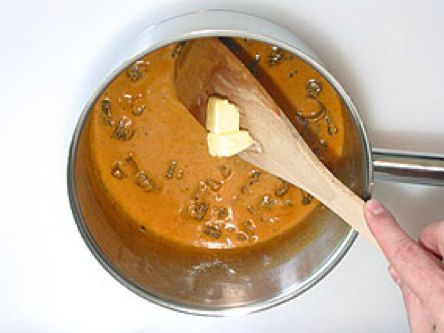
(monter= to go up, to rise; au beurre=with butter): Monter au Beurre or mounting a sauce with butter is the last step in sauce making. This culinary term describes the action to slowly whisk or stir in butter to a warm sauce to thicken it and add a butter flavor. Always remove the pan from the source heat and never boil a sauce again after that step is done.
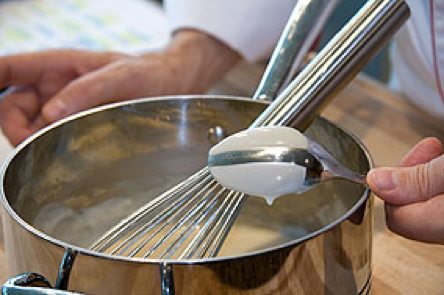
The right consistency for a sauce is very important. Today, Chefs have the tendency to make sauces thinner than it used to be. A sauce should be just thick enough to coat the back of a spoon. Cold and hot emulsified sauces like Mayonnaise and Hollandaise sauces should be pretty thick enough to hold to the ribbon stage.
Coating sauces that will be served over food in order to coat them should be slightly thicker than regular sauces, in order to stay on the food. To test the consistency of such sauces, dip a wooden spoon into the sauce and lift it out. The sauce should cling lightly, leaving a clear path when you draw your finger across it. When coating food with sauces, a small ladle or soup spoon can be used, tip it towards your body and work away from it.