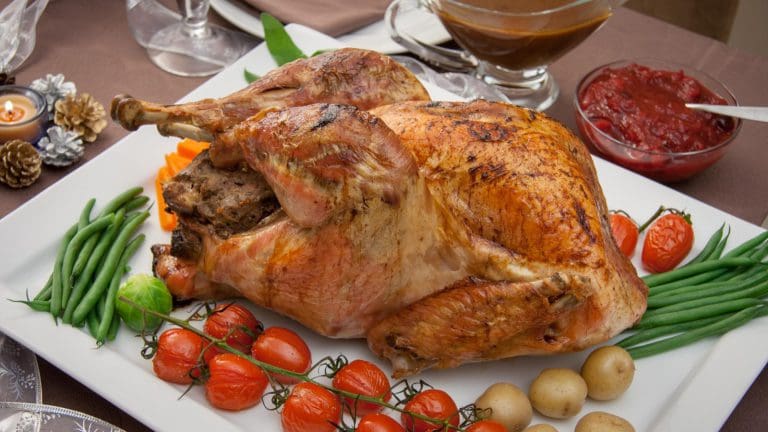
Topic · Sauce Making Fundamentals
Gravy
Gravy is made from meat juices which congeal and caramelize in the bottom of a roasting pan or heavy frying pan. For red meats, gravy should be dark brown and for lighter meats or poultry, a golden color. To add extra flavor to gravy made from roast, cook a quartered onion and carrot, together with any bones, in the pan with the meat. If juices start to burn on the bottom of the pan, add a little stock or water. If juices are not dark enough at the end of cooking, reduce them beyond a glaze until caramelized. This also adds color and flavor.
Gravy can be thick or thin, flavored or plain. Add stock, wine or water, or a mixture of wine and stock and boil, stirring to deglaze the juices. Reduce the gravy until concentrated, strain and season to taste.
For thickened gravy, leave one or two tablespoons of fat in the pan, stir in or two tablespoons of flour in order to make a Roux, and cook it thoroughly. Browning is the key to good thickened gravy. Add stock, wine or water and reduce until the gravy thickened.
Consistency is a matter of taste. The gravy may be too thin to coat a spoon, or it can be thick and rich. Cream or sour cream may be added or even ham as used in Sweden with roast lamb. In French cuisine, today chefs preferred to make gravy on the thin side just to coat the back of the spoon, and call it jus lie or thickened jus.
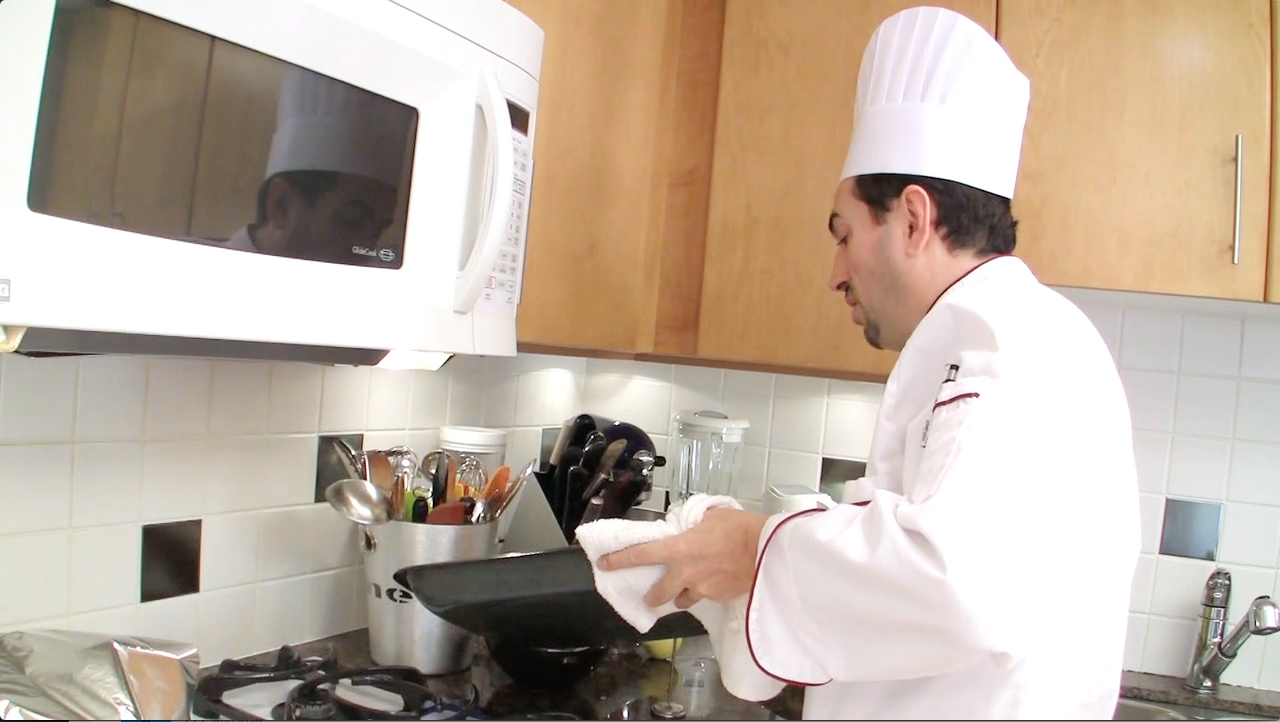
1: Degrease some of the fat
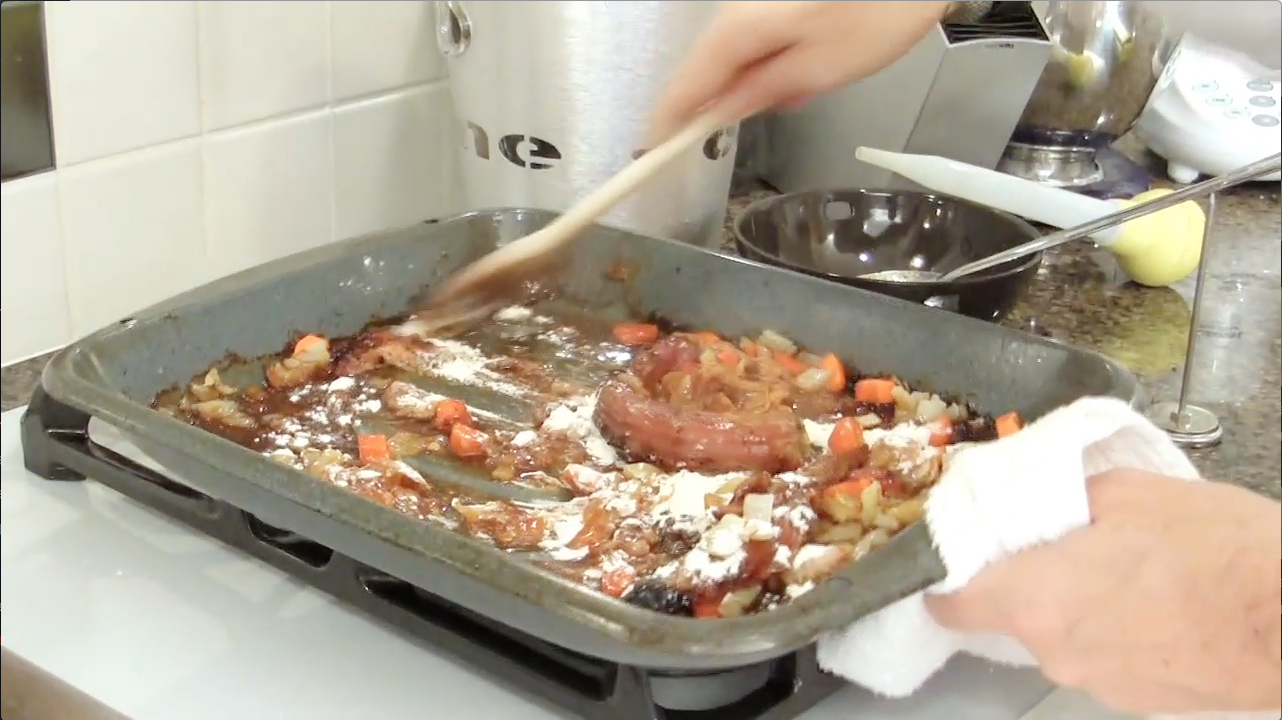
2: Stir in flour for roux
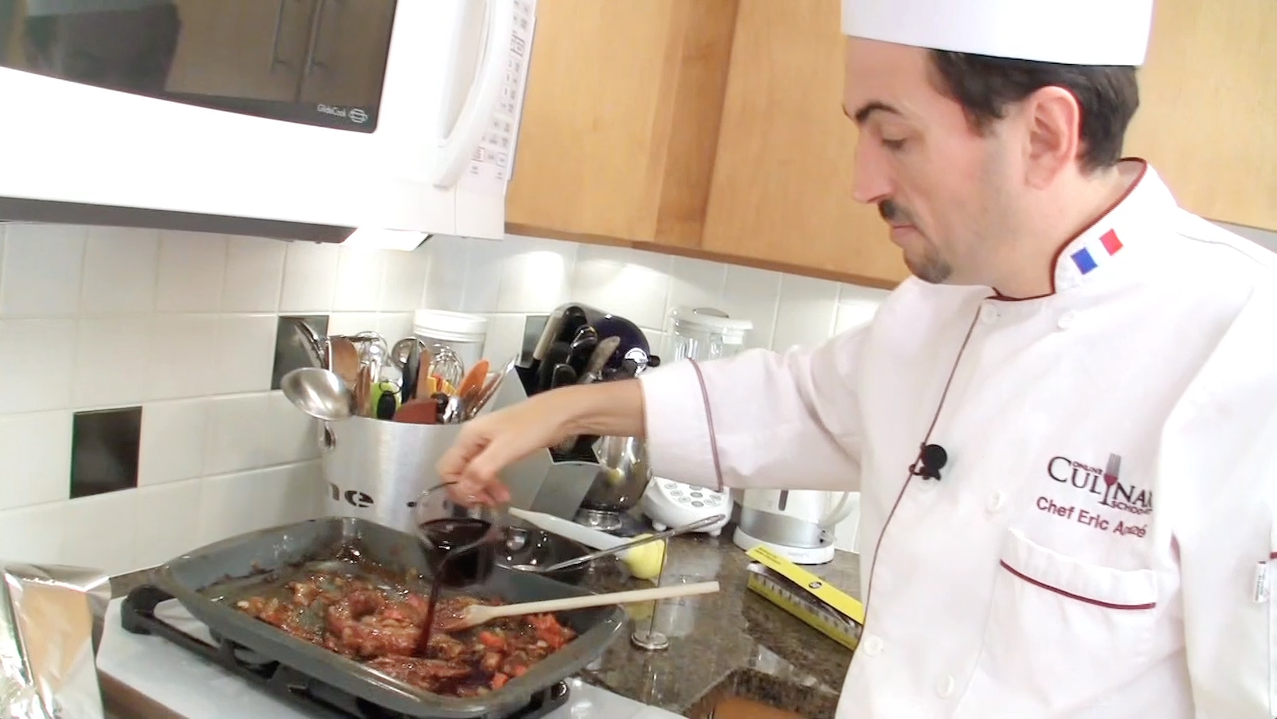
3: Add wine and reduce
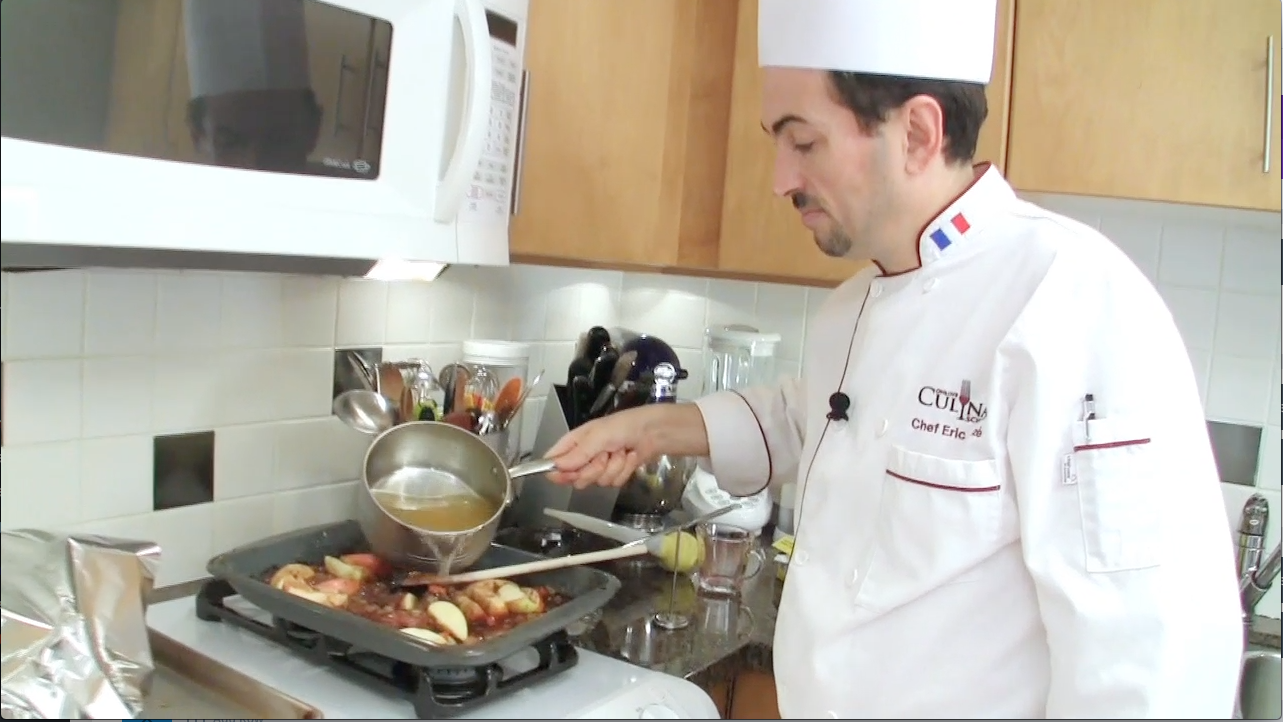
4: Add stock and reduce
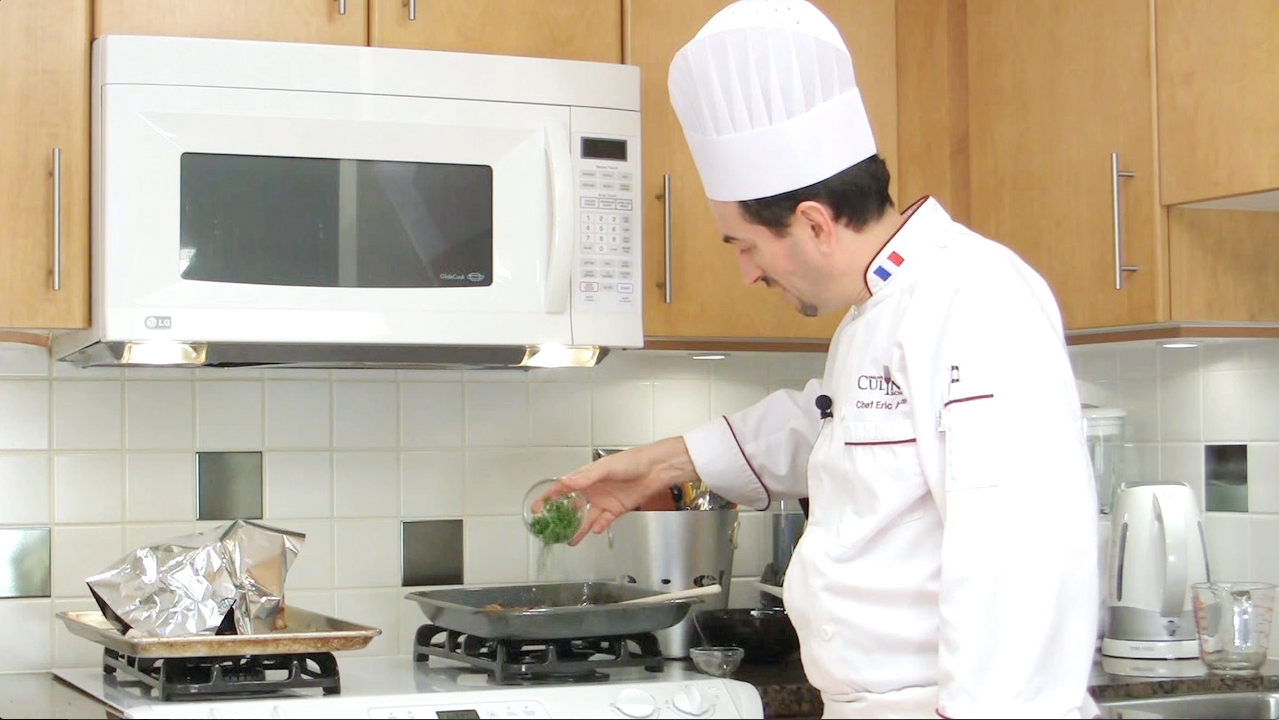
5: Add aromatics (optional)
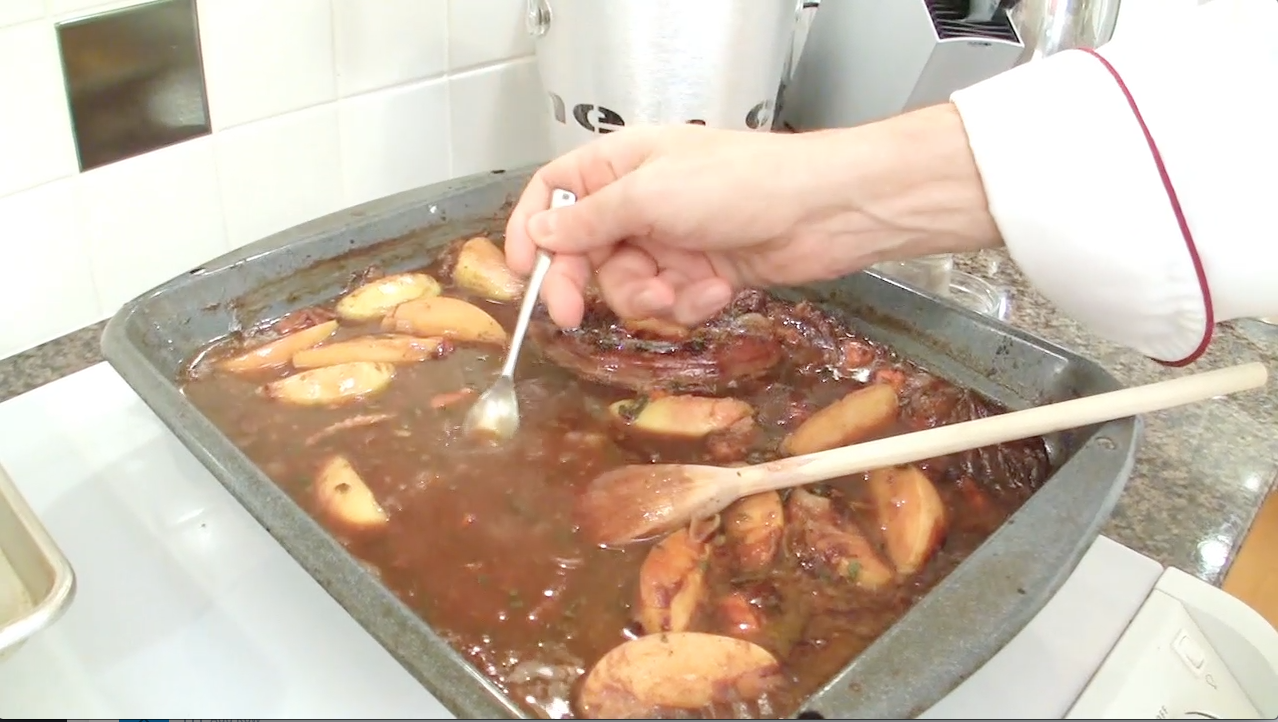
6: Taste and check consistency
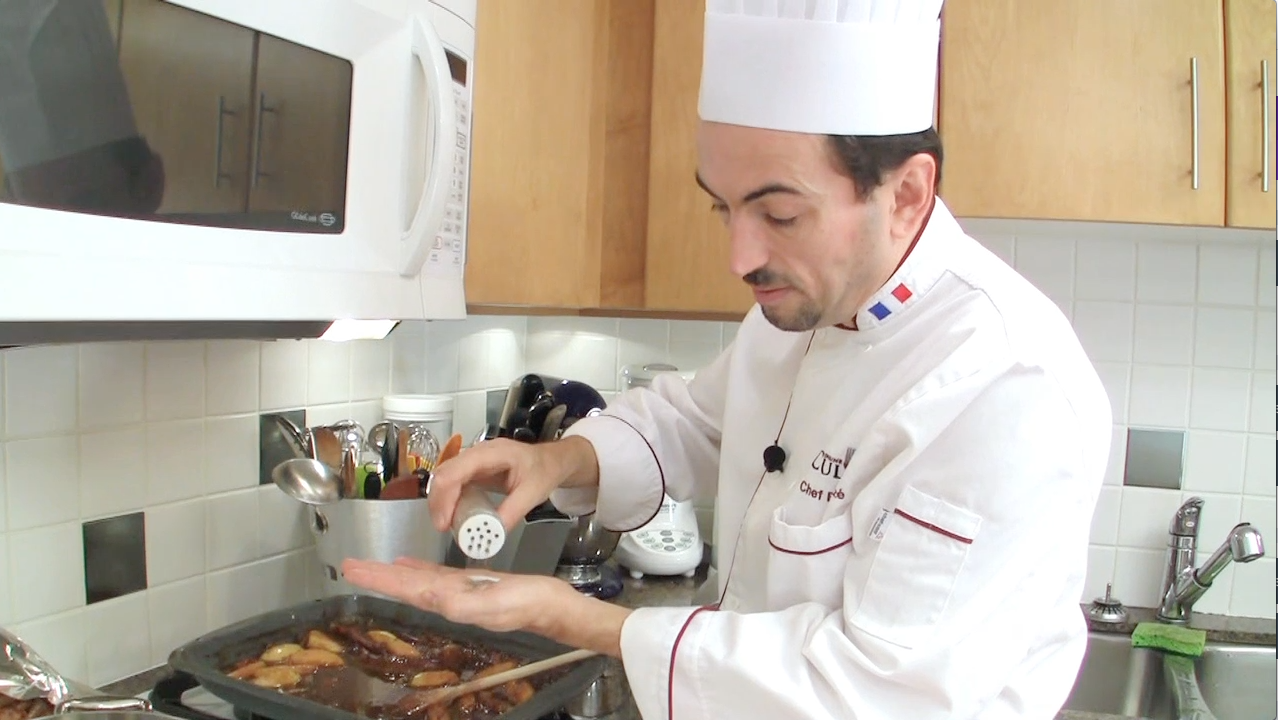
7: Rectify the seasoning
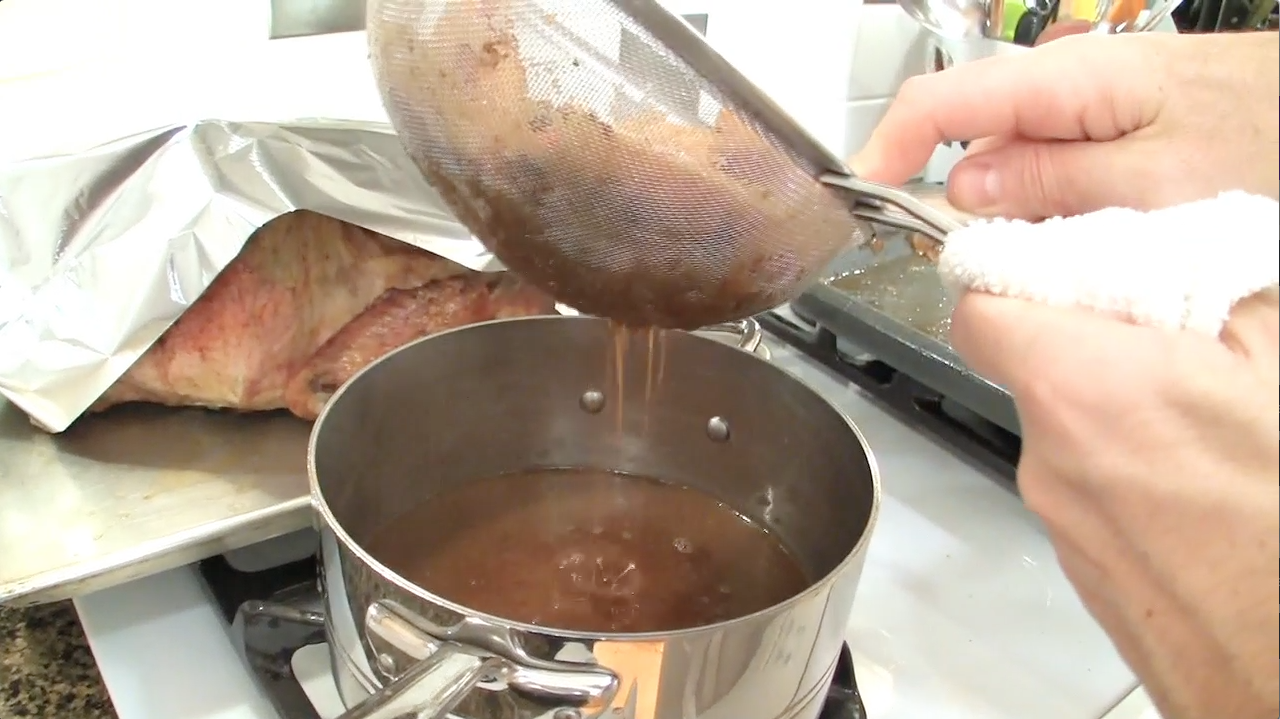
8: Strain and press down
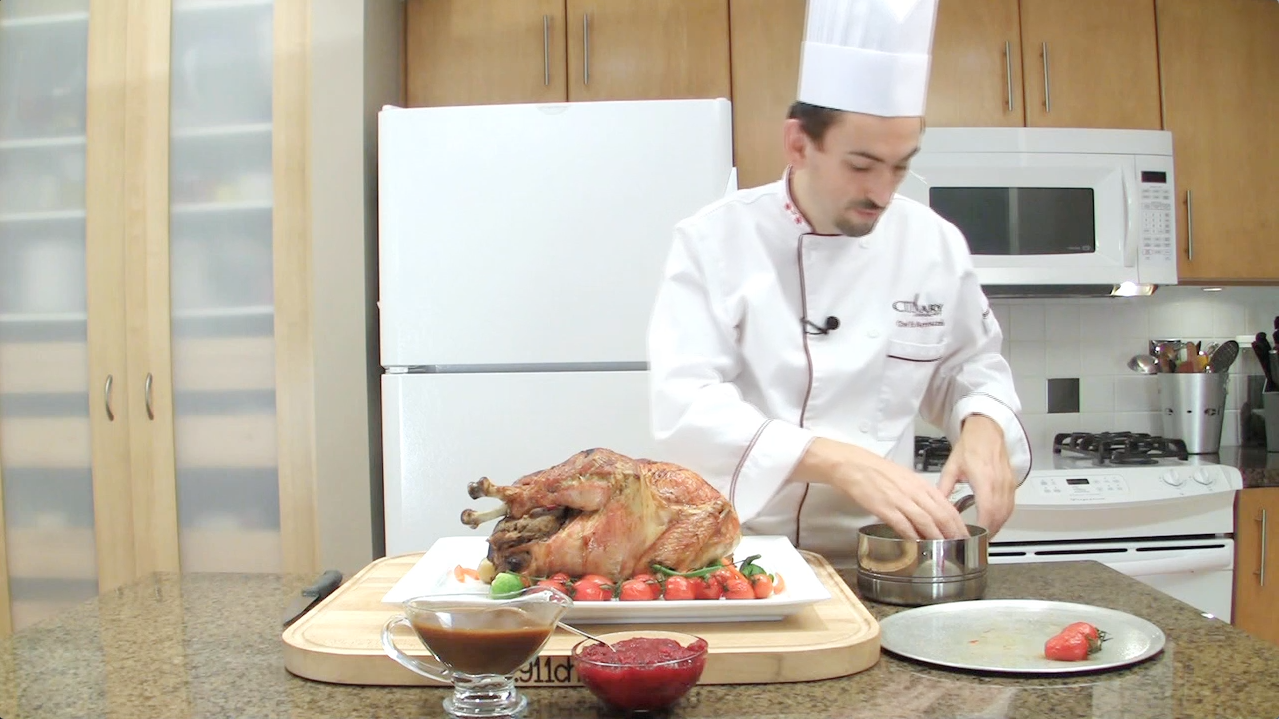
9: Serve on the side