
Topic · Sauce Making Fundamentals
The Concept of Lightness
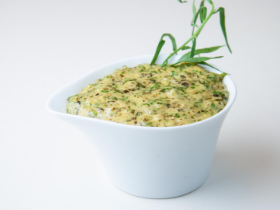
Béarnaise sauce
With the concept of lightness, innumerable chefs are following a lighter trail that leads to concoctions made of emulsified egg yolk sauces with butter as the main ingredient.
These sauces use the Hollandaise principle as the base and are known as hot emulsified sauces. With a penchant for two favorites amongst these sauces, Chefs favor the Hollandaise with the lemon juice flavor and the Béarnaise with the shallot, white wine vinegar and tarragon flavor.
There are other Hollandaise types of sauces but have not come to light due to not being used often in North America. Some of these sauces are Sauce Maltaise that is a blood orange Hollandaise and the Mousseline sauce that is a Hollandaise sauce with whipped cream.
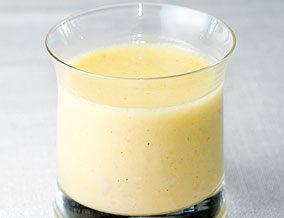
Beurre blanc sauce
The beurre blanc or white butter sauce is the third type of basic butter sauce that is not held together by adding egg yolks but is much thinner and separates faster than Hollandaise or Béarnaise sauce. The quality secret of these three sauces is the usage of fresh unsalted butter. In order to get a smoother Hollandaise sauce, clarified butter is used.
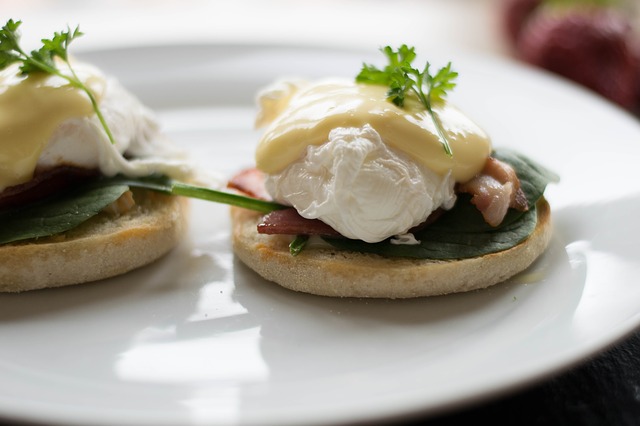
Egg Benedict with Hollandaise sauce
As emulsified sauces have the tendency to separate easily, the creation and maintenance of the egg yolk mixture called Sabayon is necessary.
When the Sabayon reaches the ribbon stage when being cooked, warm clarified butter should be slowly added till the sauce starts to get thick with the beginning of the emulsifying stage. The sauce must not be exposed to a very high heat or temperature and if made to stand for too long a time, it will start to separate. The base of the pan should not cross the level of being more than hand hot when making hot emulsified sauces. If it gets too hot, then the eggs will slowly become solid and the sauce will get curdled.
Sauces that are based on the Hollandaise family of sauces must be served warm. When serving while butter sauces, the sauce should be just tepid in temperature.