Topic · Vegetable Cookery Fundamentals
Peeling Turnips
Turnips were probably one of the vegetables eaten by primitive humans. Since they are easy to cultivate, they have been a mainstay in human diets throughout history, especially during lean times. During affluent periods, turnips were relegated to livestock feed. Today turnips are more popular in the South than in other parts of the United States. They are root vegetables, which grow partially above the ground. In fact, the purple tops result from exposure to sunlight.
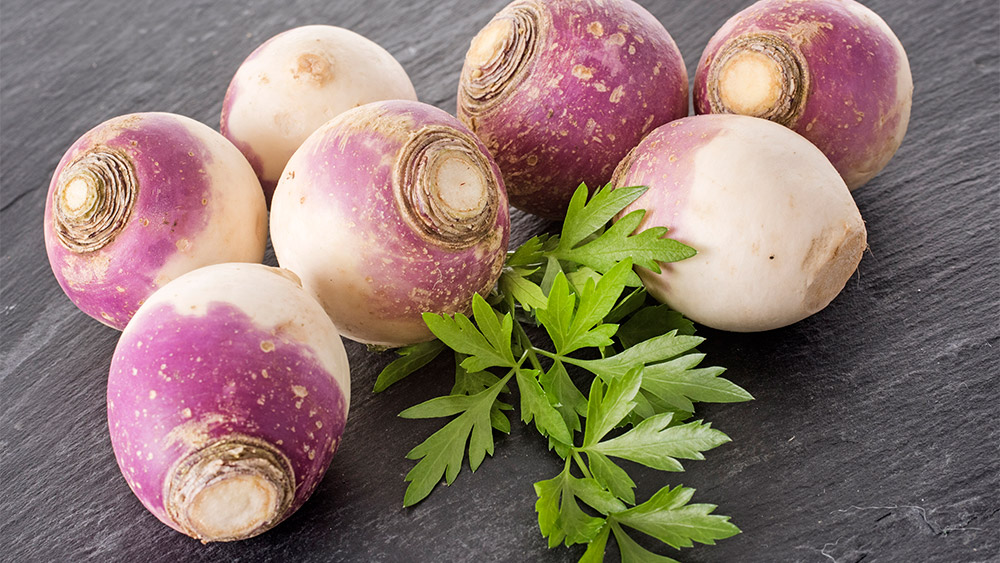
The most common variety of turnip found in supermarkets has a creamy white skin that changes to purple, lavender or green at the top.
Availability:
Turnips are available all year round, but the supply peaks from October to February.
Buying Tips:
Choose turnips that are about 2 inches in diameter. Larger turnips have a coarse texture and less sweet flavor. Select ones that are firm and heavy for their size with smooth unblemished skin. Avoid turnips that are soft, shriveled and have many root hairs. If greens are attached, they should be fresh, crisp and of bright color.
Yield:
1 pound turnips without tops = To about 2-1/2 cups chopped.
Storage:
If turnips are purchased with tops attached, remove and store them separately. You can store turnips in a plastic bag in the refrigerator for up to two weeks. Store turnip greens, unwashed, in the refrigerator in a plastic bag for several days.
Basic Preparation:
Wash turnips under cold running water, scrubbing them with a brush, if necessary, to remove soil. Trim off the top and roots. Peel turnips with a paring knife. (Very young, fresh turnips may not need peeling.) Slice, cube or cut them into strips. In order to retain their mild flavor, avoid overcooking turnips.