Topic · Vegetable Cookery Fundamentals
All About Ginger
How to Use Fresh Ginger
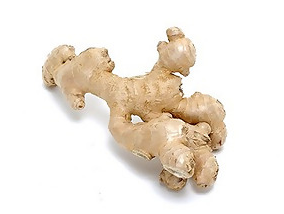
Peeling or scraping ginger with a spoon is one of the most common ways to peel ginger. The skin is thin and scrapes off easily. Some people use a common vegetable peeler to peel ginger. Using a peeler will create more waste than is necessary. We used a large piece or a “hand” of ginger and a common spoon to illustrate this method. Peeling this amount of ginger would be only on rare occasions.
Scrape the ginger with the edges of a spoon, getting the edge of the spoon into the crevices of the ginger. The skin will come off with a gentle scrape. Once complete, you will notice the ginger looks almost identical to how it looked before peeling. Removing the skin of ginger does not alter the shape of the original piece of ginger. Your new ginger peeling skills will come in handy when you cook these recipes.
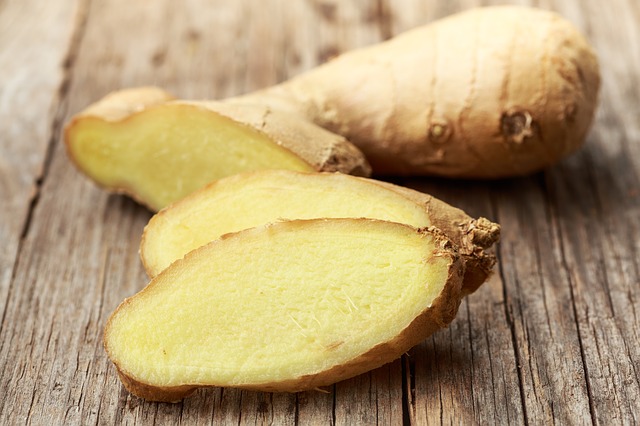
Origin of Ginger
As one of the earliest Oriental spices known in Europe, ginger has been cultivated in India both as a fresh vegetable and marketed as a dried spice since time immemorial. The fresh, dried or powdered rhizome of a slender perennial herb, Indian ginger has been acclaimed worldwide for its characteristic taste, flavor and texture. Ginger has always meant many things to many people such as a taste-maker, a flavoring, an appetizer or a drug.
Though grown all over India, the finest quality ginger comes from Kerala endowed as it is with a congenial climate and a rich earthy soil. Indian dry ginger is known in the world market as ‘Cochin Ginger’ and ‘Calicut Ginger’. India offers ginger in a variety of forms like oils, oleoresins, and fresh ginger in brine, pickles, candies and syrups. India has a predominant position in ginger production and export. The principal buyers are the Middle East, USA, UK and the Netherlands.