
Topic · Vegetable Cookery Fundamentals
All about Tomato
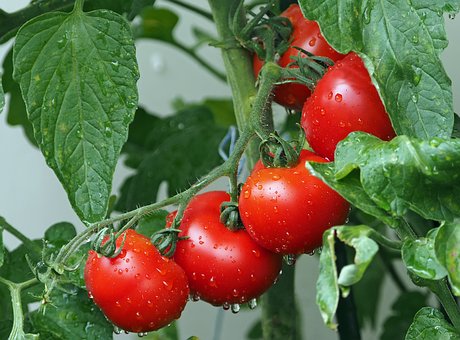
Tomato is today the most popular garden vegetable in America. For many years, however, tomatoes (then called “love apples”) were considered poisonous and were grown solely for their ornamental value. Tomatoes are usually easy to grow and a few plants provide an adequate harvest for most families.
The quality of fruit picked in the garden when fully ripe far surpasses anything available on the market, even in season. The tomato plant is a tender, warm-season perennial that is grown as an annual in summer gardens all over the continental United States. Spring and fall freezes limit the outdoor growing season.
Hundreds of varieties of tomatoes are now available for the home gardener. They range widely in size, shape, color, plant type, disease resistance and season of maturity. Catalogs, garden centers and greenhouses offer a large selection of tomato varieties and choosing the best one or two varieties can be extremely difficult. Evaluate your needs, and then choose the varieties best suited to your intended use and method of culture.
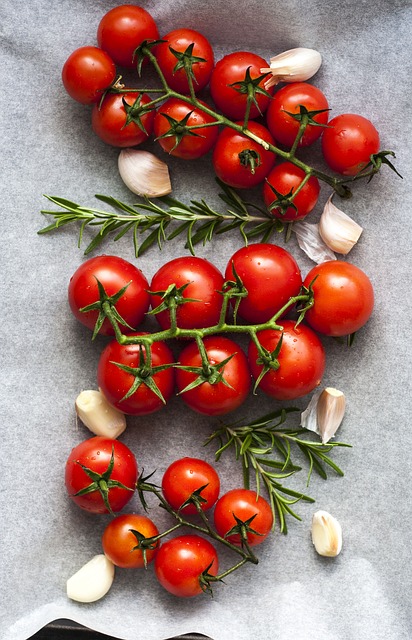
Tomato plants fall into one of two types that affect ultimate plant height and cultural requirements. Tomatoes are determinate if they eventually form a flower cluster at the terminal growing point, causing the plant to stop growing in height. Plants that never set terminal flower clusters, but only lateral ones and continue indefinitely to grow taller are called indeterminate. Older varieties are almost all indeterminate. These can be counted upon to produce abundant foliage and to ripen flavorful fruit. They may, however be extremely late in maturing. The first determinate varieties developed had real problems with inadequate foliage cover and taste, but they ripened very early. Newer determinate produce better foliage, may grow taller and ripen fruit of similar quality to modern indeterminate varieties. They still tend to ripen their fruit over a shorter period of time, so successive plantings may be desirable with determinate to keep the harvest coming through the entire season. Determinate vines are easier to control and support during the growing season. Some of the extreme dwarf types are determinate as well as dwarf, producing some truly tiny mature plants.
Nutritionists have always known tomatoes were good for you, now there is research-based information as to why. Tomatoes are packed with vitamin C, potassium, fiber and vitamin A in the form of health promoting beta-carotene, which the body converts to vitamin A.
Tomatoes are also a source of lycopene, which is the subject of current promising research on the role of plant chemicals that promote health. Research suggests that lycopene may play a role in the fight against cancer, especially prostate cancer. Like beta-carotene, lycopene is a carotene, responsible for the bright red color of the tomato, watermelon, and grapefruit. Although lycopene is available in all ripe tomatoes, a greater supply is more useful to the body in cooked tomatoes.
How to core and dice tomatoes
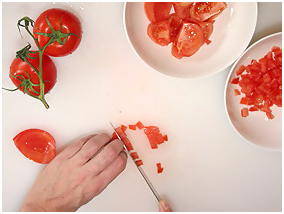
Cored tomatoes are much easier to handle when peeled. Here’s how to do it. Place the tomato on its side, holding it steady with one hand. Just outside the core and next to the stem, insert a small knife about ½-inch into the tomato. Rotating the tomato as you cut, carve a full circle around the stem end, keeping the point of the knife angled towards the center. Remove the core. Be careful when removing the stem to remove as little of the tomato as possible.
To dice tomato, use a very sharp or a serrated kitchen knife to slice the tomato. Cut the tomato into slices with the same thickness to about a ½ inch, for half- inch squares of tomato slices. Cut each slice into ½- inch strips. Turn the strips 90 degrees to the left and cut the strips into ½ inches of diced tomato.
Tomato Rose Garnish
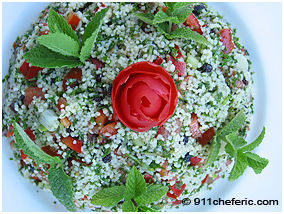
Choose: Pick the right tomato for a large tomato rose. You must pick a tomato that is not only ripe, but is also large and round. You also need to find a tomato that is a nice shade of red.
Peel: Begin by holding the tomato in your non-dominant hand. The top of the tomato should be held in your palm. Use a sharp paring knife to slice the skin of the tomato in a spiral from the base of the tomato to the top. The peel should come off in a strip that is ½ inch to 1 inch wide.
Lay: Once you have cut the peel away from the tomato you need to lay the strip on a flat surface. A cutting board works well just in case you need to trim the strip in places. You need to place the flesh side up.
Roll:Begin at the end of the peel that was closest to the top of the tomato. The end farthest away from you should be curling, as this was the bottom of the tomato. Take the edge of the peel and roll the strip like a scroll, keeping it tight.
Finish the rose: Once the peel has been rolled tight, set the rolled portion on the circle end. When you let go of the roll, it will expand and look like a rose. Pick the rose up by the base in order to move it. Next, slide two pieces of mint under the tomato rose to simulate leaves.