Topic · Vegetable Cookery Fundamentals
All About Celery
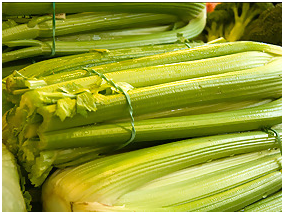
Celery has become a common household staple along with carrots, onions and potatoes. Its crunchy texture and distinctive flavor makes it a popular addition to salads and many cooked dishes. Although it is available throughout the year, you will enjoy the best taste and quality of celery during the summer months when it is in season and locally grown varieties can be easily found in the markets. In French cuisine celery is part of many aromatic garnish, including, Paysanne or Mirepoix ot Matignon.
Celery grows to a height of 12 to 16 inches and is composed of leaf-topped stalks arranged in a conical shape that are joined at a common base. It is a biennial vegetable plant that belongs to the Umbelliferae family whose other members include carrots, fennel, parsley and dill. While most people associate celery with its prized stalks, the leaves, roots and seeds can also be used as a food and seasoning as well as a natural medicinal remedy.
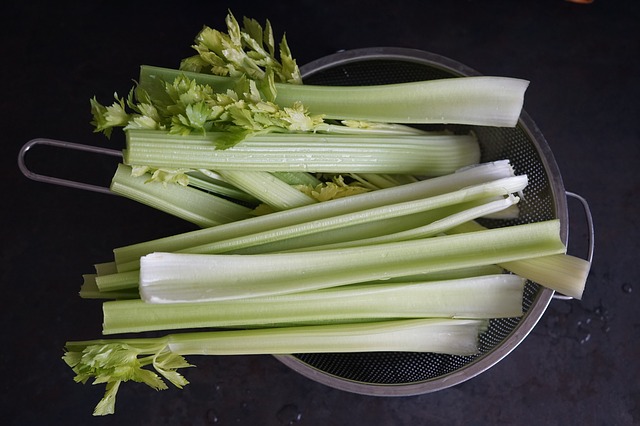
Tips for preparing celery:
To clean celery, cut off the base and leaves, then wash the leaves and stalks under running water. Cut the stalks into pieces of desired length. If the outside of the celery stalk have fibrous strings, remove them by making a thin cut into one end of the stalk and peeling away the fibers. Be sure to use the leaves as they contain the most vitamin C, calcium and potassium, but use them within a day or two as they do not store very well. Celery should not be kept at room temperature for too long since, because of its high water content, it has a tendency to wilt quickly. If you have celery that has wilted, sprinkle it with a little water and place it in the refrigerator for several hours, where it will regain its crispness.
A few quick serving ideas:
- Add chopped celery to your favorite tuna fish or chicken salad recipe.
- Enjoy the delicious tradition of eating peanut butter on celery stalks.
- Use celery leaves in salads.
- Braise chopped celery, radicchio and onions and serve topped with walnuts and your favorite soft cheese.
- Next time you are making fresh squeezed carrot juice give it a unique taste dimension by adding some celery to it.
- Add celery leaves and sliced celery stalks to soups, stews, casseroles, and healthy stir fries.