Topic · Vegetable Cookery Fundamentals
How To Clean Mushrooms
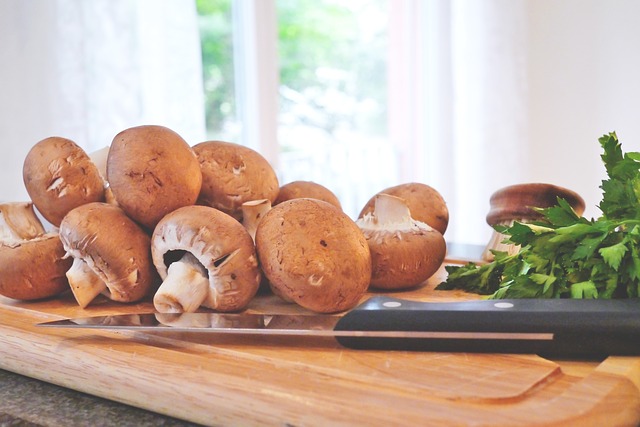
Mushrooms are extremely porous and soak up water like a sponge. Because they are mostly water, never soak fresh mushrooms.
Since commercially-available mushrooms are grown in a sterile medium, invest in a soft mushroom brush and simply brush away any clinging growing medium rather than washing with water. If you must, wipe them with a damp paper towel.
Be aware that salt releases the water in mushrooms, so judge the salt usage accordingly for your particular recipe.
There is no need to peel mushrooms. In fact, peeling mushrooms nullifies most of their flavor. Simply trim off any damaged spots and tough or dirty stems.
Cultivated mushrooms will require less cleaning than wild mushrooms because they are grown in a controlled environment in sawdust, dirt, and other coarse mediums. Most of the dirt will only be surface dirt and generally only require a dusting or wiping off with a damp paper towel.
Wild mushrooms require a little more cleaning because of the environment they are exposed to. Start by using soft brush to brush away sand, dirt and other debris. Use a damp paper towel to wipe off anything that could not be brushed off. If the mushroom has a hollow stem or cavity, split the mushroom lengthwise and check for additional sand, dirt and insects that may be trapped in this area and clean if necessary. After cleaning the mushroom in this manner, if there is still debris on the mushroom, you will have to rinse them with water. Place mushrooms in a colander and use gentle running water or a spray nozzle to rinse. Rub lightly with fingers if necessary to remove particles. Rinse as little as possible, drain well and then spread out on a paper towel and pat dry immediately.
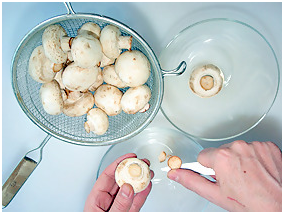
Mushrooms can be used whole but are most often sliced or chopped before cooking. Only the cap of some mushrooms should be eaten. To remove the stem, trim the stem off with the tip of a knife or twist the stem to separate it from the cap.
- To slice mushrooms, use a sharp knife and begin cutting slices parallel to the stem of the mushroom to the desired thickness
- To chop mushrooms, slice mushrooms parallel to the stem and the cut slices into strips. Cut strips into desired size pieces
- Use a food processor to slice or chop large quantities
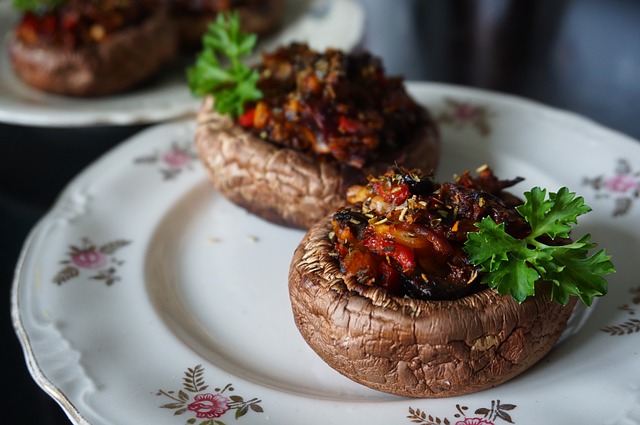
Slice off the stem of a whole, clean mushroom. With a small teaspoon (1/8 or 1/4 teaspoon), or small melon baller, scoop out the inside of the mushroom. Fill with prepared stuffing or favorite dip.
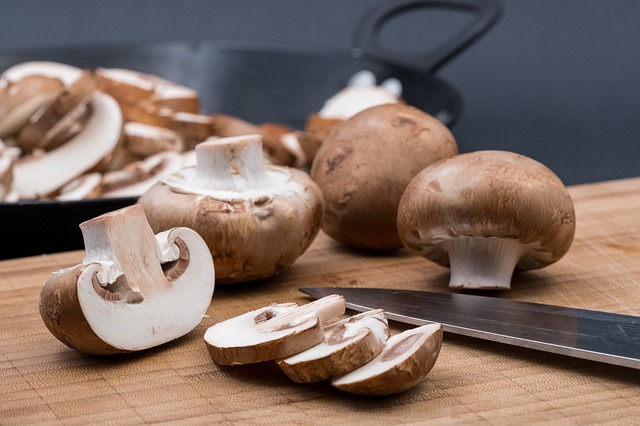
- Mushrooms can be sautéed, broiled, fried, or eaten raw. Wild mushrooms require longer cooking times than store bought mushrooms
- Aluminum pans tend to turn mushrooms black, so avoid using this type of pan when cooking
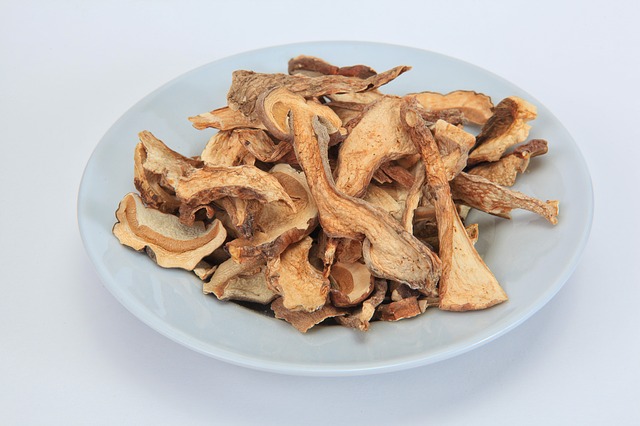
To reconstitute dried mushrooms, soak in hot water or chicken broth for approximately 30 minutes. Use a fine sieve lined with paper towels or cheesecloth to drain the liquid from the mushrooms. The liquid can be saved to use as stock for soups and sauces. If there is sand or grit still remaining, rinse and drain the mushrooms again. If the dried mushrooms are going to be added to a soup, they do not need to be reconstituted first.
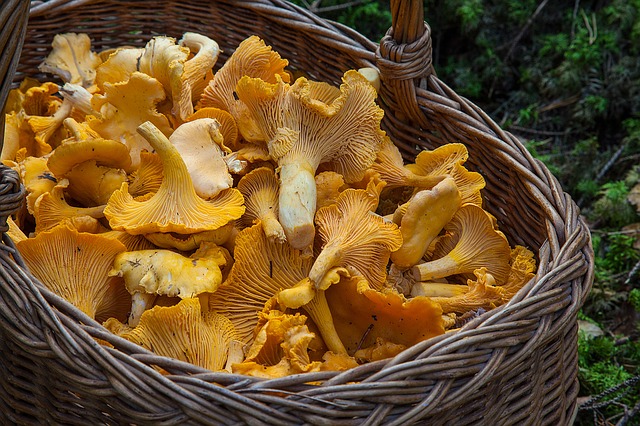
Wild mushrooms are a variety of mushrooms that are not cultivated commercially, but are gathered in the wild such as Morel and Chanterelle varieties. Care must be taken when harvesting wild mushrooms because there are many poisonous varieties that have the same appearance as edible mushrooms.
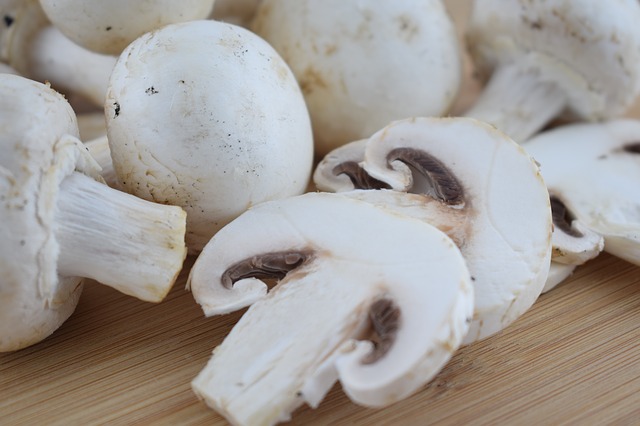
Cultivated mushrooms, such as Portobello, Shiitake, Cremini and Oyster, are available year round. The wild mushrooms are available during their seasonal times, such as Morels that are available in the Spring, Chanterelles in Midsummer, and Porcini in the Fall. Dried mushrooms are available all year round.