
Topic · Cold Soups and World Soups
Introduction on Cold Soups
As a distinct yet straightforward dish, cold soups can be served as a cold or chilled version of cream soup or as singular as a cold fruit soup with a combination of coconut milk, buttermilk, and yogurt. Besides being a cold preparation, cold soups cannot be classified together as each one of them is prepared with unique combinations and preparation methods. Nevertheless, they can be divided into two categories: those that do not require cooking and those that need cooking.
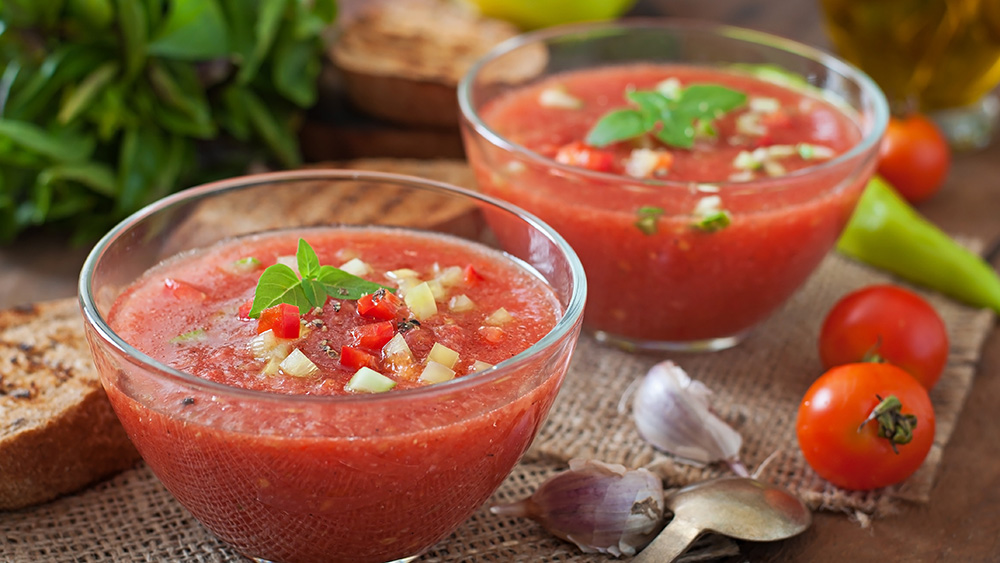
Cold Gazpacho Soup
One of the features of a buffet table comprises cold jellied consommé. Lately, the repertoire of cold soups has expanded that includes broth, cream soups, and purees, especially that of vegetables. As a typical example, Borscht is a soup that can be eaten when either hot or cold. The consistency and flavor of the soup are affected when chilled.
A cold soup is more tasty and pleasant in flavor when it reaches a stage where it is almost too thick to be poured. In terms of consistency, cold soups should never be thin. While cooling, most soups naturally thicken, and soups with egg yolk and butter become too firm to pour. Gazpacho is a tasty example of cold soup and uses the Spanish combination of bell pepper, pounded garlic, tomato, and sliced cucumber. With many varieties of cold soups, many of them are thinned with ice or cold water just before being served.
As an important note, cold soups should be tasted often, especially when it is cooling, and the seasoning should be adjusted. The soup should be tasted just before serving if it has been made earlier. The seasoning should be adjusted as required and may need the addition of spice, vinegar or lemon juice, seasoning or herbs.
Note: A few minutes should be allowed for the salt to dissolve before another tasting.