Topic · Meat & Poultry
Beef Primal Cuts & Steaks
Beef Primal Cuts
The large sections a beef carcass is first divided into. North American (USDA and Canadian) butchery uses eight primals — chuck, rib, loin (short loin and sirloin), round (called the hip in Canada), brisket, plate, flank and shank. British and French butchery divide the animal differently, which is why the same name can mean different cuts on each side of the Atlantic: a British ‘sirloin’ is a North American strip loin, and a North American ‘sirloin’ is close to a British ‘rump’.
Chef’s tip: when following a European recipe, check which muscle the author means, not just the name.
Tenderloin / Fillet
The long, tapering muscle (psoas major) under the backbone that does almost no work — the most tender and most expensive cut, mild in flavour and very lean.
- North America: tenderloin; filet mignon, tenderloin steak.
- UK & Europe: fillet; fillet steak.
- French: filet: tête (head), cœur (centre, for Chateaubriand), pointe/queue (tail).
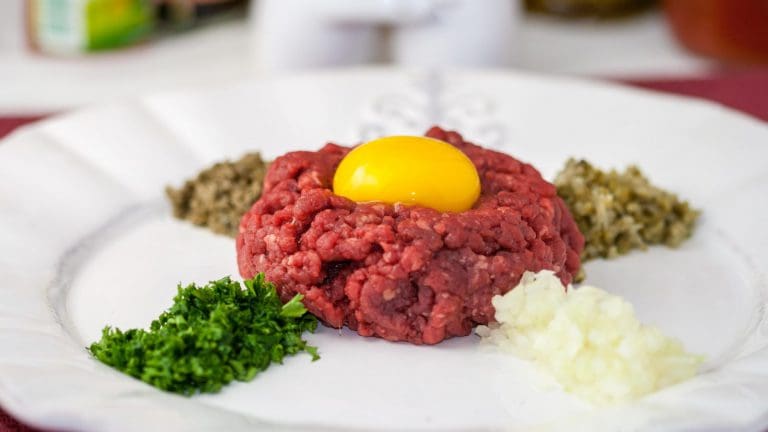
- Best cooked: roasted whole, cut into steaks or medallions; Beef Wellington; tartare and carpaccio raw.
Chef’s tip: tuck the thin tail under and tie the whole fillet so it cooks evenly.
Top Sirloin / Rump Steak
Boneless steak from the top sirloin butt — lean, beefy and good value.
- North America: top sirloin steak, sirloin steak.
- UK & Europe: rump steak.
- French: rumsteck, pavé de rumsteck.
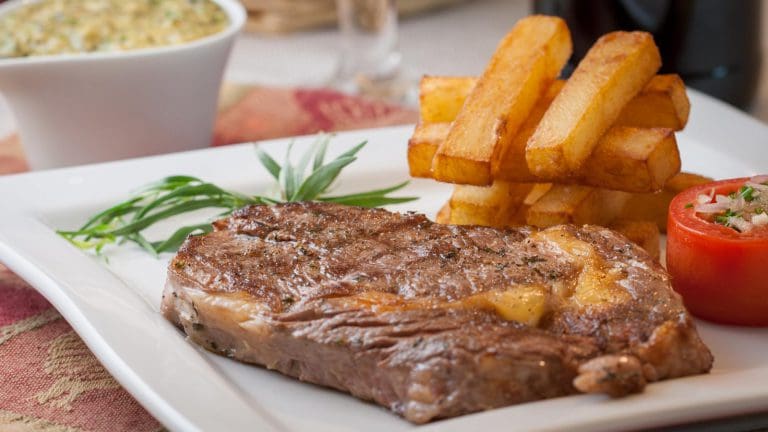
- Best cooked: grilled or seared, medium-rare, sliced across the grain.
T-Bone Steak
A cross-cut steak from the short loin containing a T-shaped bone with strip loin on one side and a small piece of tenderloin on the other.
- North America: T-bone (tenderloin at least ½ inch / 1.3 cm wide).
- UK & Europe: T-bone.
- French: T-bone (no classic French equivalent; closest is côte d’aloyau).
- Best cooked: grilled; keep the tenderloin side away from the hottest heat.
Porterhouse Steak
A large T-bone cut from the rear of the short loin where the tenderloin is widest (USDA: at least 1¼ inches / 3.2 cm). Steak for two.
- North America: porterhouse.
- UK & Europe: porterhouse (UK usage varies).
- French: côte d’aloyau / ‘Fiorentina’ style in Italy (bistecca alla fiorentina).
- Best cooked: grilled over high heat, rested, carved off the bone.
Hanger Steak / Onglet
A single thick muscle that hangs from the diaphragm between the plate and the loin — one per animal, so butchers used to keep it for themselves. Deeply beefy, with a slight offal note.
- North America: hanger steak, butcher’s steak.
- UK & Europe: onglet, skirt (sometimes).
- French: onglet.
- Best cooked: seared hot to rare or medium-rare, rested, sliced across the grain; classic with shallots (onglet à l’échalote).
Chef’s tip: remove the tough central membrane that divides the two lobes before cooking.
Skirt Steak / Hampe
Long, thin, ribbon-like diaphragm muscle with coarse grain and rich flavour. The outside skirt (diaphragm) is more tender than the inside skirt.
- North America: outside skirt, inside skirt; the cut for fajitas and carne asada.
- UK & Europe: skirt, thin skirt.
- French: hampe.
- Best cooked: very hot and very fast — grill or plancha, then slice across the grain.
Flat Iron Steak / Butler's Steak
A tender, well-marbled steak cut from the top blade muscle of the shoulder, with the tough central sinew removed. Developed in the early 2000s by meat scientists in the USA; now a bistro favourite.
- North America: flat iron steak, top blade steak.
- UK & Europe: butler’s steak, feather blade (when left whole).
- French: paleron (the whole muscle); ‘jumeau’ and ‘macreuse’ are neighbouring shoulder muscles.
- Best cooked: grilled or seared to medium-rare and sliced across the grain; the whole muscle braises beautifully.