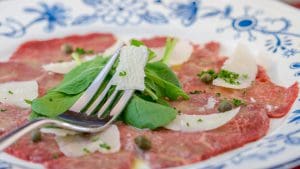
Steak tartare is a classic French dish of finely hand-chopped raw beef. This recipe pairs it with capers, gherkins, onion and Dijon mustard, served with toast points. Mix it in the kitchen or serve the seasonings separately at the table.
Finely every ingredient and keep them refrigerated. On a cold plate shape half of the meat into a ball and hollow the center. Put a raw egg yolk in it. Arrange half of the onion, capers, gherkins, and parsley around. Serve the Dijon mustard, ketchup, Worcestershire sauce, Tabasco sauce, olive oil, salt, and freshly ground pepper separately. Each person will mix and his own steak tartare accordingly to his taste. Serve immediately with French fries and toasted bread points.
Place the egg yolks in a large stainless-steel bowl and add the mustard. Mix well, then add the ketchup, Worcestershire sauce, Tabasco, olive oil, salt and pepper and mix well again. Slowly in the oil and mix again. Fold in the onion, capers, gherkins, and parsley. Add the chopped meat to the bowl and mix well using a spoon or your hands. Divide evenly among the two chilled dinner plates and, using a ring mold or spatula, form it into disks on the plates. Serve immediately with French fries and toasted bread points.
This recipe connects to Pastry & Desserts — learn the technique step by step in the video lessons.
History of the steak tartare: The basis of the name is the legend that nomadic Tatar tribe of the Central Asian steppes did not have time to cook and thus placed meat underneath their horses' saddles. By the end of the journey, the meat tenderized. If you'd like to go deeper, Pastry & Desserts covers this in full.
If you'd ever like hands-on guidance for your own kitchen or restaurant, I also offer 1-on-1 coaching through OCS, or you can reach me directly for consulting at 911ChefEric.com.
Recipes come out right when you understand the method. Chef Eric’s courses teach the foundations step by step — knife skills, stocks, soups and classic French technique — with video lessons and short quizzes. Not sure where to start? OCRS™ will build your roadmap in five questions.