
Topic · Stock Making Fundamentals
Getting the Right Ingredients
The basic ingredients of most protein-based stocks are fresh uncooked bones, a vegetable mixture known as a Mirepoix, a bundle of aromatic herbs tied to a piece of leek leaf, or left loose known as Bouquet garni, seasoning, and cold water.
Bones
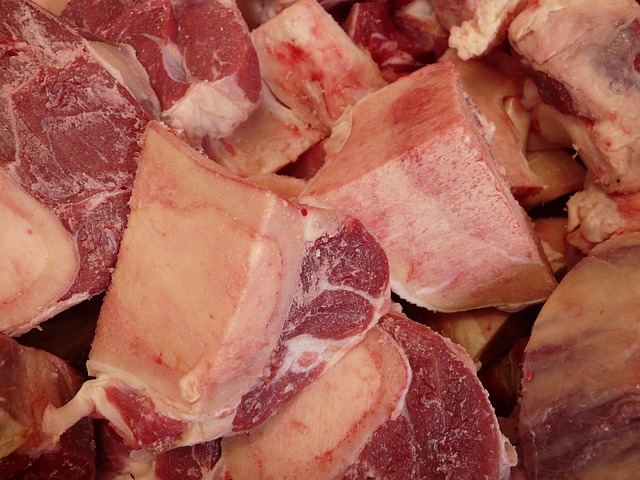
Bones are the most important ingredients for producing good protein-based stock. They are the key to adding flavor, body, and color and they must be raw. Traditionally, large kitchens and butcher shops saved the day’s bones to make stock. However, because many types of meat and poultry items are now purchased previously cut or portioned, Chefs often purchase the bones separately specifically for stock making.
Beef and veal bones
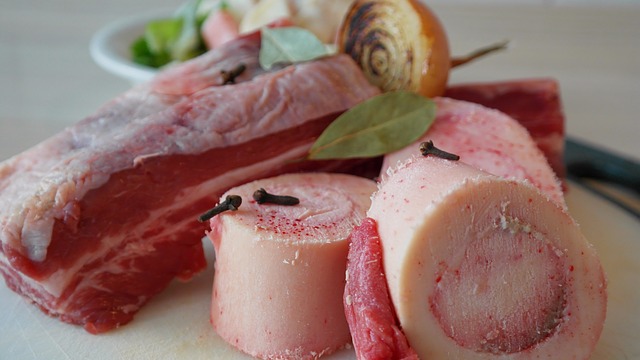
The best bones for beef and veal stock are from the younger animals. They contain a higher percentage of cartilage and other connective tissue than bones from mature animals. Connective tissue has collagen in it, which gets converted into gelatin that thickens the liquid.
The best bones for beef and veal are knuckles and shank bones, as they have high collagen content. Ask your butcher to cut the bones into pieces of 3 to 4 inches long (8 to 10 cm), so that they can release as much flavor and collagen as possible while cooking.
Chicken bones
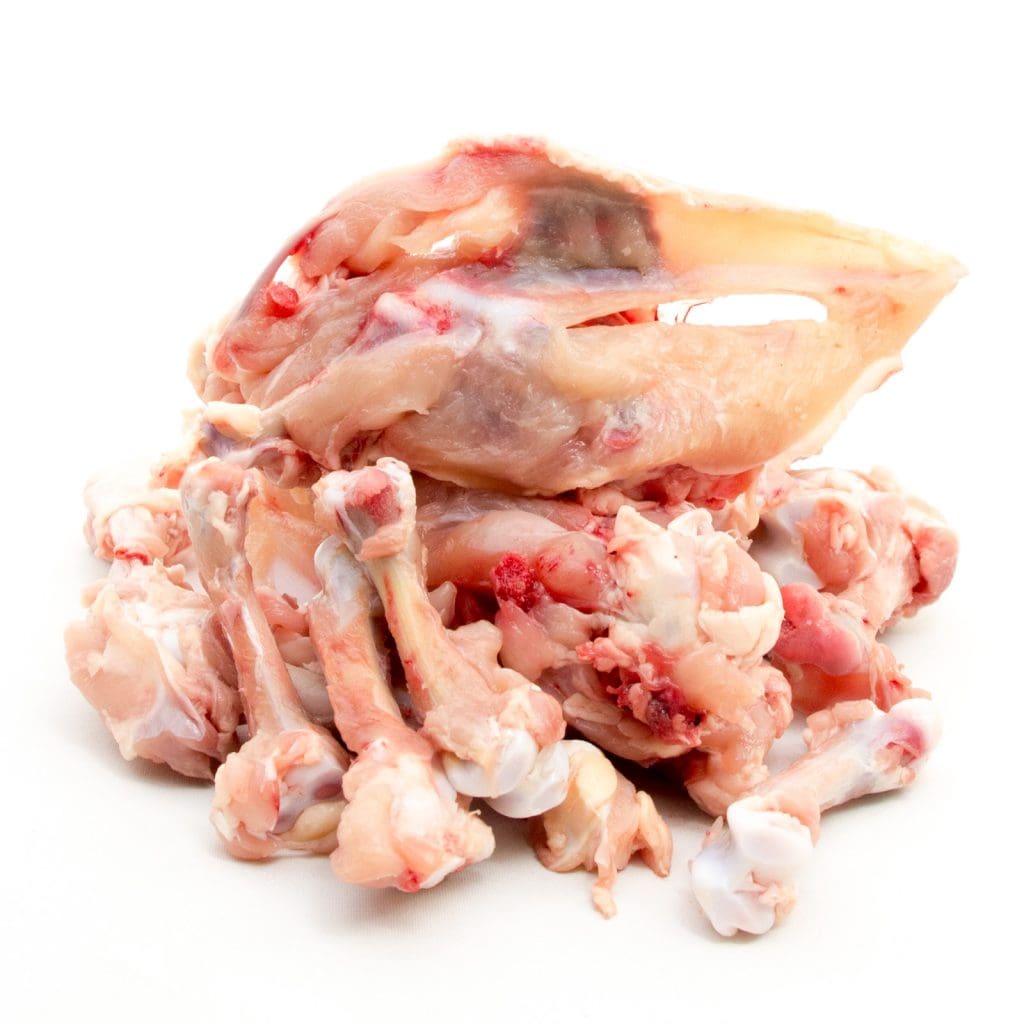
The best bones for a chicken stock are from the neck and back, but the whole carcass can be used as long as it has been cut in smaller pieces for easier handling and to maximize the flavor extraction into the stock. When using chicken carcass, skin and fat should be removed to avoid a greasy stock.
Fish bones
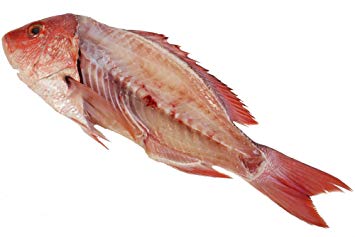
The best bones for fish stock are from lean fish such as sole, halibut, cod, turbot, or JohnDory. But you may use any fish bones including the heads except bones from fatty fish such as salmon, tuna or swordfish or strong-flavored fish such as trout. They do not produce good quality stock because of their high-fat content and distinctive flavor.
However, if such bones are used which I do not recommend, the resulting stocks take the name of the fish bones that were used like salmon stock, tuna stock, etc.
The entire fish carcass can be used but it should be cut up with a cleaver or heavy knife for easy handling and even extraction of flavors. After cutting, the pieces should be rinsed well in cold water to remove blood, loose scales, and other impurities.
Important note: When fish heads from large fish are used the eyeball should be removed and discarded. Use scissors to cut the optical nerve. When cooked, the eyeballs release cloudiness and bitterness to the stock which is very unpleasant.
Other bones
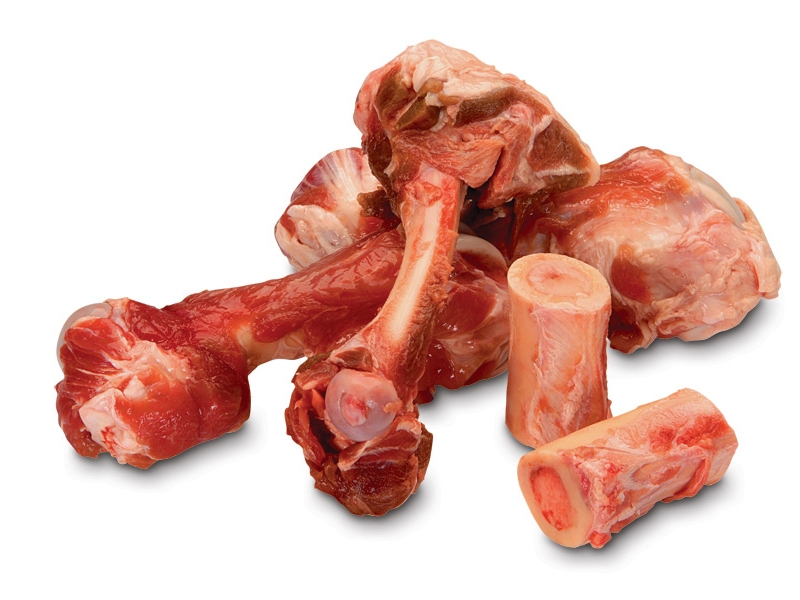
Lamb, turkey, duck, game, and ham bones can also be used for white or brown stocks. While mixing bones is generally acceptable, be careful of blending strong-flavored bones such as lamb or game, with veal, beef, or chicken bones. The former’s strong flavor may not be appropriate or desirable in the finished product.
Mirepoix
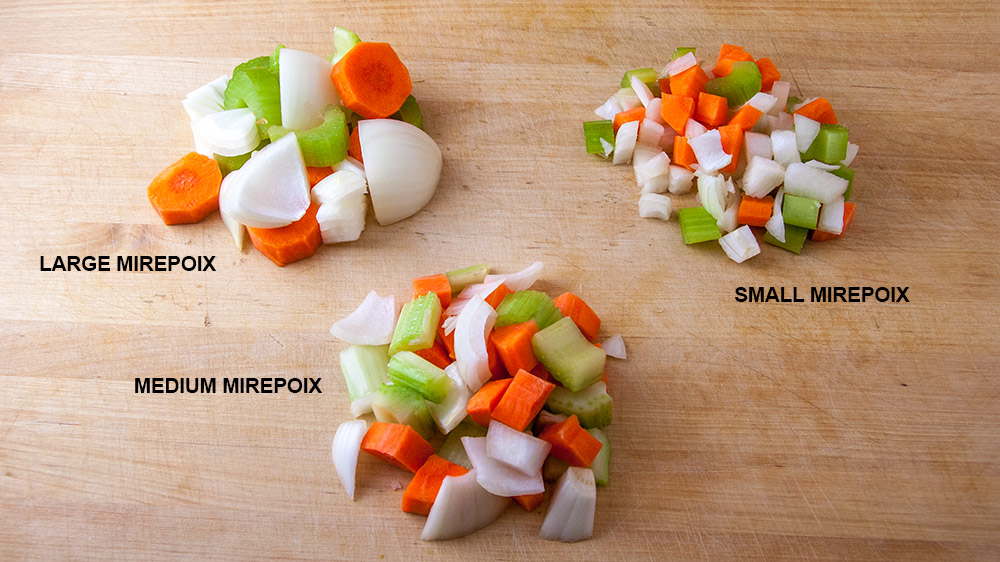
A combination of cut onions, carrots, celery and sometimes other vegetables. Often the less desirable parts of the vegetables, such as carrot skins and celery ends, are used since they will not be eaten. The size of the cut of a Mirepoix will vary depending on the cooking time of the stock which is 30 minutes to 1 day!
Bouquet garni
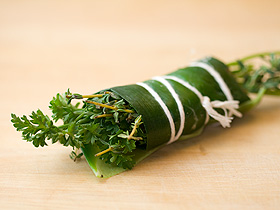
Bouquet garni is a selection of aromatic plants and spices used to flavor a sauce, stock, or other dishes. They are usually tied together in a small bundle to prevent them from dispersing in the liquid and are removed before serving.
Seasoning
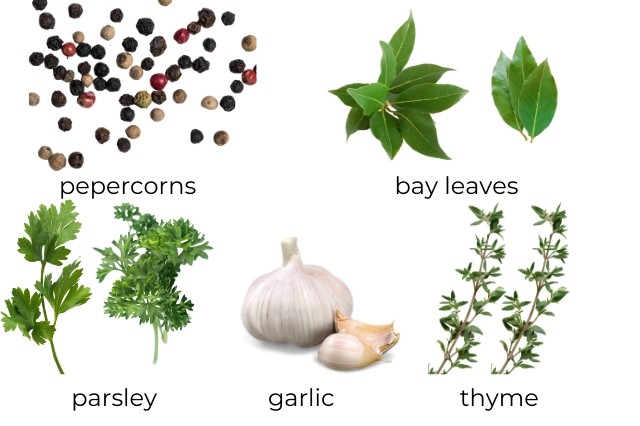
Principal stock seasonings are peppercorn, bay leaves, thyme, parsley stems, and optionally garlic. These seasonings are usually left whole. A stock is cooked long enough for all their flavors to be extracted so there is no need to chop or grind them.
Salt is not added to stock. Because a stock has a variety of uses, it is impossible to know how much salt to add when preparing it. In many dishes including sauces, stocks are reduced to concentrate the flavor and the end product has a great chance to taste too salty.