Topic · Stock Making Fundamentals
Brown Duck Stock Recipe
Brown Duck Stock

A brown duck stock is prepared by first browning the ingredients in the oven. This is the base for sauces, jus, and stew.
MAKE ABOUT 2 LITERS
- 2 pound of raw duck bones
- 1 large onion
- 1 large carrot
- 1 stalk celery
- 1 head garlic cut in half
- 4 tablespoons tomato paste
- 10 whole black peppercorns
- 3 large bay leaves
- 1 sprig thyme
- 1 sprig rosemary
- 4 liters water
Heat the oven to 450°F. In a roasting pan, brown the duck bones for 30 minutes. Turn frequently to cook evenly. Peel and wash the carrot, onion, and celery. Cut the onion in quarters and place in a bowl. Cut the carrot into 1-inch pieces and add it to the onion. Cut the celery the same as the carrot. Add the celery and mix.
- Check the oven; the duck bones should be golden brown. Add both halves of the head of garlic, peel on. Remove the bones from the oven. Add Mirepoix and garlic. Reduce the temperature to 380°F. Stir the bones and Mirepoix every 10 minutes, for an additional 30 minutes. Add the tomato paste and cook for 15 minutes.
- Make sure, the bones and the aromatic garnish become brown and do not burn. Transfer the bones and the vegetables to a large stockpot. Discard any excess fat. (Decanter) Put the roasting pan over a burner on high heat and fry. Add 1 liter of cold water (deglaze). Whisk continuously, scraping any residue from the bottom of the pan. Pour the liquid from the roasting pan, over the bones in the stockpot. Add the peppercorns, bay leaves, thyme, and rosemary.
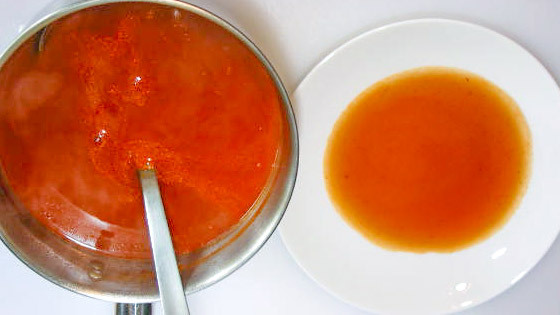
The liquid must cover all ingredients. Bring to a boil and then reduce heat and simmer for a minimum of 4 hours. Stir from time to time to ensure nothing is sticking or burning to the bottom. You must keep the bones covered by adding more water during this long cooking process. Strain the stock through a fine strainer.
- Cool and refrigerate overnight. When the stock is cold, the fat will solidify. The stock can be used to make sauces or stews. You can also freeze it if you have leftovers.
This stock technique may apply to any type of bones. For example brown quail stock, brown rabbit stock, brown squab stock etc.