
Topic · Clear Soups Mastery
Clear Soup General Guidelines
Cooking
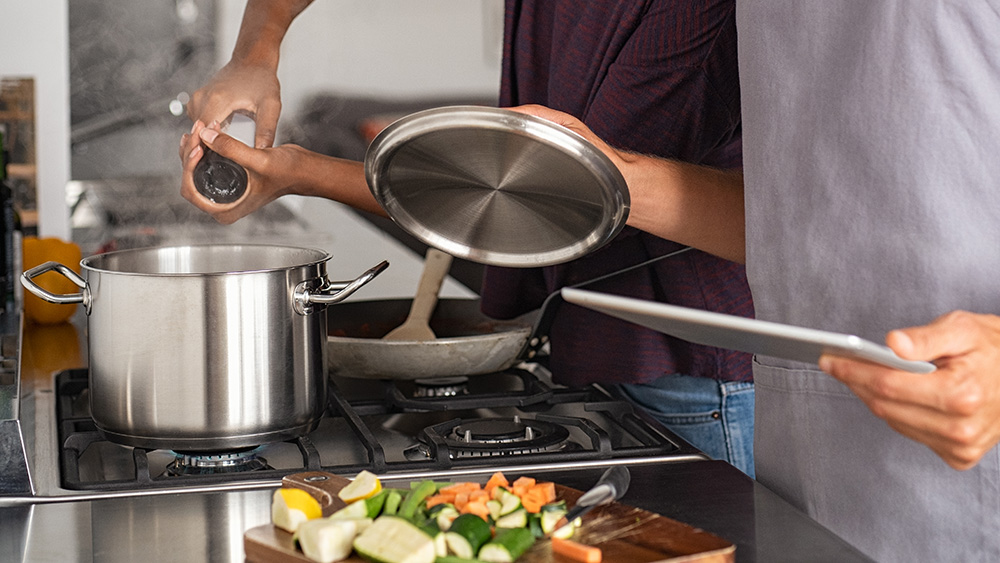
When cooking your clear broth soup, start with an onion and some other aromatic veggie (like carrots, celery, peppers, and garlic) and sauté before adding the liquid to the pot. You can develop some color to draw out the aromas from your veggies.
Add meat, bones, ham hock, carcass, etc.. to reinforce the flavor. Fill the pot with cold water or stock for hearty broth until it covers the protein by about an inch and a half. Cover with the lid slightly ajar, and simmer on low heat until the meat is fully cooked or the protein flavor has totally been released.
Add vegetables at staggered intervals, according to cooking time. All vegetables do not take the same amount of time to cook. Usually, onions, cabbage, and leeks are sweated first (cooked with or without colors) then the root vegetables like carrot, turnips, etc.
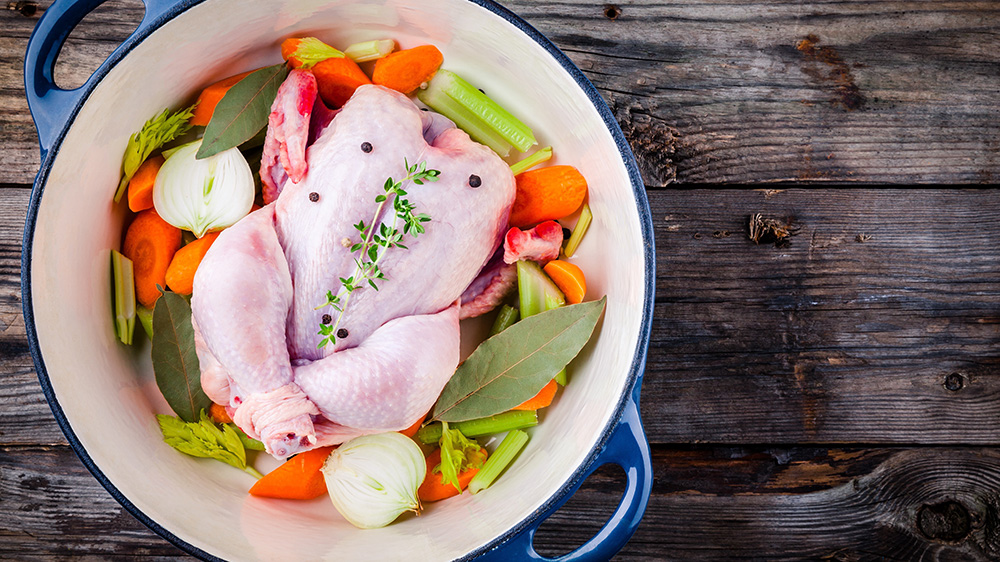
Ingredients for soup broth: chicken, carrots, celery, onions
When adding water or stock, always add the liquid from cold rather than hot. This will give time to impurities to coagulate and form scum for you to remove.
Stir the soup from time to time throughout the cooking process, to prevent heavy ingredients from sticking to the bottom of the pot and for best flavor, texture, and appearance.
Skimming
When the soup is about to boil, you may start to see scum and fat floating and creating forms. With a skimmer or mesh sieve in one hand and the other hand with an empty bowl, start scooping it off and discard it.
After you pick up the scum, rinse the skimmer or sieve under cold water and continue to scoop the scum. Repeat this operation as needed as the soup might produce more scum during simmering.
When the flavor is fully developed, and all the ingredients are tender, the soup may be finished or garnished and served right away.
Adjusting Flavor and Seasoning
Season the soups throughout the cooking process, but be light on peppercorns. Pepper powder and specifically white pepper powder tend to infuse and become overpowering.
Meat or poultry glaze may be added to increase the flavor of a weak soup but this will affect the clarity. Chopped fresh herbs, a few drops of lemon juice, Tabasco sauce, Worcestershire sauce or grated citrus zest may be added to brighten a soup’s flavor.
Degreasing
Some soups, especially broth-based ones, may be prepared in advance, then cooled and refrigerated. It is then easy to remove the fat, which congeals on the surface, before reheating the soup. If the soup is to be served just after it is prepared, skim as much fat as possible from the surface. A clear soup is to be served just after it is prepared and skim as much fat as possible from the surface.
Clear soups may be blotted with strips of paper towel to remove any traces of fat before serving. Float the strips on the surface over the fat then carefully lift them off. Consommé should be completely fat-free, but broth and clear vegetable soups characteristically have some droplets of fat on the surface.
Finishing
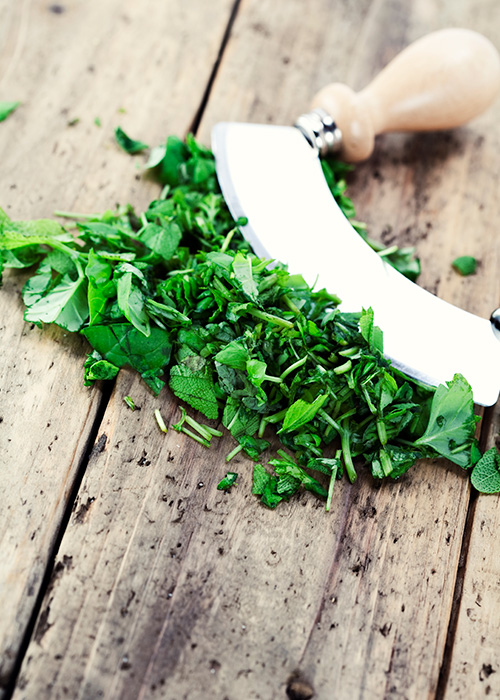
Broth soups are often finished with some lemon juice and/or fresh chopped herbs at the end to bring freshness and cut off some of the fat that could pearl on the surface.