
Topic · Restaurant Business Plan Mastery: From Concept to Execution
Kitchen Equipment
… in Restaurant Operations
Objectives: To guide students through the selection of essential kitchen equipment, including modern intelligent systems, and explain how to make informed choices regarding fire protection, energy sources (electric, gas, or hybrid), and sanitation.
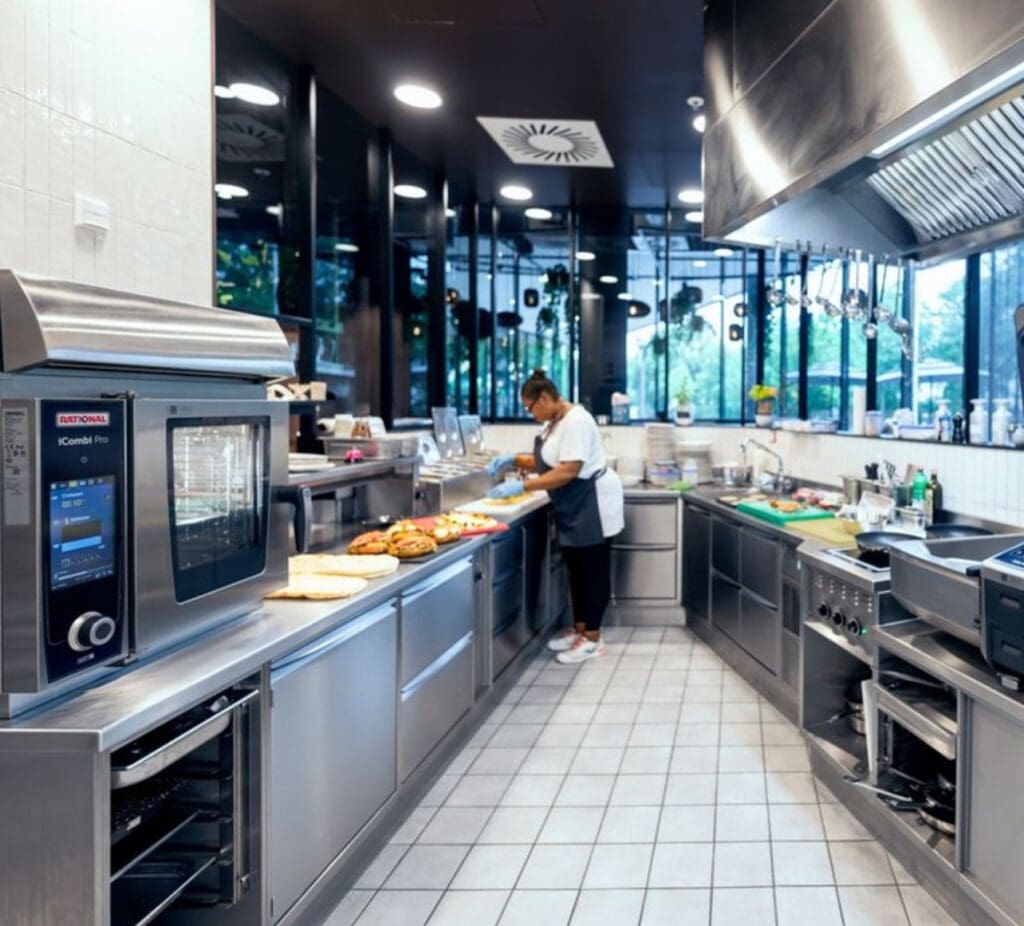
Importance of Kitchen Equipment
Choosing the right kitchen equipment is essential for a restaurant’s efficiency, productivity, and safety. Equipment selection directly affects food preparation, consistency, labor costs, and energy consumption. This lesson explores the essential kitchen tools, including advanced systems like Rational iCombi Pro and iVario, and emphasizes the importance of sanitation equipment, fire protection, and energy choices.
Categories of Kitchen Equipment
1. Cooking Equipment
Cooking equipment forms the core of any kitchen. Restaurants must choose equipment based on their menu and expected volume.
- Ranges and Ovens: Commercial gas and electric ranges, along with convection ovens, are essential. Specialty devices like combi ovens offer versatility by combining steam, convection, and air frying in one unit.
- iCombi Pro: This intelligent combi oven optimizes multiple cooking processes, ensuring precise results for grilling, baking, and frying while saving energy and space.
- Fryers and Grills: Both are fundamental for high-volume kitchens. Fryers come in both gas and electric versions, and choosing the right one depends on your energy strategy and space availability.
- iVario Intelligent Cooking System: This system covers multiple cooking methods, including boiling, frying, and braising, with smart technology that prevents overcooking and reduces manual intervention.
2. Food Preparation Equipment
Efficient food preparation is critical to smooth kitchen operations.
- Food Processors and Blenders: Commercial-grade food processors and blenders handle chopping, slicing, and blending, speeding up the prep process.
- Meat Slicers and Mixers: Essential for delis, sandwich shops, and bakeries, these machines ensure consistent portioning and texture.
3. Refrigeration and Storage Equipment
Maintaining optimal food storage and refrigeration is key to food safety and preservation.
- Walk-In Coolers/Freezers: Walk-ins are critical for large operations, while smaller units, such as reach-ins, work well in smaller restaurants.
- Refrigerated Prep Tables: Combining prep surfaces with refrigeration is a time-saving solution, especially in pizzerias, salad bars, and sandwich shops.
4. Sanitation Equipment
Sanitation is essential for food safety, quality, and compliance with health regulations. Cleanliness prevents cross-contamination and ensures that food handling is safe.
- Commercial Dishwashers: Whether high-temperature or low-temperature (chemical sanitizing), dishwashers are essential for cleaning and sanitizing dishes, utensils, and glassware.
- Three-Compartment Sinks: Standard in most commercial kitchens, these sinks allow for manual washing (wash, rinse, and sanitize) when a dishwasher isn’t available.
- Blast Chillers: Blast chillers quickly reduce the temperature of cooked food, preventing bacterial growth and ensuring food safety. They are vital for rapidly cooling hot foods before storage and are often used to extend shelf life while maintaining freshness and quality. Blast chillers are especially useful in kitchens that prepare food in advance or need to cool food items to safe temperatures quickly.
- Waste Management: Proper waste management tools like commercial-grade garbage disposals and recycling bins ensure that waste is handled efficiently and in accordance with local regulations.
5. Safety and Ventilation Equipment
A safe and well-ventilated kitchen protects both staff and customers, ensuring the safe operation of cooking equipment and the proper removal of smoke, heat, and grease.
- Ventilation Systems: Ventilation hoods remove heat, smoke, and grease from cooking areas, helping maintain a safe and comfortable kitchen environment. Proper ventilation systems also reduce the risk of grease fires.
- Fire Suppression Systems: Installed over ranges, grills, and fryers, fire suppression systems automatically extinguish fires caused by grease or other flammable materials, ensuring the safety of kitchen staff and property.
Fire Protection and Energy Choices
Fire safety and energy decisions are critical when outfitting a commercial kitchen. Each kitchen must balance the cost and efficiency of their energy source while adhering to fire safety regulations.
- Fire Protection:
- Ventilation Hoods and Fire Suppression: A well-designed kitchen should have efficient hoods that include fire suppression systems, which automatically activate in case of a grease fire.
- Fire Extinguishers: Class K extinguishers are mandatory for handling kitchen fires caused by fats and oils.
- Energy Choice – Gas, Electric, or Hybrid:
- All-Gas Kitchens: Offer quicker heat-up times and precise temperature control, but require more robust ventilation and fire suppression systems. Gas prices may also fluctuate.
- All-Electric Kitchens: More energy-efficient, safer, and better for locations where renewable energy is available. However, electric equipment tends to heat up slower compared to gas.
- Combination Kitchens: Many restaurants use a combination of gas and electric appliances to leverage the benefits of both. For example, gas ranges can be paired with electric convection ovens to balance energy consumption and cooking precision.
Considerations for Choosing Kitchen Equipment
- Capacity and Volume: Choose equipment based on the anticipated volume of customers. High-capacity kitchens need more powerful and larger appliances.
- Energy Efficiency: Opt for ENERGY STAR-rated appliances where possible to reduce energy costs, particularly in all-electric kitchens.
- Safety and Fire Protection: Ensure proper fire suppression systems and ventilation are in place, particularly when using high-heat or gas-powered equipment.
- Sanitation and Food Safety: Equipment like blast chillers and high-temperature dishwashers are critical for maintaining safe food-handling practices.
Conclusion
Choosing the right kitchen equipment impacts not only the quality of food but also the safety, efficiency, and profitability of a restaurant. By integrating intelligent systems like the iCombi Pro, understanding the importance of sanitation equipment like blast chillers, and making strategic energy decisions, restaurant operators can create a well-functioning and cost-effective kitchen environment.