Topic · Brown Stocks Making
Brown Veal/Beef Stock Principles
Veal stock is a staple in many kitchens and especially in French kitchens and it is the base to make great sauces. Chefs like veal because it has a deep but not overwhelming flavor and contains more pectin, a good quality to have in stocks as we use them to make reductions or demi-glace. If you cannot find veal bones, you can achieve similar results with beef bones as long as some of the bones have marrow. Also, veal bones are more expensive than beef bones.
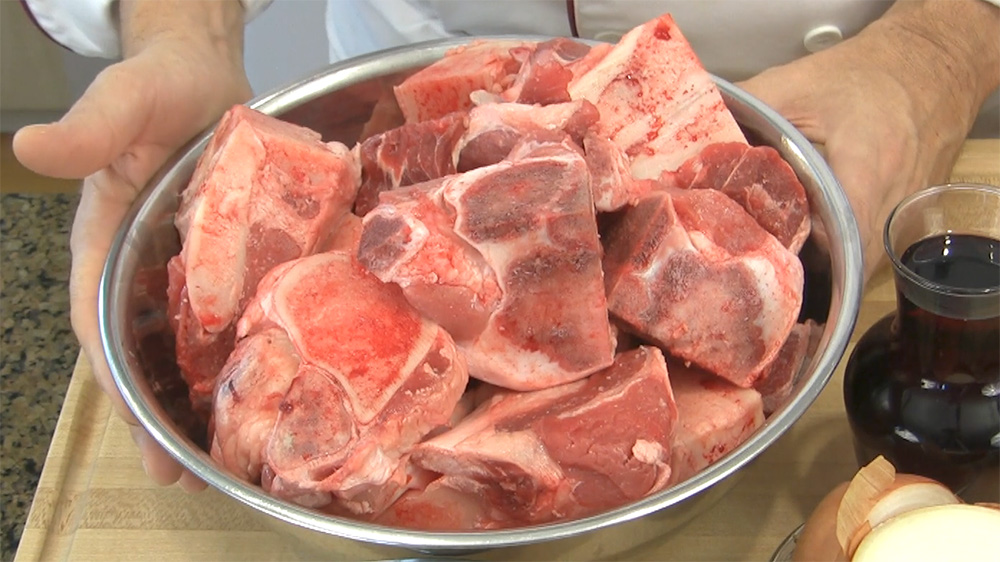

In restaurants and hotels, chefs simmer brown veal stock on the top of the stove for a full day, adding some water occasionally to make sure that the bones stay covered with liquid, to avoid the danger zone. (See the Danger Zone lesson in the Food Safety course). After a full day of simmering, the stock is strained.
Meaty bones and meat trimming are good to bring flavor and body. Bones contain collagen, which, when simmered, produces gelatin. The more gelatin there is in the stock, the more body it will have. When chilled, a good brown stock will solidify, thanks to the gelatine. The types of bones that are naturally high in cartilage include:
- knuckle, found in the large joints
- back
- neck
- bones of younger animals, such as veal
Some chefs like to thicken their stocks with a brown roux, others with some flour mixed with water. Flavor-wise the brown roux is better as the gluten from the flour will be cooked. Then the stock is cooled down and stored in the cooler. The stock is degreased the next day as the fat will float and solidify on the top to a thick crust.