Topic · Brown Stocks Making
Brown Duck Stock Principles
Duck stock isn’t something you can pick up at the grocery store or order from your food supplier, so when you have duck bones on hand, make a duck stock from scratch.
Making duck stock is, unfortunately, something that many chefs won’t consider or do because of a lack of knowledge or reflex. The bones, neck, and carcasses can be used to make white or brown duck stock. It’s an excellent way to utilize everything in the bird, reduce food waste, and lower your food cost.
It can also be done with goose bones, For brown duck stock, you roast the bones and roast the veggies like for brown veal stock, the end finishes produce with liters more of rich stock that is a perfect base for stews, soups or wintertime risottos or polenta.
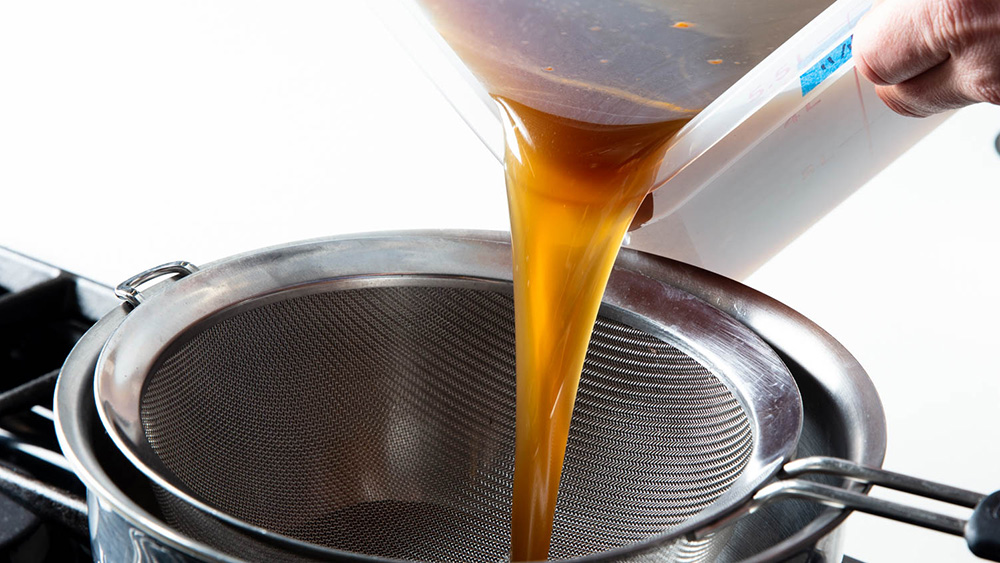
Straining duck stock
Additional tips:
- Deglaze your degreased roasting pan with water or wine, scrape all the browned bits off it with a wooden spoon, then add it to the stockpot for added flavor.
- After scooping out the carcasses, let the stock rest for 15 minutes before straining. The stock will be more clear.
- Add the bones of other game birds such as squab, quail, pheasant, partridge, etc.
- Consider adding the Mirepoix, unroasted in the last 2 hours. It keeps their flavors brighter and more distinct; something to consider.
- Include fennel seeds and/or juniper berries in your bouquet garni aromatics, if desired.
- You can keep your duck stock in the fridge for a week or so, or you can freeze it for six months.
- You may use duck’s heads if you plucked it completely. If not, don’t use them.
- Do not use any liver in stock, it will discolor the stock and add an unpleasant livery flavor.

White or brown duck stock should simmer for 4.5 hours, for the bones and carcasses to release all their flavor.