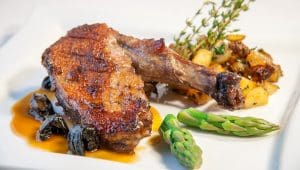
Discover blanquette de veau, the classic French white veal stew. Learn why the meat is simmered without browning, how the creamy sauce is finished and how to keep the veal tender.
Start the Veal Blanquette:
Cut the meat into one-inch cubes, and place in a pot. Cover with cold water. Bring to boil for a minute, and skim off the foam off the top. The foam is the coagulated blood of the meat. into a colander and refresh to stop cooking.
Prepare the aromatic :
Peel the onion, and prick with the cloves. Peel the carrots and cut in half lengthwise the leek and tie it up. Peel the garlic, split in half, and remove the germ. It is essential that you remove the germ of the garlic.
Cook the Veal Blanquette:
Put the meat and all vegetables in a large pot. one-inch with approximately 3 liters (quarts) of cold water. Add the rock salt. Bring to a boil, and frequently. Cook for about an hour.
In the meantime, prepare the garnish. Soak the pearl onions in warm water. Dice the bacon and on high heat for three minutes with a tablespoon of butter. Clean and quarter the mushrooms, and add them to the bacon in the pan. Cook them for five to six additional minutes; strain through a colander or sieve. Peel the onions. Cook in the baby onions, with one cup of water, two ounces of butter, and one tablespoon of sugar. Strain on top of the mushrooms.
Prepare the sauce:
Prepare a white roux with the butter and flour. Melt the butter in a small saucepan. Add the flour. Whisk until homogenized. Cook on low heat for three minutes. Using a very fine sieve, strain onto the cold roux, about 1.5 liters of the cooking . Whisk and cook over medium heat until thickened. Remove from the heat and gradually pour this mixture into the boiling broth, stirring constantly. Add seasonings. Strain the sauce once more in a large, clean saucepan. Add the pieces of meat one by one, and immerse them in the sauce. Add the mushrooms, pearl onions, and bacon. Gently stir and serve hot with hot parsley on top.
Blanquette de veau is a classic French veal stew in which the meat is gently simmered without first browning it, then served in a pale, velvety sauce. The name comes from the light colour of the finished preparation. It is traditionally associated with French home cooking and is valued for tender veal, a delicate stock-based sauce and carefully balanced seasoning.
Unlike a brown stew, the veal is not seared to create a dark crust or browned fond. The goal is a pale, clean flavour and a light-coloured sauce. The cooking liquid becomes the foundation of the sauce, which is finished to a smooth consistency rather than reduced to a dark glaze.
Use evenly sized pieces so they cook at a similar rate. Begin with the preparation and liquid specified in the recipe, bring the pot up gradually and maintain a gentle simmer. Skim as needed and avoid a hard boil, which can make the meat tough and disturb the clarity of the cooking liquid. Cook until the veal is tender, then remove it while the sauce is finished.
The cooking liquid is commonly thickened and enriched to create a pale sauce. Depending on the recipe, the finish may include a liaison of cream and egg yolk. If egg yolk is used, temper it gradually with hot sauce and avoid boiling after the liaison is added, as excessive heat can cause it to curdle. Season carefully and keep the sauce smooth.
Blanquette is often served with rice, potatoes or another simple accompaniment that allows the sauce to remain the focus. Mushrooms and small onions are common traditional garnishes, although the exact preparation varies.
Chef's tip: Control the heat throughout the cooking process. A gentle simmer protects the veal's texture and helps produce a refined, pale sauce.
This recipe connects to Meat & Poultry — learn the technique step by step in the video lessons.
About Veal Shoulder: The muscles include shoulder, forearm, and a thin layer of lean meat from brisket. The shoulder is usually used for braising or roasting. If you'd like to go deeper, Meat & Poultry covers this in full.
If you'd ever like hands-on guidance for your own kitchen or restaurant, I also offer 1-on-1 coaching through OCS, or you can reach me directly for consulting at 911ChefEric.com.
Recipes come out right when you understand the method. Chef Eric’s courses teach the foundations step by step — knife skills, stocks, soups and classic French technique — with video lessons and short quizzes. Not sure where to start? OCRS™ will build your roadmap in five questions.