Topic · Brown Stocks Making
Brown Stock Principles
An understanding of stock making principle will lead to good technique. The techniques describe the steps to be taken to achieve the desired result. It doesn’t really matter if you are doing a brown veal stock, a brown lamb stock, or a brown quail stock. The principles will remain the same.
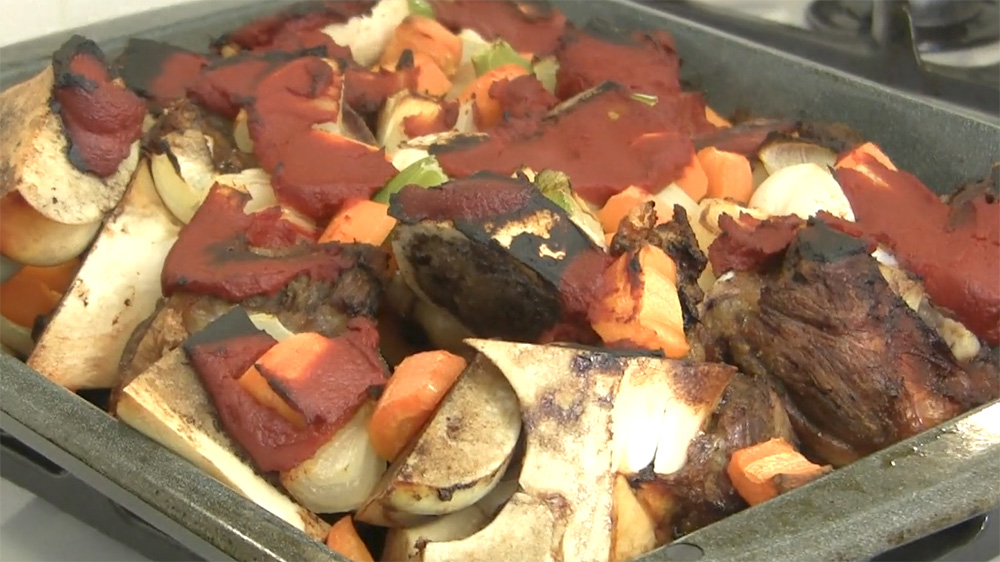
Adding tomato paste on roasted veal bones
Bones for Making Stock
You can use any bones from most animals. So you can make a brown stock of:
- veal
- beef
- duck
- lamb
- chicken
- turkey
- quail
- pigeon
- rabbit
etc.
Use Cold Water for Clearer Stock
Certain proteins, like albumin, will only dissolve in cold water, and albumin helps clarify a stock. Therefore, starting a stock with cold water helps release the albumin, producing a clearer stock. As the water gets hot, the albumin works like a filter and help to coagulate the impurities.
Because an important part of stock making is to remove the impurities, prefer to use filtered water to tap water whenever possible.
Bones is the primary ingredient in the stock making, and water is the second most important one. That being said, tap water in many countries is recognized by experts to be as good as filtered water when it came to health. If you are not sure, use activated carbon filtered water systems to get rid of much of the heavy metals, parasites, pesticides, and other chemicals not removed by treatment plants.
Aromatics
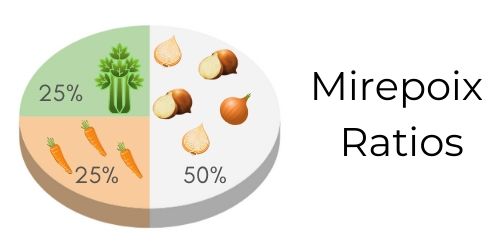
Mirepoix and Bouquet-Garni are essential aromatics. As explained before, Mirepoix is a combination of chopped carrots, celery, and onions used to add flavor and aroma to stocks. The usual proportions (by weight) for making mirepoix are:
Not sure how to pronounce Mirepoix? (pronounced “MEER-pwah”)
Not sure how to pronounce Bouquet-Garni? (pronounced “BUːkeɪ -ɡɑr:Ni”)
Bouquet Garni is a bundle of herbs usually tied together with a string to prevent them from dispersing in the liquid. When the liquid is going to be strained, like for stock, it can be added loose. The size of the Bouquet-Garni must match the size of the pot and should include:
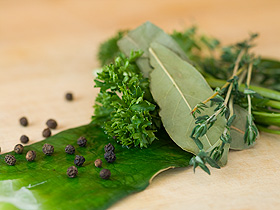
- the green part of leeks
- thyme
- bay leaves
- parsley stems
- whole black peppercorns
The Role of Acid in Stock making
In most stocks, the addition of wine is optional, but in brown stock, it’s recommended. As it concentrates on when you deglaze the roasting pan, the acid helps break down the cartilage and other connective tissues in bones, thus accelerating gelatin formation.
All brown stocks include tomatoes, especially tomato paste, that, along with bone colorations, adds color and flavor to the stock. It must be added and roasted after the bones to develop the character and remove the bitterness that tomato paste carries.
Seasoning Stock
A brown stock is never seasoned. Because brown stock is always reduced while making other preparations, salting the stock would make the end result too salty. Seasoning is introduced in the second preparation like sauces, stews, etc.
Straining Stock
When the stock is done, remove the bones with a flat spider strainer and discard them; unless you want to do a “remouillage,” as explained next. Strain the liquid through a conical strainer, and use a ladle to push through the liquid and flavors (this is called “foulé” in French). Then, strain the stock through a very fine mesh conical strainer or a colander lined with three or four cheesecloth layers.
Chilling Stock
Chill quickly, then refrigerate. The best way to chill any hot food is to use a blast chiller. However, very few kitchens have this pricey equipment. Alternatively, chill your hot stock over an ice bath, stirring frequently, until it reaches 4°F/40°F. When the stock is cold, skim off the fat that has solidified on top, and discard.
Freezing Stock
Brown stocks freeze very well, but they could take a lot of space. Consider freezing Demi-Glace or Glace-de-Viande to save 50% to 75% of freezing space. After thawing, you can always add water to extend them back to make brown stock.
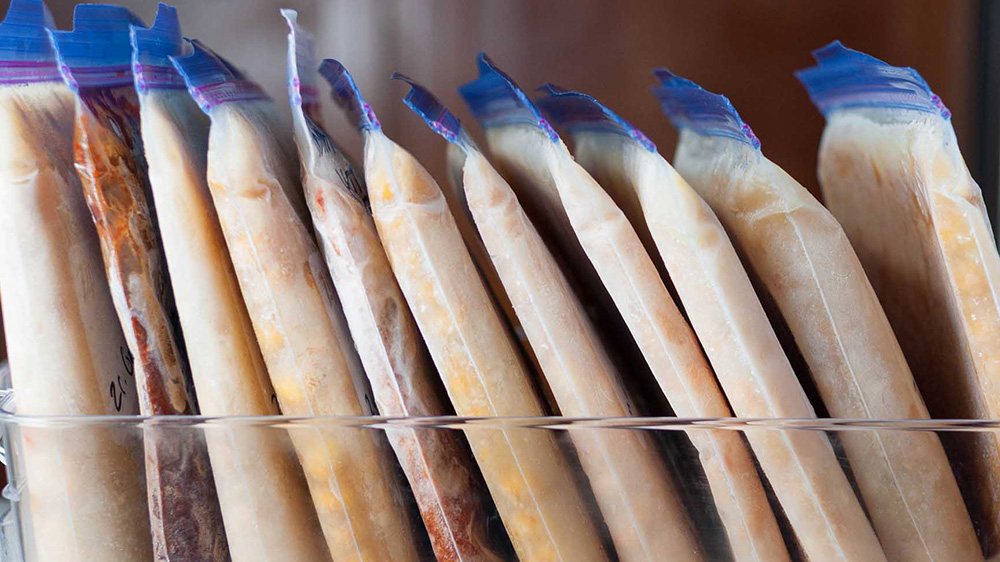
Labeled them properly and blast freeze them flat in sturdy zip-top freezer bags or boilable vacuum-pack bags. Once frozen you can stack them or store them upright, like books on a shelf.
Do not use glass containers to store or freeze stocks as it is considered as a physical hazard in food businesses.