Topic · Soups Making 101
Basic Purée Soups Recipe
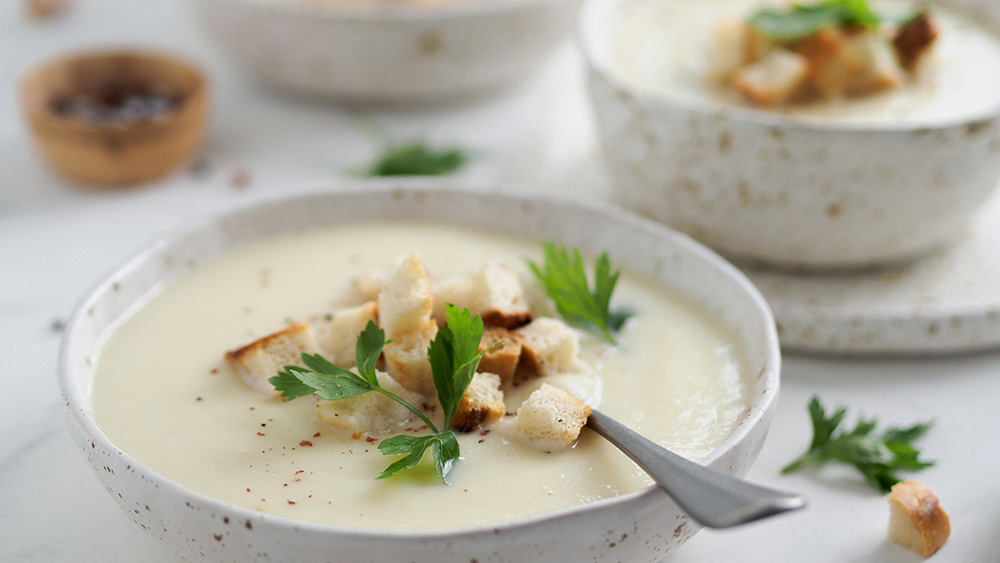
Cauliflower purée soup
Purée Soups
Ingredient for a basic recipe for ½ gal/ 1.92 L
- Salt pork or smoked bacon, if desired
- 2 lb / 0.9 kg of one or more vegetables, such as potatoes, onion, leek, squash, etc.
- 1 lb / 454 g dried legumes, such as lentils
- ½ gal/ 1.92 L of stock or broth
- 1 Bouquet garni
- Seasonings such as salt and pepper
- Spice sachet, optional
- Finishing ingredients, such as croutons or diced ham
Method for all Purée Soups:
The salt pork should be rendered as the first step to build a flavor base and will help to sweat the aromatic garnish with the fat. Butter can also be used for this process but the oil that comes from cured pork products is not used. The aromatic garnish can be cooked over medium heat while being stirred at intervals for about 5 to 10 minutes till a rich aroma emanates or develops.
The remaining ingredients and the liquid should be added at the right time. The soup should be simmered till it is well-flavored and all ingredients are tender. Root vegetables, winter squash, and dry beans as dense, tough, starchy, fibrous and dry ingredients should be added at the beginning of the cooking process at the time when the broth or the stock has started to simmer.
As the soup is puréed before serving, the ingredients need not retain their shape, unlike a hearty broth where the ingredients have to retain their shape during the cooking time and when being served. During the last 30 minutes of the cooking process, the Bouquet Garni or sachet may be added.
Quite a few purée soups have legumes as the base and often use the addition of ham hock or smoked pork or similar ingredients that are cut and added to the soup as soon as the simmering process starts so that the broth and its main ingredients are well flavored. Once the soup acquires its required flavor, these ingredients may be removed. The lean meat may be diced and reserved as a garnish.
The soup should be stirred often so that the ingredients that are starchy do not stick to the bottom of the pot. Liquid or other stock may be added through the cooking period. The dry or starchy ingredients used in different purée soups will absorb varying amounts of liquid that depend on the maturity of the starchy ingredients and also on their soaking period. The seasonings should be adjusted and the soup should be skimmed to remove impurities.
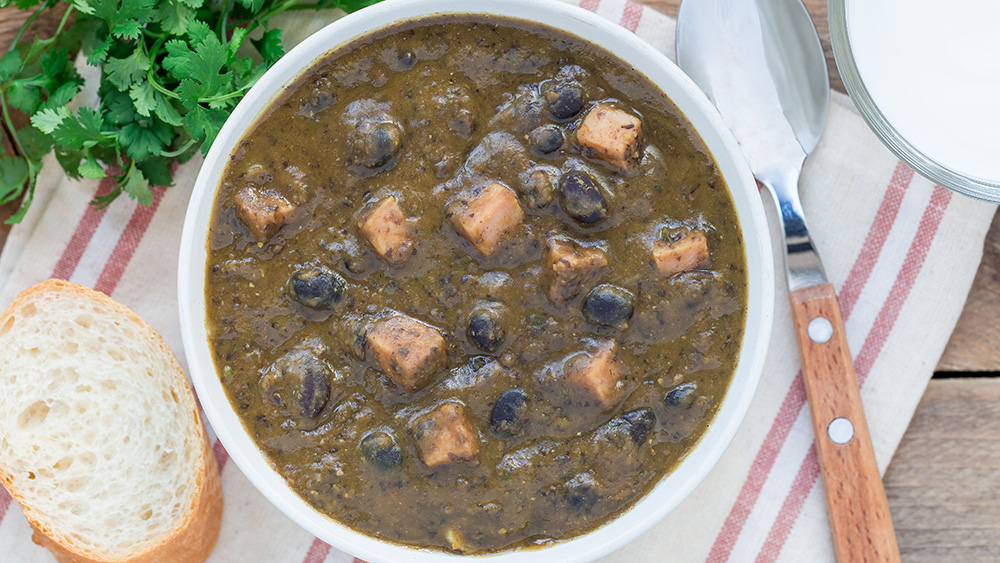
The soup should be puréed, seasoned, and checked for consistency. Various kinds of equipment will render various textures in the finished soup. Soups that are rustic and made at home style will be almost coarse and often use the main starchy ingredients to produce a texture that is thick. A food mill with a disk that is coarse may be used to offer a textured purée soup. Soups with a smooth and fine consistency may be produced with blenders, immersion hand blenders, and a food processor. The finished soup may be served or quickly cooled and kept ready for refrigeration.
The quality of the finished purée should be evaluated. Soups that are puréed have a slightly coarse texture and are thicker as compared to other soups that are thick. They should retain their liquidity that should facilitate easy handling with a ladle to be poured into a bowl with a consistency akin to heavy cream.
With a harmonious balance of the liquid and the solid ingredients, the end result should be pleasing to the palate with a flavor that is robust. To enhance the flavor, a small bit of butter may be swirled or mixed at the top of the soup in the kitchen just before serving in the dining room.