
Topic · Soups Making 101
Tips For Making The Perfect Cream Soup
A cream soup may be thickened with white Roux, blond Roux, potatoes, rice, and flour-based on the desired results.
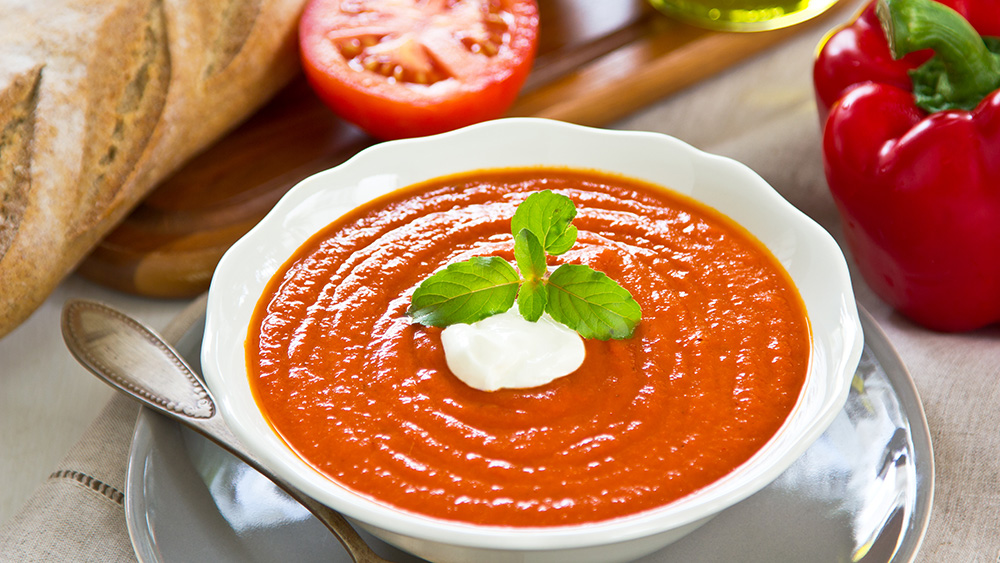
Tomato with red pepper soup and a cream dollop
In order to develop more flavors, additional ingredients may be used and added at the right time. Some of the ingredients may be used earlier to add flavor and also because they may cook evenly during the cooking process. The other ingredients such as bouquet garni and the spice sachet will retain their specific flavor and texture when added later.
Garnishing enhances and influences the flavors in a cream soup. Ingredients used for garnishing may be cut to the right size with the preferred shape to be added during the final stages of the cooking process or just before serving. The garnishing ingredients may include heavy cream crème fraîche, minced or Chiffonade herbs, liaison, or diced or Julienned main flavoring ingredients.
Cream soups that have poultry, fish, or meat as a base need not be puréed. A rinsed cheesecloth or a fine-mesh sieve can be used to strain puréed cream soups. The purée can also be extracted by pushing the solids against the sides when a fine-mesh sieve is being used. Fibers can be removed by straining that gives the soup a smooth and velvety texture. By now, the soup should have developed the required consistency and flavor. Any adjustments that are needed should be made so at this point. The soup is now ready to be finished. The soup may be cooled and refrigerated for later use or can be served as a chilled soup.
The soup should be checked for flavor, seasoning, and consistency before the cream is added. The soup can be reverted to simmer on a medium heat if a hot cream is required, and hot cream can be added to enhance the taste of the soup without overpowering the flavor of the main ingredient. Adjust the seasoning if required and let the soup simmer.