
Topic · Professional Vegetable Cuts
Stick – “Bâtonnet ” Cuts Sizes
Whether you’re new to the culinary arts, or you’ve been cooking for a while and want to polish your skills, the bâtonnets (pronounced bah-tow-NAY) is a great knife cut to learn.
Why? Unlike some of the more preposterous knife cuts, like the fine brunoise, a cut so tiny it’s barely visible with the naked eye — anyone who’s even minimally familiar with a knife should have no trouble making a bâtonnets cut. That makes it practical. But it’s also a really attractive cut. Long and slender, it can make the most pedestrian vegetables a turnip, let’s say, seem positively elegant.
So check out this step-by-step tutorial on how to make a bâtonnets cut. Incorporating this easy knife cut into your repertoire will enhance the presentation of your dishes enormously.
Learn how to make stick cuts: Pont-Neuf, Frite, Baton Cut, Batonnet, Allumette and Julienne.
Bâtonnets are one of the most common culinary knife cuts. Literally translated, bâtonnets means “little stick” in French. A dish like carrots bâtonnets wouldn’t have nearly the same appeal if it were named Little Stick Carrots or Carrot Twigs.
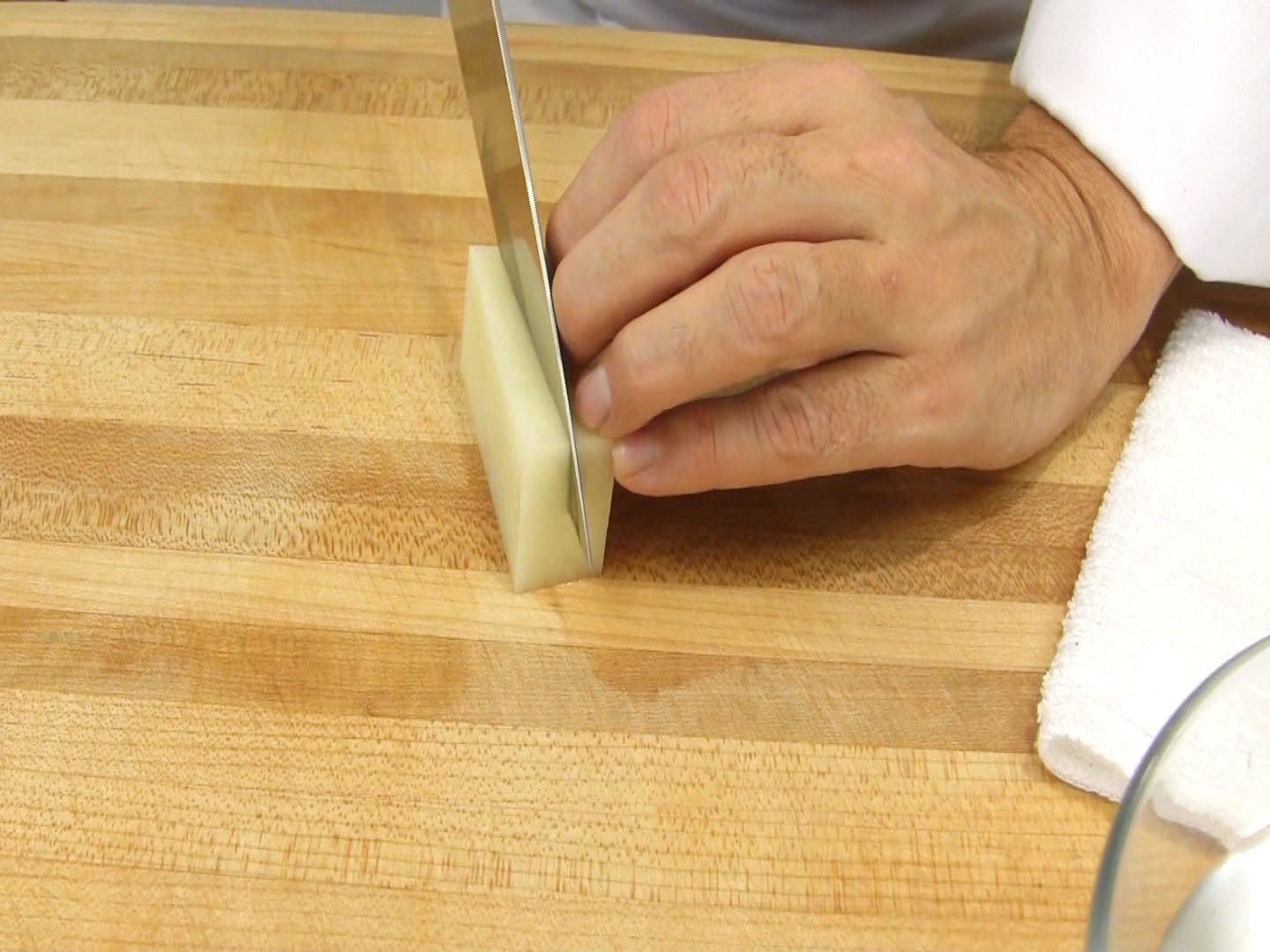
Julienne, allumette and bâtonnets are matchstick-shaped cuts prepared using the same procedure as cutting sticks or dicing.
Each size of cut has a name, that you need to learn and recognize.
