Topic · Appetizers Mastery
Hors d’Oeuvres vs Appetizers
The difference between hors d’oeuvres and appetizers have to do with when they are served and portion size. For example, appetizers are slightly larger than hors d´oeuvres. The purpose of both is to stimulate the appetite and set a mood for the meal. Hors d’oeuvres are typically served as a prelude to a meal with a napkin and eaten with fingers, so they are also referred to as “finger foods.” On the other hand, appetizers are usually the meal’s first or second course, are served on a plate, and are eaten with a fork.
There is a very thin line of difference between appetizers and hors d’oeuvres. For example, some might consider tapas as an appetizer whilst others would consider them as hors d’oeuvres.

About Hors d’Oeuvres
The term hors d’oeuvre is derived from the French for (dishes) “outside the work (meal).” Hors d’oeuvres are meant to pique the taste buds and perk up the appetite. Foods served as hors d’oeuvres should be:
- Small enough to eat in one or two bites. Some hors d’oeuvres are often eaten with the fingers, while others may require a plate and a fork. With a few exceptions, hors d’oeuvres do not require the use of a knife.
- Attractive. Because hors d’oeuvres customarily precede the meal, they are considered a means of teasing the appetite. This is partially accomplished through visual appeal.
- Designed to complement the meal that is to follow. It is important to avoid serving too many foods of a similar taste or texture. For example, if the menu features lobster bisque, lobster canapés may be inappropriate.
Presenting Hors d’Oeuvres
The presentation of hors d’oeuvres can extend from the elegance of butler-style service to the relative informality of buffet, or it may be a combination of service styles. The type of hors d’oeuvre as well as the requirements of a particular function determine how these foods are presented. Guidelines below can help the chef in hors d’oeuvre presentation.
- Keep in mind the nature of the event as well as the menu that follows when selecting hors d’oeuvre
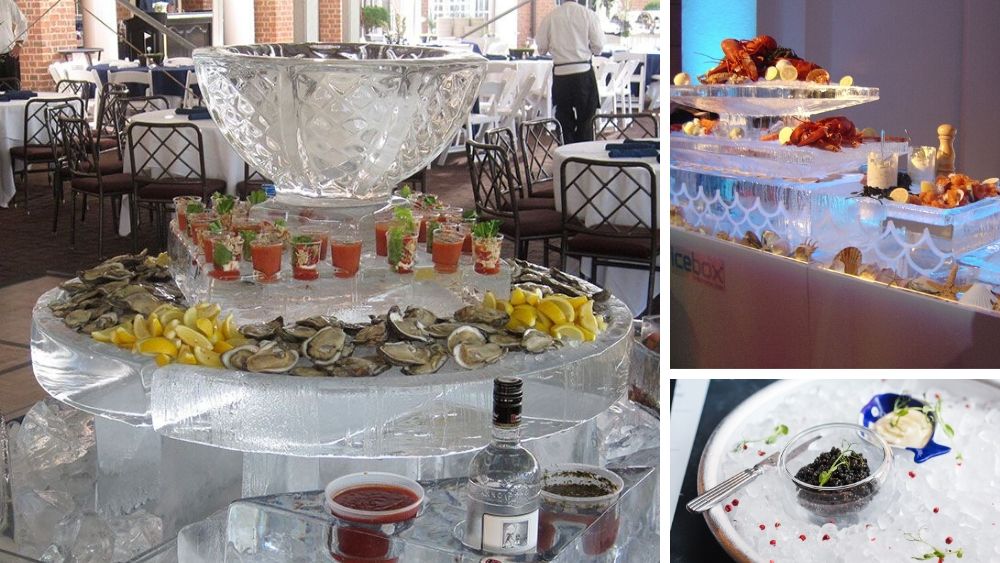
- Ice carvings and ice beds are often used to keep seafood and caviar very cold, and their dramatic appeal is an added bonus. Be sure that the ice can drain properly and that heavy or large ice carvings are stable.
- Hors d’oeuvres served on platters or passes on trays should be thoughtfully presented so that the last morsel on the plate is still attractively presented.
- Hors d’oeuvres that are served with a sauce require serving utensils. In order to prevent the guest from having to juggle a plate, fork, and napkin while standing, these hors d’oeuvres should ordinarily be limited to buffet service as the prelude to a more elaborate meal.
- To ensure that hot hors d’oeuvres stay hot, avoid combining hot and cold items on a single platter and have chafing dishes available for buffet services.