
Topic · Seafood Preparation
Frozen Seafood Guidelines
You may live in a rural area, where fish is not so easy to find. Frozen fish can actually be a very good choice as long as it is of the best quality. Typically, if you see “frozen on the boat” or “frozen at sea,” it’s a good sign. Indeed, it is best to have a fish that was frozen shortly after it was caught (on the boat) than a “fresh” fish that traveled many hours before arriving on your table.
Frozen Seafood
- After shopping, immediately store commercially wrapped frozen seafood in your freezer.
- Put it in the coldest part of the freezer, at a temperature as close to –20°C /-4°F as possible.
- As with other frozen foods, avoid prolonged storage by planning your purchases, keeping in mind “first in, first out.”
- Commercially frozen seafood can be stored in the freezer for up to six months. However, the more you open your freezer, the more the temperature will fluctuate, shortening the shelf life of your frozen products. My rule of thumb Is to keep frozen seafood for up to three months.
- Food thawed in the refrigerator can NOT be refrozen without cooking, although there may be some loss of quality.
- Don’t buy frozen seafood if its package is open, torn, or crushed on the edges.
- Avoid packages with signs of frost or ice crystals, which may mean the fish has been stored a long time or thawed and refrozen.
- Avoid packages where the “frozen” fish flesh is not hard. The fish should not be bendable.
Thawing Seafood
- Plan ahead; defrost fish overnight in the refrigerator. This is the best way to thaw fish to minimize loss of moisture.
- Defrost on the lower shelf, separate from produce and ready to eat food to prevent cross-contamination.
- A one-pound package will defrost within twenty-four hours.
- Never defrost seafood at room temperature or with hot or warm water as bacteria on the surface will begin to multiply.
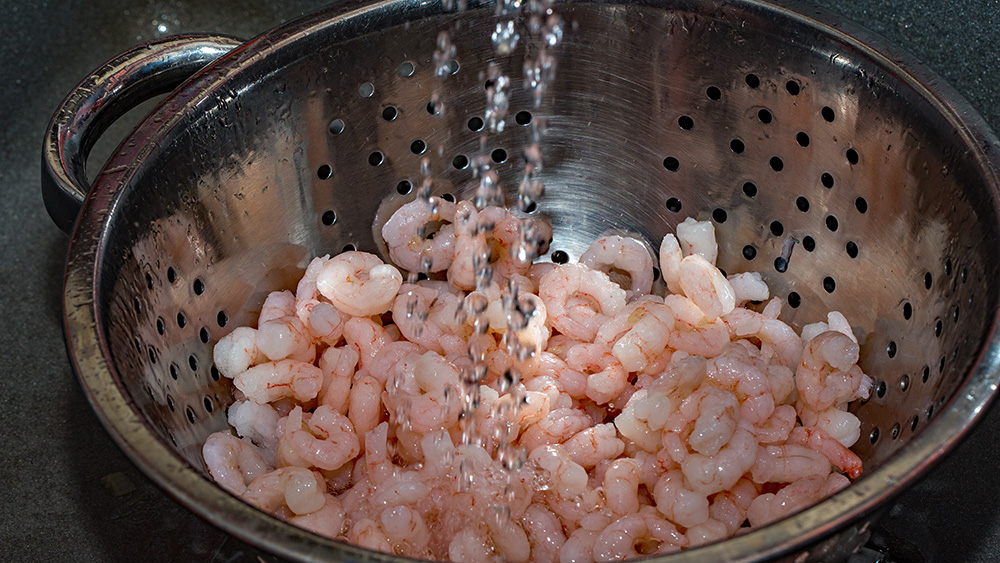
- If you forget to take the seafood out of the freezer in time, place it in the sink (still in the package) under cold, running water. A one-pound package will defrost in about an hour.
- Wash your hands for at least 20 seconds with soap and warm water after handling any raw food.
When preparing fresh or thawed seafood, it’s important to prevent bacteria from raw seafood from spreading to ready-to-eat foods. Take these steps to avoid cross-contamination:
You can also use your microwave oven to partially defrost fish. Use the lowest defrost setting (10% to 20% power). A pound of fillet will defrost in five to six minutes. The fish should feel cool, pliable, and slightly icy. Be careful not to overheat it and begin the cooking process. Foods defrosted in the microwave oven should be cooked immediately after thawing. Personally, this is my least favorite method, and I do not recommend it, as often the fish will start to cook due to the sporadic heat of the microwave.