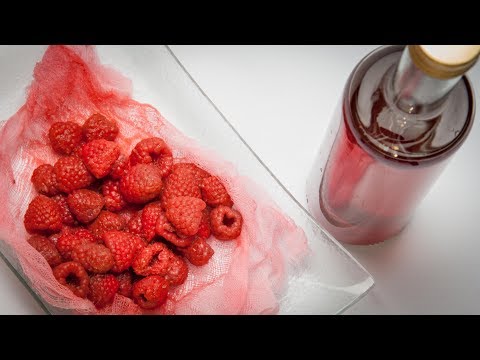
Make raspberry vinegar with fresh berries for a fruity, aromatic condiment. Use it in dressings or to deglaze a pan after cooking duck, adding bright acidity to rich dishes.
In a medium, nonreactive saucepan over low heat, warm the vinegar just until it begins to give off steam (do not bring to a boil). Put the raspberries into a sterilized jar. Pour the warm vinegar over the berries and allow the mixture to cool 20 to 30 minutes to room temperature, then seal and shake the jar gently. Set the jar out of direct sunlight and away from the heat too steep for 4 days, shaking it every so often. While , the vinegar will take on a raspberry hue and the fruit will lose most of its color.
Flavored vinegar made with soft fruits or berries is excellent with vegetables, duck or liver. What I like to do is to deglaze the pan where I just fried a duck breast with a little bit of raspberry vinegar. It is simply devine!
This recipe connects to Sauce Making Fundamentals — learn the technique step by step in the video lessons.
Flavored vinegars and oils add excitement to salads, marinades, and sauces. They also make special gifts, provided a few simple precautions are followed. Of the two, flavored vinegars are easiest and safest to make. Because vinegar is high in acid, it does not support the growth of botulism bacteria. However, some vinegars may support the growth of Escherichia coli bacteria. Infused oils have the potential to support the growth of C. botulism bacteria. These products may cause great harm if not made and stored properly. By following the procedures below, both types of products can be safely prepared and used. If you'd like to go deeper, Sauce Making Fundamentals covers this in full.
If you'd ever like hands-on guidance for your own kitchen or restaurant, I also offer 1-on-1 coaching through OCS, or you can reach me directly for consulting at 911ChefEric.com.
Recipes come out right when you understand the method. Chef Eric’s courses teach the foundations step by step — knife skills, stocks, soups and classic French technique — with video lessons and short quizzes. Not sure where to start? OCRS™ will build your roadmap in five questions.