Topic · French Christmas Menu Masterclass
Foie Gras Terrine
What Is Foie Gras Terrine?
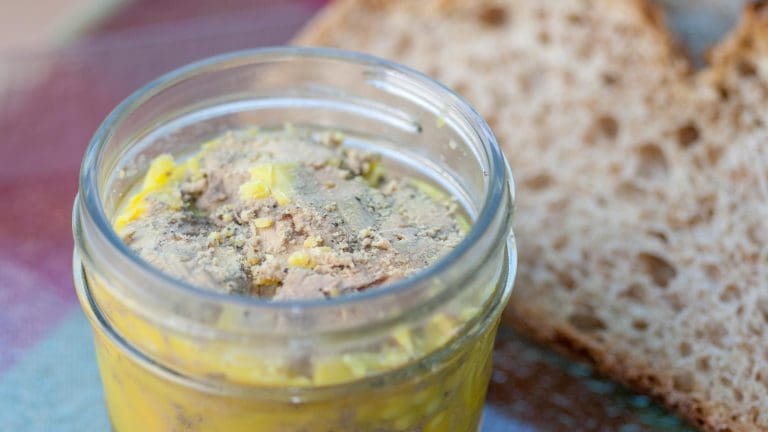
Foie gras terrine is a classic French preparation of duck or goose liver that is seasoned, packed into a terrine mould, gently cooked and chilled before slicing. The finished terrine should have a smooth, rich texture and clean slices that hold their shape. The word foie gras is French for “fatty liver” and refers specifically to the fattened liver of duck or goose.
Ingredients
- 454 g raw foie gras (duck or goose liver)
- 5 g fine sea salt
- 1.5 g freshly ground black pepper
- 0.5 g sugar
1. Prepare and Devein the Liver
Keep the liver very cold. Place it in a bowl of cold water for approximately 30 minutes, adding ice if necessary to maintain a cold temperature. Remove the liver and carefully separate the lobes. Use small cuts to locate and remove the main veins and connective vessels while keeping the pieces as intact as possible.
2. Season the Foie Gras
Break the liver into large pieces and season evenly with the salt, pepper and sugar. Handle gently to avoid crushing the liver. Arrange the seasoned pieces in the terrine mould and press lightly to remove large air pockets and create an even fill.
3. Cook in a Bain-Marie
Preheat the oven to 350°F (175°C). Place the terrine in a hot water bath and cook according to the recipe’s intended texture and validated process. The original 120°F (49°C) internal-temperature reference is a culinary target for this traditional preparation, not a universal food-safety standard. For commercial foodservice, use only a time-and-temperature process permitted by the local health authority and validated in the operation’s food-safety plan. Do not assume that a low-temperature terrine is safe simply because it is chilled afterward.
4. Press and Chill
Remove the terrine carefully from the water bath. Place it in a deep dish and apply light, even pressure using the terrine lid or a clean, food-safe insert. The original method uses a short pressing period to bring rendered fat to the surface. Keep the time at room temperature controlled and transfer the terrine promptly to refrigeration under the operation’s cooling procedure. Once the fat has covered the surface, cover the terrine, label and refrigerate for at least one day before serving.
5. Serve the Terrine
To unmould, dip the outside of the terrine briefly in warm water. Use a hot, clean knife to cut neat slices. Serve with French Melba toast, toasted brioche or another suitable accompaniment. Keep the terrine chilled until service and return it to refrigeration promptly.
Chef’s Tips
- Work with very cold liver and clean, sanitized equipment.
- Devein carefully; removing large vessels improves the texture of the finished terrine.
- Pack the mould evenly so the terrine slices cleanly.
- Control pressing, cooling and refrigerated storage according to a validated food-safety procedure.
- Use a hot, clean knife for neat slices and wipe the blade between cuts.
Food-safety reminder: Foie gras is a raw animal product and must be handled, cooked, cooled and stored according to the applicable food code. The low-temperature method described here is not appropriate for every jurisdiction or commercial operation; verify the permitted process before preparing it for guests.