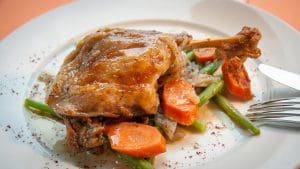
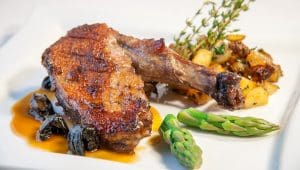
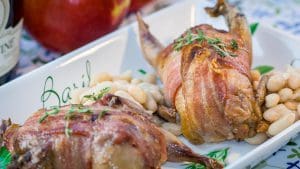
Learn how to make traditional cassoulet from southwest France with white beans, sausage, pork and duck confit. Explore bean preparation, layered cooking, slow baking and the characteristic crust.
Soak the beans overnight in 2 liters of cold water and reserve in a fridge for 8 to 10 hours. Rub the pork shoulder with one tablespoon of rock salt on each side and let cure in a fridge for 3 to 4 hours.
Drain the beans and discard the soaking water. Place the beans in a large pot and cover with the cold water. Bring to a boil on high heat and boil for a minute. Strain and refresh the beans under cold water to stop them from cooking. Rinse the pot and put the strained beans back. Add thyme, bay leaves, carrots, eight cloves, green leek, and tomato paste. Cover the ingredients with 5 cups of chicken , put the lid on top and bring to a boil on high heat.
When the beans are boiling, reduce the heat to medium. Cook for about 20 to 30 minutes, just until tender, but firm enough to stay together. When cooked, strain in a colander with a bowl underneath to collect the cooking liquid.
In the meantime, rinse the pork shoulder under cold running water and dry it with a clean towel. Heat the duck fat in a sauté pan and sear the pork on all sides until golden brown, then set it aside. Do the same for the and the pork sausages.
You are just searing the outside of the meat, to make it golden brown. Degrease and deglaze the pan with 2 cups of the bean cooking liquid to clean and dissolve the flavor of the pan. Preheat the oven to 350°F (if using a , bake at 25°F lower).
Peel and chop the garlic, remove the aromatic of the beans, but save the bay leaves for later use.
Place the bacon slices on the bottom of a clay casserole or in an ovenproof dish, slightly overlapping them. Cover the bacon with a layer of beans, and then place in the center the pork shoulder, duck confit legs, chopped garlic, and the rest of the beans. Add the bean cooking stock and the remaining cup of chicken stock if needed. Place the sausages and bay leaves all around the top. Finally, with salt and black pepper.
Bake for 1 hour and 45 minutes. Test the beans; they should be cooked but not mushy. Sprinkle half of the breadcrumbs, and bake until golden brown. It will take 10 to 15 minutes. Then, the thin crust and add the remaining breadcrumbs and bake for another 10 to 15 minutes at 450°F, until the top becomes crusty and golden brown.
Remove from the oven and serve in the same dish with a glass of good red wine. A Madiran would be an excellent choice.
Cassoulet is a substantial baked bean dish from southwest France, traditionally made with white beans and a selection of meats such as sausage, pork and duck confit. Regional styles are associated with places including Castelnaudary, Carcassonne and Toulouse, each with its own traditions. The dish is slow-cooked so the beans absorb the flavour of the meat and cooking liquid.
Use the white beans specified in the recipe. If using dried beans, soak and cook them according to the recipe and supplier guidance before assembling the cassoulet. Prepare the pork, sausage and duck confit as directed, removing excess fat where necessary while retaining enough richness for flavour.
Arrange the beans and meats in a suitable ovenproof pot, adding the cooking liquid so the mixture remains moist. Cook slowly in the oven until the beans are tender and the flavours have melded. Monitor the liquid level and add hot stock or water if needed to prevent the beans from drying out.
A browned crust forms on the surface during baking. Depending on regional tradition and recipe, it may be broken and allowed to reform during cooking. The top should be golden and savoury while the beans beneath remain moist and tender.
Cook the meats thoroughly, cool leftovers promptly and reheat using the kitchen's approved time-temperature procedure. Serve cassoulet hot in warmed dishes.
Chef's tip: Cassoulet is a slow, layered preparation. Give the beans time to absorb the meat and stock flavours, and keep the pot moist enough to avoid drying out.
This recipe connects to Meat & Poultry — learn the technique step by step in the video lessons.
If you'd like to go deeper, Meat & Poultry covers this in full.
If you'd ever like hands-on guidance for your own kitchen or restaurant, I also offer 1-on-1 coaching through OCS, or you can reach me directly for consulting at 911ChefEric.com.
Recipes come out right when you understand the method. Chef Eric’s courses teach the foundations step by step — knife skills, stocks, soups and classic French technique — with video lessons and short quizzes. Not sure where to start? OCRS™ will build your roadmap in five questions.