Make pan bagnat, the traditional Provençal sandwich from Nice with bread, tuna, vegetables and olive oil. Learn how to layer the ingredients, season the filling and press the sandwich before serving.
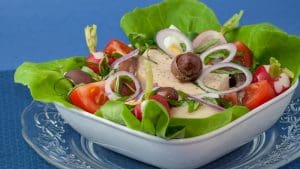
Divide the Kaiser buns horizontally into 2 pieces. Tear out some of the soft bread in the center of each side, making a slight well in the bread. On each bottom piece, place the tuna, green pepper, red onion, hard-boiled eggs, olives, tomato and basil on the bottom side of the bread in that order.
Drizzle the over the vegetables, top with the second piece of bread, and wrap tightly in plastic wrap. Let stand at room temperature for ½ hour before serving.
Pan bagnat is a traditional sandwich from Nice in Provence. Its name is commonly understood as “bathed bread,” referring to the way the bread absorbs olive oil and the juices from its filling. The sandwich is associated with the flavours of salade niçoise and is often made with tuna, vegetables and other Mediterranean ingredients.
Use a round, sturdy loaf with a crust that can hold the filling without falling apart. A soft bread may become soggy too quickly, while an overly hard crust can make the sandwich difficult to bite. Open the loaf and remove a little interior crumb if needed to create room for the filling.
Arrange the ingredients specified in the recipe in balanced layers. Tuna, vegetables and olive oil are central to many versions; other traditional additions may include tomato, hard-boiled egg, anchovy, olives or fresh herbs. Season carefully and distribute the ingredients so each portion has a balanced bite.
Close the sandwich and press it gently so the bread absorbs the oil and juices. It may be wrapped and rested briefly before slicing, depending on the recipe. Keep perishable fillings refrigerated and avoid holding the assembled sandwich at room temperature for extended periods.
Chef's tip: Pan bagnat should be moist and flavourful, not waterlogged. Drain juicy vegetables and use olive oil with restraint so the bread absorbs flavour without collapsing.
This recipe connects to Seafood Preparation — learn the technique step by step in the video lessons.
If you'd like to go deeper, Seafood Preparation covers this in full.
If you'd ever like hands-on guidance for your own kitchen or restaurant, I also offer 1-on-1 coaching through OCS, or you can reach me directly for consulting at 911ChefEric.com.
Recipes come out right when you understand the method. Chef Eric’s courses teach the foundations step by step — knife skills, stocks, soups and classic French technique — with video lessons and short quizzes. Not sure where to start? OCRS™ will build your roadmap in five questions.