Learn how to peel, slice, dice and finely chop shallots with a chef's knife. Follow professional knife technique for even pieces used in sauces, vinaigrettes and aromatic bases.
Top and Tail: Using a , cut off the top and bottom (root end) of the shallot without slicing all the way through.
Remove the Skin: from the attached side, and the skin should come away easily.
Halve the : Slice the peeled shallot in half lengthwise.
Slice: Place the cut side down and make thin, even slices lengthwise.
Cut in Half: Cut the peeled shallot in half lengthwise and place it flat on the cutting board.
Make Vertical Cuts: Starting from the root end, make vertical cuts close together but not all the way through. The closer the cuts, the finer the .
Horizontal Cuts: Make one or two horizontal cuts through the shallot.
Dice: Now, slice across the shallot to create fine dice.
Rough : For a rough chop, simply cut across the shallot without precision, resulting in small, irregular pieces.
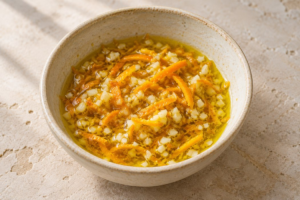
Chop Finely: If you need finely chopped shallots, first slice or dice and then go over the pieces with your knife until they reach the desired size.
Shallots are small alliums with a delicate, sweet onion flavour and a subtle garlic note. They are widely used in French cooking for vinaigrettes, sauces, reductions, garnishes and aromatic bases. Correct peeling and knife work help produce clean, even pieces that cook consistently and distribute flavour evenly.
Place the peeled shallot on a stable cutting board and cut it lengthwise through the root. Make controlled horizontal and vertical cuts as required, keeping the root end intact to hold the layers together. Slice across the shallot to create an even dice, then trim away the root end. For fine chopping, gather the pieces and use a controlled rocking motion with the chef's knife.
A dice produces small, defined pieces, while a mince is finer and less geometric. Use a fine mince when the shallot needs to blend into a vinaigrette or sauce. A larger dice or slice may be more appropriate when the shallot is sautéed or used as a visible component.
Key point: A clean shallot cut starts with careful peeling and a stable cutting position. Consistent pieces improve cooking, texture and presentation.
This recipe connects to Vegetable Cookery Fundamentals — learn the technique step by step in the video lessons.
If you'd like to go deeper, Vegetable Cookery Fundamentals covers this in full.
If you'd ever like hands-on guidance for your own kitchen or restaurant, I also offer 1-on-1 coaching through OCS, or you can reach me directly for consulting at 911ChefEric.com.
Recipes come out right when you understand the method. Chef Eric’s courses teach the foundations step by step — knife skills, stocks, soups and classic French technique — with video lessons and short quizzes. Not sure where to start? OCRS™ will build your roadmap in five questions.