Make gazpacho Andaluz, the classic chilled Spanish soup of tomatoes, cucumber, peppers and onions. Marinate and blend the vegetables for a smooth, refreshing summer starter.
Chop celery, red onion, red peppers (remove seeds), cucumbers ( and seed), cilantro, garlic, and tomatoes (peel if desired).
Cut the bread into cubes and sauté in 2 tbsp olive oil until golden and crispy. Season with salt and set aside on paper towels to absorb excess oil. Dice the remaining cucumber and chop the green onions for .
In a large bowl, combine all vegetables, tomato paste, breadcrumbs, red wine vinegar, cayenne pepper, and water. Add ½ cup olive oil, tomato juice, and season with salt and white pepper. Let the mixture in the fridge for at least 2 hours.
Process the mixture in a food processor until finely chopped. Return it to the bowl and taste; adjust seasoning with salt, pepper, and cayenne as needed.
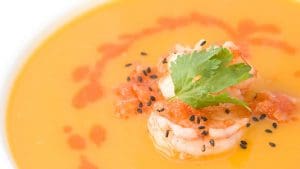
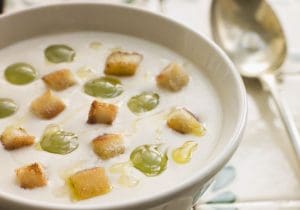
Serve the chilled gazpacho with optional shrimp and garnish with croutons and chopped green onions.
Gazpacho Andaluz is a healthy Spanish soup that embodies the vibrant flavors of Spain. This summer gazpacho recipe is made with simple, fresh ingredients such as tomatoes, cucumbers, peppers, and onions. The key to an excellent gazpacho recipe is marinating the vegetables and blending them into a smooth, rich soup. You can add shrimp for an extra protein boost, or enjoy it as a chilled soup on its own. This dish is also perfect for shrimp gazpacho enthusiasts, as the shrimp adds both texture and flavor to the mix.
The Gazpacho Andaluz should be served cold, garnished with croutons or additional fresh vegetables. Whether you're preparing a summer gazpacho for a family gathering or just craving a tomato cucumber pepper soup, this dish is a great way to embrace the flavors of Spain.
This recipe connects to Cold Soups and World Soups — learn the technique step by step in the video lessons.
Gazpacho descends from an ancient Andalusian liquid concoction based on a combination of stale bread, garlic, olive oil, salt, and vinegar. Tomato was added to the recipe after it was brought to Europe after the Columbian Exchange, which began in 1492. If you'd like to go deeper, Cold Soups and World Soups covers this in full.
If you'd ever like hands-on guidance for your own kitchen or restaurant, I also offer 1-on-1 coaching through OCS, or you can reach me directly for consulting at 911ChefEric.com.
Recipes come out right when you understand the method. Chef Eric’s courses teach the foundations step by step — knife skills, stocks, soups and classic French technique — with video lessons and short quizzes. Not sure where to start? OCRS™ will build your roadmap in five questions.