Topic · White Stocks Making
White Beef Stock Principles
What makes a white beef stock different from a white veal stock is the type of bones you are going to use. The technique remains the same. You would use beef bones for the first and veal bones for the later.

The cooking could vary, depending on the size of the bones, but typically, it should simmer for at least 3 hours.
It is a stock generally used as a base for clear soups or white cream sauces. Make sure you keep the stock to a low simmer, and all ingredients, always, totally covered by the liquid by at least an inch or three centimeters.
Sometimes white veal or beef stock is called “Marmite,” and they are used as a base for beef consommé. The term “marmite” (not to be confused with the commercial spread of the same name) describes a white beef stock with burned onions. A consommé is a type of clear soup made from richly flavored stock or bouillon that has been clarified usually through a fining process involving egg protein.
When I was Chef at Le Cap Estel*, a luxury hotel on the French Riviera, some of the guests were staying at the hotel for months. Consommé was a popular dish on the menu. It was a must-have dish to always have on hand for the guests. So, daily, we were alternating cooking brown veal stock, white stocks, and marmite.
Do’s and Don’ts!
- For good flavor and body, use meaty bones.
- Bones from young animals contain a high percentage of cartilage and connective tissue that produce more gelatin. The gelatin adds a silky, velvety texture to the stock. The flavor is not as beefy either, more subtle.
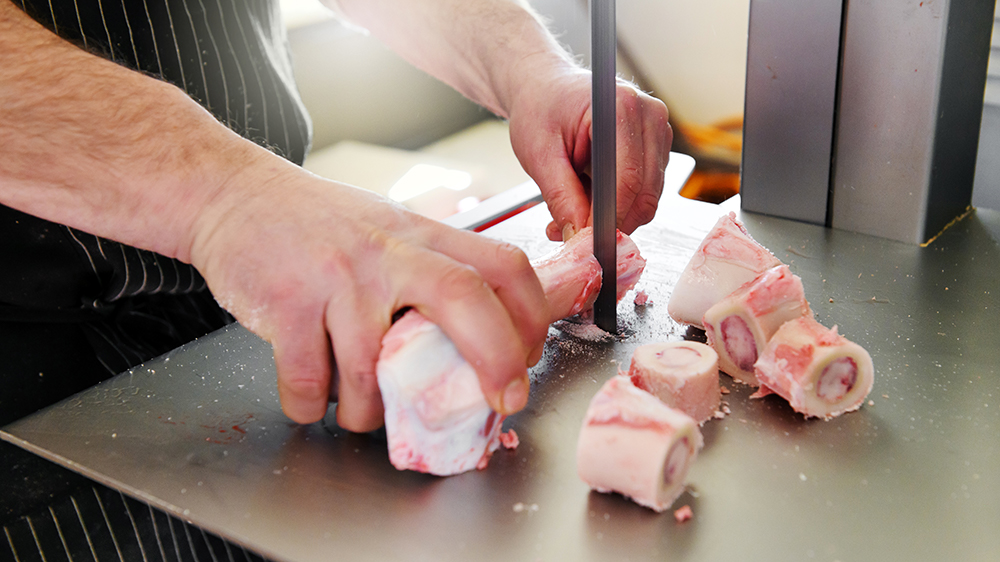
- Use a few bones with marrow in the mix to add depth to the stock. But don’t use too many, or the stock will be very greasy.
- Knuckle, back, and neck bones are suitable for white stock, along with meat trimming as well.
- Cut bones into 8 to 11 cm / 3 to 4 inches lengths for quicker extraction of flavor, gelatin and nutrients.
- When using frozen bones, there are two schools of thoughts:
- Blanching the bones (cover the frozen bones with cold water and bring to a boil) first, throw the water away and cover again with new water.
- Not blanching and cook them an extra hour. This is my favored choice as I want to keep all the flavors.
- Rinse fresh bones before using them into the stockpot. This will remove the blood and any impurities that can compromise the quality of the white stock.
- Respect the proper size and bone ratio for the Mirepoix.
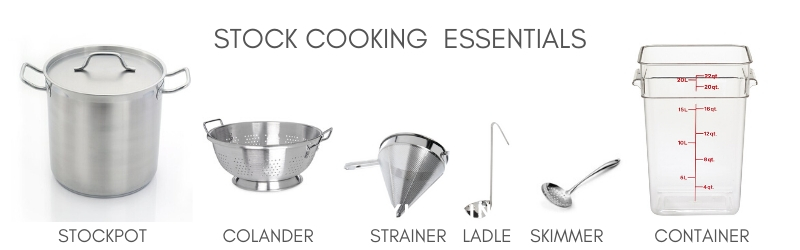
- Use the proper pot to make stocks. Stockpots are taller than they are wide. This allows having a smaller evaporation surface, for long cooking times.
- Some stockpots come with spigots at the bottom. I am not a fan of those, as they make the pot less durable.
- Have a ladle or skimmer on hand to remove scum from the stock as it simmers. Rinse or wash them after each use.
- Have sieves, colander, and cheesecloth on hand to strain the stock.