
Topic · White Stocks Making
Chicken Stock Principles
Homemade fresh chicken stock is much tastier than any commercial brand; there is no doubt about it. At the market, some organic brands are alright and convenient to use, but read the small print in the ingredients. Stay away from monosodium glutamate or MSG and control the sodium content of what you buy.

By doing your own fresh stock, you are controlling what you are eating too. Use this stock as a base for soup, stew, sauces and to cook grains or make risotto. Once the stock is prepared, it will keep in the fridge for up to 4 days and freeze for up to 3 months. The possibilities are endless. Chicken stock simmers for 2 hours, for the bones to release all their flavor.
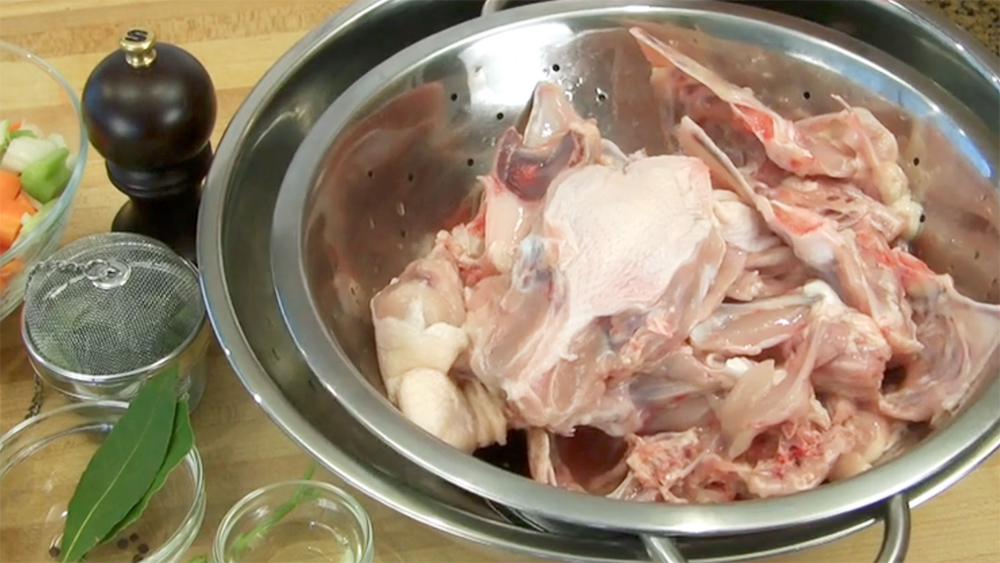
Do’s and Dont’s!
- Rinse the bones under cold water to remove the blood. By doing so, you will remove any impurities.
- Chicken stock must be done with fresh raw bones, not with already cooked bones. Any carcass, including poultry, includes some marrow. Leftover cooked marrow has a high potential for food poisoning.
- Add a pinch of salt to extract all flavors. But do not season the sock, as the salt will concentrate during the cooking process.
- Replace 25% of the chicken bones with chicken necks, for extra rich, gelatinous stock.
- Add or replace an aromatic ingredient to obtain a particular flavor:
For example:
– Ginger, lemongrass, star anise, fresh or dried chili for an Asian flair
– Juniper berries for game stock
– Strongly flavored herbs such as tarragon or rosemary
– Wild mushroom stems for forest flair - Don’t let the stock boil. It should stay at a gentle simmer.
- Do not stir chicken stock while it’s simmering, or it will get cloudy.