
Topic · Knife Skills and Safety Fundamentals
Sharpening Tools
To sharpen your knives, you have a couple of options:
- You can take it to a store that will do it for you such as a gardening center or a knife store.
- You can do it yourself using a sharpening tool.
There are different types of tools that you can use.
Pull-through Sharpeners
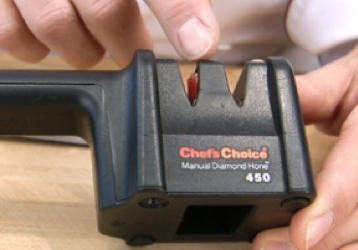
This type of sharpener is for many a welcome substitute for a whetstone or sharpening steel because it holds the blade in place and ensures an optimal sharpening angle. To use, rest the sharpener on a flat surface, and pull the blade through in one smooth motion until it reaches desired sharpness.
When it has one pair of wheels, it is either coarse or fine.
When it has two pairs of wheels, one pair is coarse and the other one is fine.
To sharpen your knives, simply place your knife in the sharpener without applying pressure and pull the knife through to the tip. The weight of the knife will do the work.
If your knife is very dull, start with the coarse wheels and finish up with the fine wheels.
Electric Sharpeners
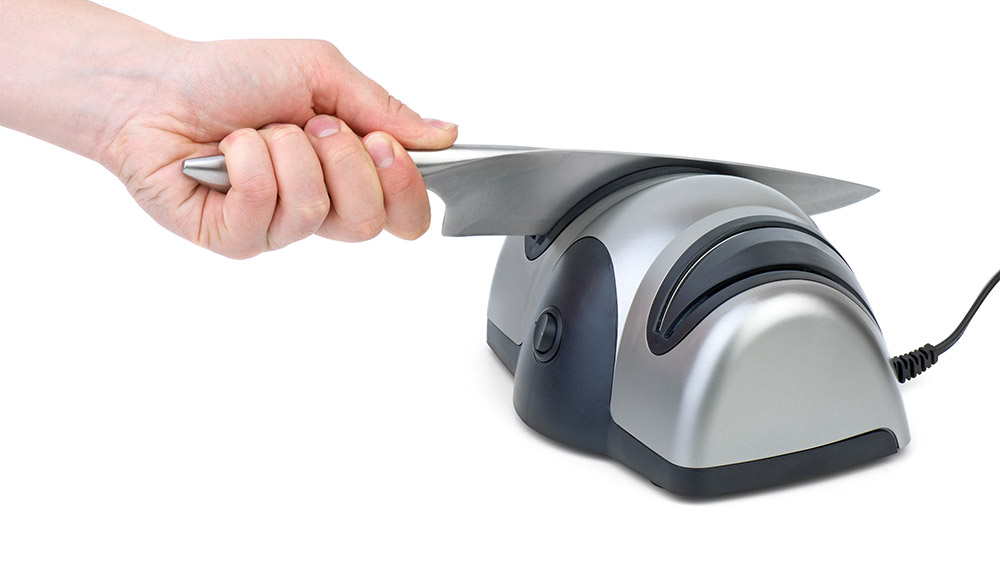
Look for a model that allows you to adjust the angle or that offers a choice of angles. Some models allow you to do two sides at a time. You use an electric sharpener in a similar manner to the pull-through sharpener. Be very careful in your choice of combination of coarse grinding wheels and high speed as you can damage knives beyond repair.
Sharpening stone
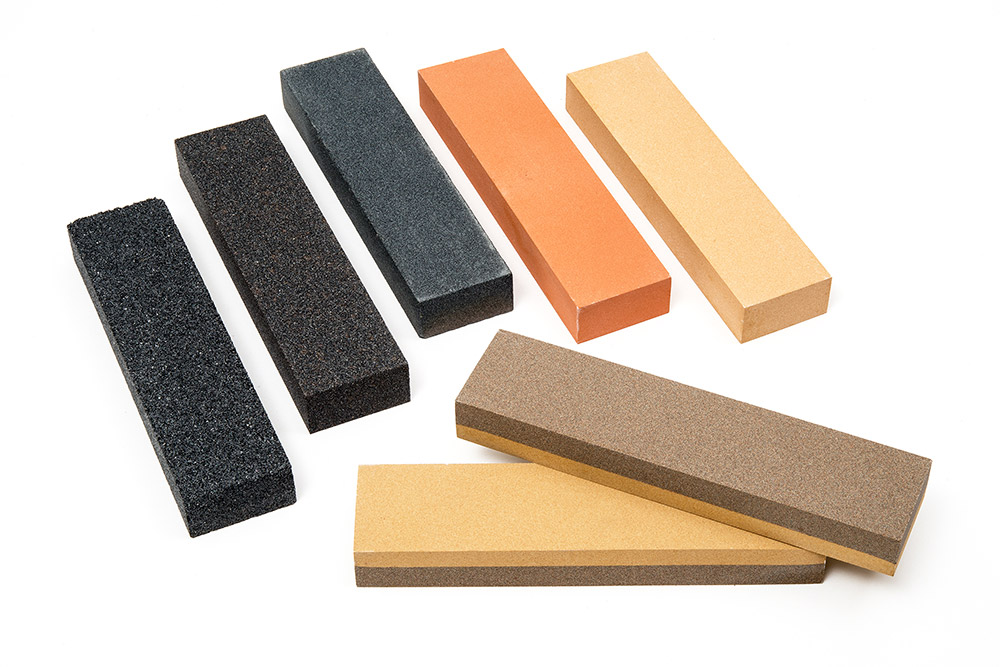
A finishing tool used to sharpen steel blades of knives and cutting utensils. Most often rectangular in shape, the sharpening stone may be one-half to several inches in thickness. Some common varieties include the whetstone or the carborundum stone.
Whetstones
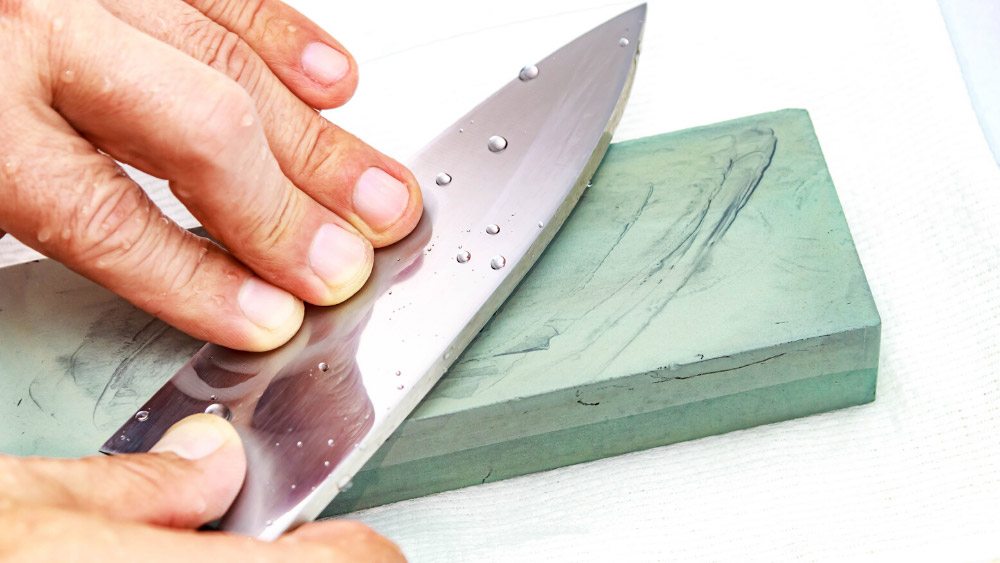
Whetstones are sharpening stones used to grind the edges of steel implements, such as scissors, knives, and chisels.
There are 4 different categories of whetstones: oil stones, diamond stones, ceramic stones, and water stones. Mine is a water stone. It is called that way as it needs to be soaked in water for at least 10 minutes before use.
- A sharpening stone has two sides: One rough, one fine. The stone needs to first be soaked in water.
- Place the stone on a wet cloth to stabilize it. Then, holding your knife at a 20-degree angle to the stone, draw the entire length of the knife blade over the stone. Use your free hand to exert pressure on the blade firmly and evenly from tip to hilt.
- Turn the blade over and repeat the process, over and over at a 20-degree angle until the blade is very sharp. Always allow an equal number of passes for each side.
- After wiping the sharpened knife clean of any metal, use the steel to finish the edge. Holding the steel with your fingers safely behind the guard, repeatedly slide the knife from hilt to tip down one side, then the other, over the steel.
Carborundum Stone
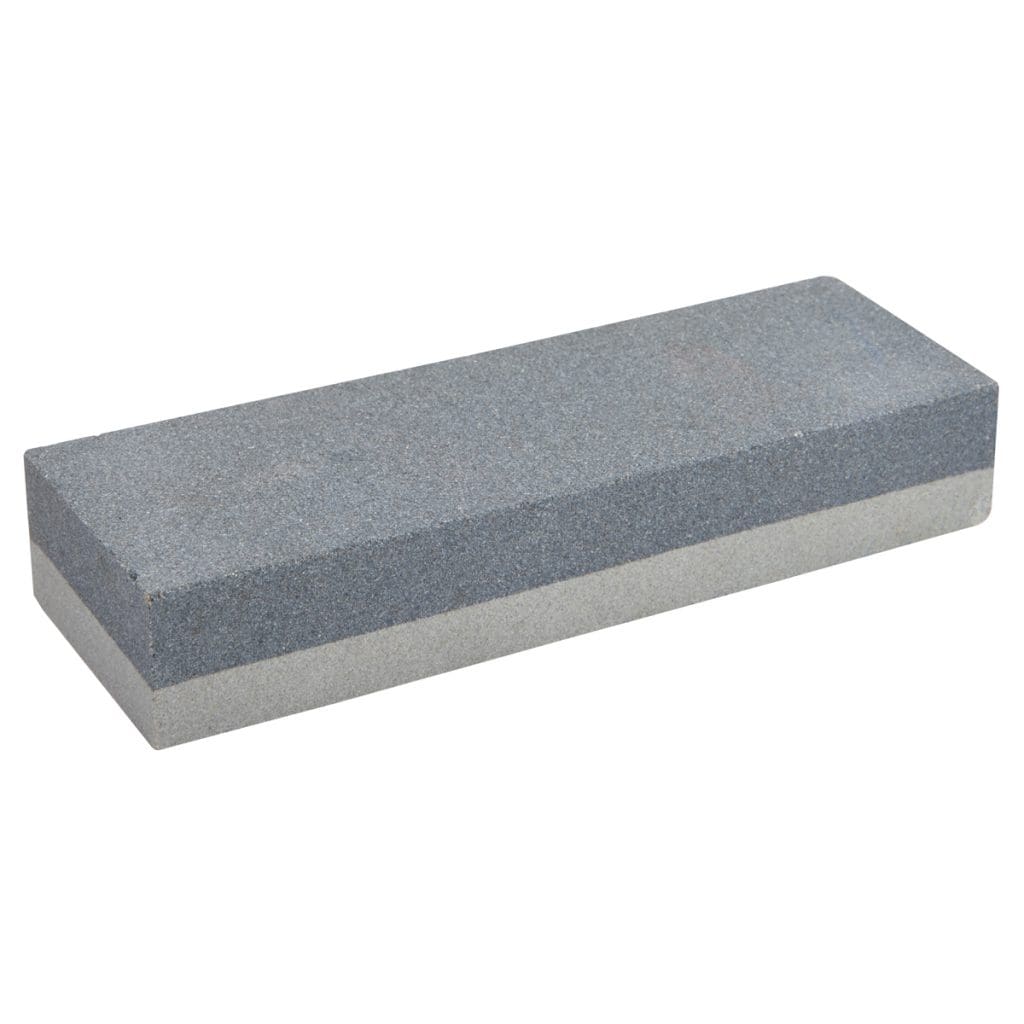
A carborundum stone is an abrasive material made of silicon carbide that sharpens blades. Rectangular in shape, this stone often has a smooth and coarse side, referred to as a double-grit stone. The coarse side is used first and then the knife is finished by using the smooth side.
To sharpen the blade, one side of the blade is drawn straight across the flat surface of the stone. The knife is then turned over to the other side of the blade and the process is repeated. The coarse side enables the blade to be ground into shape fairly quickly while the smooth side adds a smoother finish and a sharper edge, eliminating minute rough edges.
Note: What is Carborundum: Carborundum is a trademark name of silicon carbide, an inorganic compound discovered in the 1880s by E.G. Acheson. Carborundum has a crystal structure like that of diamond and is almost as hard. It is used as an abrasive for cutting, grinding and polishing, as an anti-slip additive and as a refractory.
Sharpening steel
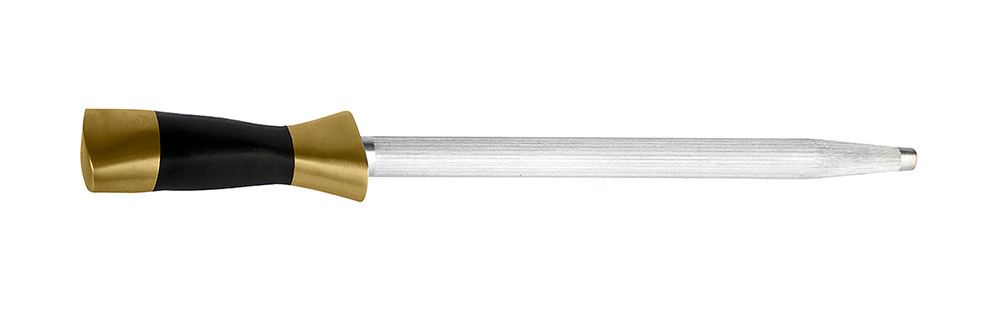
A tool generally made of steel that is used to hone knife blades and keep their edges straight in between sharpening. The tool can also be glass, ceramic, or diamond-impregnated metal.