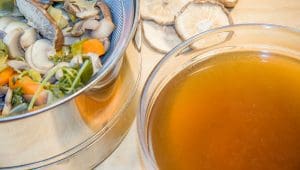
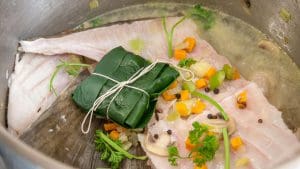
Learn how to make white beef stock (fond blanc de bœuf) with unroasted bones, cold water and aromatic vegetables. Master gentle simmering, skimming and careful straining for a clean, pale stock.
To prepare the veal stock, place the bones in a large , and cover with cold water.
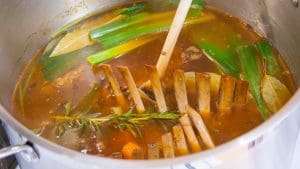
Bring to a boil. Reduce the heat and skim the fat from the surface. Add vegetables and herbs. Partially cover with alid, and allow the mixture to for 3 hours.
Add water if necessary during the cooking process. Continue to scum as needed.
Strain through a fine sieve, cool, and refrigerate.
White beef stock, or fond blanc de bœuf, is a pale, savoury stock made by extracting flavour and gelatin from beef bones and aromatic ingredients without first roasting the bones. It is used as a foundation for soups, sauces and other preparations where a lighter colour is preferred. Unlike brown beef stock, fond blanc is not built on the roasted colour and caramelized flavours of browned bones.
Start with sound, clean beef bones and cold water. Depending on the kitchen's method, bones may be blanched or rinsed to remove surface impurities before the stock is started. Add the appropriate aromatic vegetables and herbs, then bring the liquid slowly to a gentle simmer. Avoid a vigorous boil, which can emulsify fat and impurities into the liquid and make the stock cloudy.
As the stock heats, skim foam and excess fat from the surface. Maintain a quiet simmer and keep the bones covered with liquid, topping up with hot water if necessary. The cooking time depends on the size and type of bones and the desired extraction. Strain carefully through a fine chinois without pressing solids into the stock if clarity is important.
White stock uses unroasted bones and produces a lighter colour and cleaner flavour. Brown stock uses roasted bones and often browned aromatics for a deeper colour and more roasted notes. Both are foundational preparations, but they are selected according to the sauce or soup being made.
Fond blanc can be used in light sauces, velouté-style preparations, soups, braises and other dishes where a pale beef base is appropriate. Chill stock rapidly after preparation, store it under refrigeration and follow the kitchen's food-safety plan for cooling, storage and reheating.
Chef's tip: Control the heat from the beginning. A steady, gentle simmer and regular skimming are more effective for a clean stock than trying to clarify a stock that has boiled vigorously.
This recipe connects to Stock Making Fundamentals — learn the technique step by step in the video lessons.
If you'd like to go deeper, Stock Making Fundamentals covers this in full.
If you'd ever like hands-on guidance for your own kitchen or restaurant, I also offer 1-on-1 coaching through OCS, or you can reach me directly for consulting at 911ChefEric.com.
Recipes come out right when you understand the method. Chef Eric’s courses teach the foundations step by step — knife skills, stocks, soups and classic French technique — with video lessons and short quizzes. Not sure where to start? OCRS™ will build your roadmap in five questions.